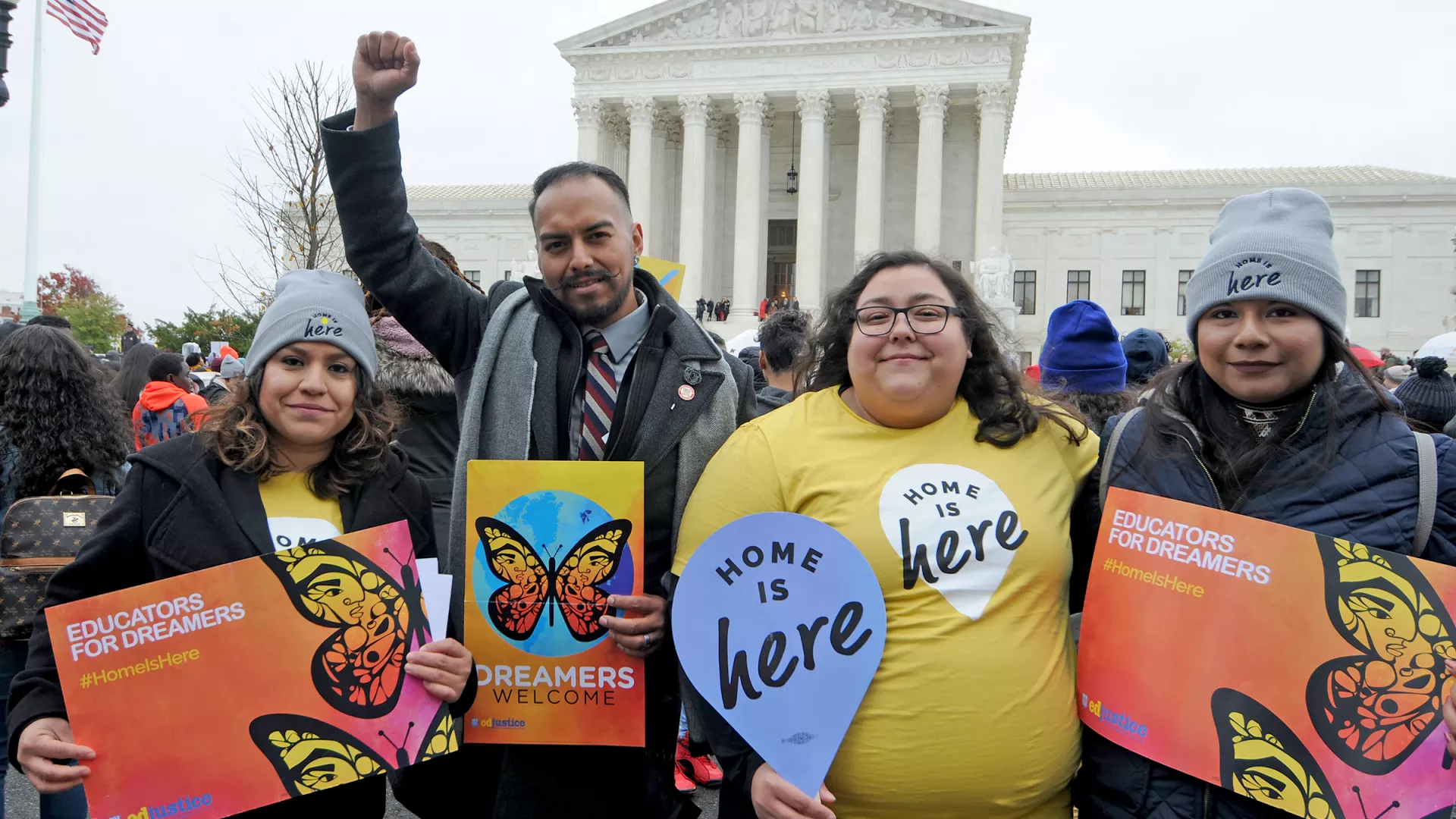
NEA is proud to have members from diverse backgrounds, including members who are immigrants to the United States. Many educators from immigrant backgrounds have U.S. citizenship or permanent residency (also known as a Green Card), which allow them to live and work in this country indefinitely. But some have a status that is lawful but not permanent, and that can be vulnerable to sudden change—especially in the current political climate. Beneficiaries of certain programs that confer temporary legal status, such as Deferred Action for Childhood Arrivals (DACA) and Temporary Protected Status (TPS), may wish to learn about how they can obtain a status that is more stable or even permanent.
This toolkit is a starting point for supporting members with vulnerable immigration status, like DACA or TPS, to explore whether employment-based sponsorship may be an option for them. Read on to learn more about the problem facing these educators, possible solutions through employment-based sponsorship, and resources that members can access if they want to learn more.
Background
Although there are several categories of immigrants whose status is vulnerable, two programs that are at particular risk during the Trump-Vance Administration are DACA and TPS.
DACA is a program that President Obama announced in 2012. It allows undocumented immigrants who grew up in the United States, sometimes called Dreamers, to seek temporary protection from deportation and authorization to work. Currently, 505,940 people are estimated to have DACA, more than 10,000 of whom are educators. DACA holders were born in countries around the world, the vast majority from Mexico, followed by El Salvador, Guatemala, and Honduras. DACA has benefited recipients, their families, and the U.S. economy, and it has had the support of most Americans. Nevertheless, it is being challenged in court, and the Trump-Vance administration has encouraged DACA recipients to leave the country. Absent a legislative solution, Dreamers are at risk of losing their status.
TPS is a humanitarian program that Congress created more than 30 years ago to assist individuals from designated countries experiencing unsafe conditions. Individuals with TPS may stay and work in the United States while those conditions continue. As of March 2025, there were around 1.3 million TPS holders from 17 countries, nearly half from Venezuela, followed by Haiti, El Salvador, Ukraine, and Honduras. Over the past year, however, the Trump-Vance administration has announced the end of TPS designations for many countries, resulting in uncertainty and legal challenges. Because TPS designations are temporary by design and vulnerable to political forces, recipients’ status is not secure.
Opportunities
NEA members who have vulnerable immigration status, like DACA or TPS, may wish to consider employment-based sponsorship for greater stability. For NEA members, this generally means a school district or higher education institution sponsoring an employee for a temporary work visa, like the H-1B, or for a Green Card through the labor certification process. These options have different requirements, timelines, and costs, and they offer different benefits and drawbacks.
NEA has collected a set of guidance documents to help members understand their options for employment-based sponsorship and how to obtain it. Many of these resources have been developed by Path2Papers, a project at Cornell Law School that assists Dreamers in pursuing pathways to permanent residency. Although some of these resources are tailored to DACA recipients, the options they describe are generally available to individuals with other vulnerable immigration status, like TPS.
Understand the basics of obtaining a Green Card through the PERM process
More details about the steps to obtain a Green Card can be found here: A Step-By-Step Timeline of the Employment-Based Green Card Application via PERM – Path2Papers
Understand the basics of obtaining a work visa through the H-1B program
More details about the steps to obtain an H-1B visa can be found here: H-1B Visas for Speciality Occupations – Path2Papers
For more information:
Next steps
Those who want to learn more should consider these additional resources and opportunities. They include further learning for educators and their employers and consultations about individual circumstances.
- View a prerecorded webinar by Path2Papers
- Review and share additional materials, including important details about the H-1B and PERM processes that employees and employers should know about.
- Get a personalized assessment:
- Path2Papers offers free consultations about employment-based sponsorship. Although people from certain regions are prioritized due to grant funding, Path2Papers works with others on a case-by-case basis.
- The President’s Alliance on Higher Education and Innovation Law Lab offer an online questionnaire to assess immigration options, as well as free consultations for certain individuals who are college students or graduates.
- Talk to your state affiliate about any immigration resources they may offer, including connections to lawyers who can help.
Are you an affiliate?