Freshman year hit Aspiring Educator Jordan Hoy like a wave. A student at Illinois State University (ISU), she faced syllabi piled high, with relentless deadlines, gnawing homesickness, and shifting friendships. Then, a lifeline: An email flickered on her laptop screen, offering a mentor from the Illinois Education Association-Retired (IEA-Retired). Hoy seized the chance.
Relief came in the form of Sara Kaufman, a septuagenarian with the energy of a 20-something. Since 2009, she’s been a passionate champion, insightful coach, trusted union advisor, and, most importantly, a cherished, wise friend to some three dozen mentees.
The perfect match
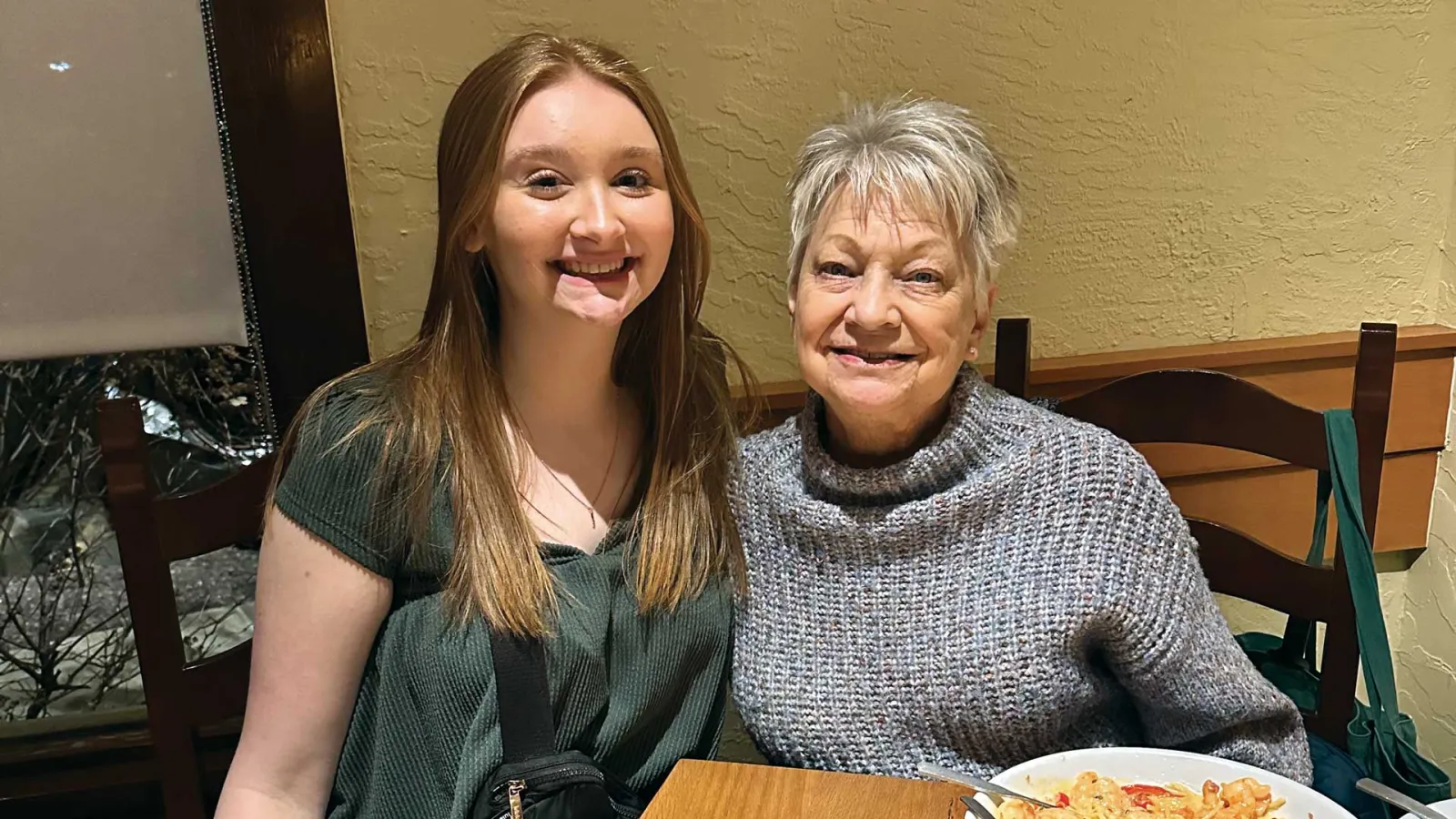
There was an immediate spark when Hoy and Kaufman met for the first time, last year. Chatting like old friends over pasta and salad, they talked about what was in store for Hoy, who is now a sophomore studying to be an elementary school teacher.
Before dessert was served, it was clear that Kaufman, who taught kindergarten for more than 30 years, had a wealth of information about everything from practical bulletin board ideas, to curriculum, to planning for parent-teacher conferences.
Turns out, the topics explored at their monthly meetings vary as much as the menu items.
Sometimes, it’s just a time to laugh and learn about how being a teacher has changed. Kaufman shares many “history lessons” from her early teaching days, but one detail truly astonished her mentee: the requirement to wear a dress or skirt, complete with stockings!
“I couldn’t imagine trying to sit on the floor with 5-year-olds wearing a fancy skirt and pumps,” Hoy quips.
A long history of matchmaking
Stories like these are exactly what Tim Brinker, coordinator of the IEA-Retired mentoring program, likes to hear. Each fall, he teams up with Alayna Nance, a leader in the Illinois Aspiring Educators program, to match mentors with mentees. They pair participants based on geography, grade level, and course subject.
The program has been going strong since 1994; today, it supports about 30 mentorships across the state each year.
“We supply resources to our mentors—on topics covering everything from improving classroom management to combating bullying—but we understand that every relationship is unique and there has to be some flexibility,” Brinker says.
Nance emphasizes the vital role of the retired mentors: “They offer invaluable support, whether through encouraging emails, answering questions, or offering a sympathetic ear.”
Brinker’s advice to retirees who want to start a program? To work best, the program needs to be co-led by a retiree and an Aspiring Educator from your state.
A shoulder to lean on
For Kaufman and Hoy, it wasn’t long before their conversation turned to more than just coursework. Hoy confided to Kaufman that she dreaded the imminent departure of two of her closest friends from school. She was losing sleep over it and getting distracted in class, yet she didn’t want to worry her parents about it.
She finally got the nerve to broach the subject with her mentor. Kaufman listened intently and then encouraged Hoy to deepen her friendships with others and, more specifically, suggested that she create an inviting space to have friends stay over.
The advice worked.
“My mentees know they can call me during the day or at night, and they can laugh or cry with me,” Kaufman shares. “I once even went with one student to meet with a professor over an unfair grade—a grade we ultimately raised.”
Models of activism
Whether fighting for fair treatment for a specific student or for educators across her state, Kaufman sees activism as a way of life. As a former president of the Eureka Education Association and current president of her IEA-Retired chapter, Kaufman encourages her mentees to be politically involved.
Just this August, Kaufman and other public education activists prevailed in having the edTPA in Illinois temporarily suspended.
She and her fellow activists convinced lawmakers that the state’s assessment is plagued with problems, not the least of which is that it does not accurately predict a teacher’s readiness to enter the profession.
Hoy, who recently advocated for paid student teaching at the Illinois State House, says: “Because of what I have learned from Sara, I fully understand that what happens in my classroom and over my career as a teacher depends on my contract and the action taken by lawmakers. As someone who would like to teach at a Title I school, I think activism is even more important. I’m grateful to be getting an early education.”
Quote byRetired teacher Janet Kilgus, speaking glowingly of her mentee and friend, Anna Mohyliuk
Happy long-distance relationships
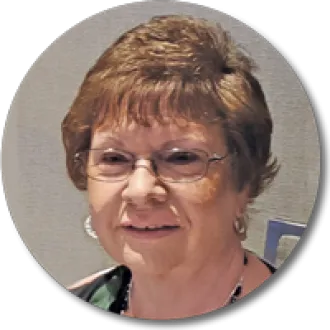
Unlike Hoy and Kaufman, who live close enough to meet in person regularly, Janet Kilgus and her mentee, Anna Mohyliuk, have more of a long-distance relationship.
Kilgus lives in Bloomington-Normal, Ill., about an hour from Mohyliuk, who is a sophomore, majoring in secondary education at the University of Illinois Urbana-Champaign. But the pair has forged a strong bond over monthly video conference meetings.
Despite their age difference and varied backgrounds—Kilgus from Pontiac, Ill., and Mohyliuk, originally from Ukraine—their shared passion for education, particularly math, unites them. That mutual desire to do their best for students is the basis for what Mohyliuk calls an “awesome friendship.”
Kilgus, who taught junior high math for more than 30 years, praises Mohyliuk’s professional approach to their monthly sessions. “She is serious about being the best possible teacher and wants to get the most out of our time together,” Kilgus says. “She always comes prepared with good questions.”
The respect is mutual.
“We talk about everything,” Mohyliuk says. “Janet gives suggestions about how I can present math lessons and explains ways I can deal with potential behavioral problems.”
The lesson of union involvement
Mohyliuk and Kilgus often discuss why union activism is an essential part of teaching. Kilgus has held leadership positions as president of her local and of the IEA-Retired State Council.
“Janet’s stories about…her union involvement have really had an impact on me,” Mohyliuk shares. “For instance, she explained to me that her class size was really getting out of hand, so she asked an IEA representative to take a look and, sure enough, her class size was reduced. It was powerful to see my mentor in this light! Because of Janet’s experience, I absolutely will be active in my union.”
There is just one problem: “We never stop talking, and then, before we know it, time has run out,” Mohyliuk jokes.
Quote byFatima Suhail, NEA Aspiring Educator at Illinois State University, speaking about her state’s mentoring program

Growing Successful Mentorship Programs
When Grace Callen and Peyton Richards were part of the Missouri National Education Association Aspiring Educators program, they recognized a valuable, untapped resource for future teachers: retired members. They hit the road to speaking directly with retirees, gathering feedback to help launch a mentorship program in their state. Callen and Richards, who are now first-year teachers, share what they learned along the way:
NEA Today for NEA-Retired Members: What inspired you to start a mentorship program?
Callen: When we began connecting with Missouri NEA-Retired members, everything shifted. One retired educator asked me, “Who has the greatest power to move education forward?” I immediately thought it was current teachers, but over time, I realized the real answer: It’s NEA-Retired members and NEA Aspiring Educators (AE). Retired educators have the time, experience, and relationships to advocate at the state level, and new educators bring fresh energy and perspective.
I saw that partnership in action for the first time at the state Capitol. Retired members used their existing relationships to help us elevate the voices of new educators.
What should NEA-Retired or AE members do if they want to start a mentorship program in their state?
Callen: The first step is to develop genuine interest and awareness. You have to tell people about it and get them excited.
Richards: It also starts with clear communication about the needs and benefits of collaboration. Both groups share common goals, which are supporting students and strengthening the teaching profession.
Now that you are active teachers, how have your interactions with NEA-Retired members helped you in your first year of teaching?
Callen: They’ve reminded me that classroom challenges are temporary and that it’s okay to ask for help. Those conversations help me stay grounded and remember why I teach. Their encouragement makes you feel like you’re part of something much bigger than your own classroom.
To learn how to start a mentorship program in your state, contact Tim Brinker, Illinois Education Association-Retired, at [email protected].