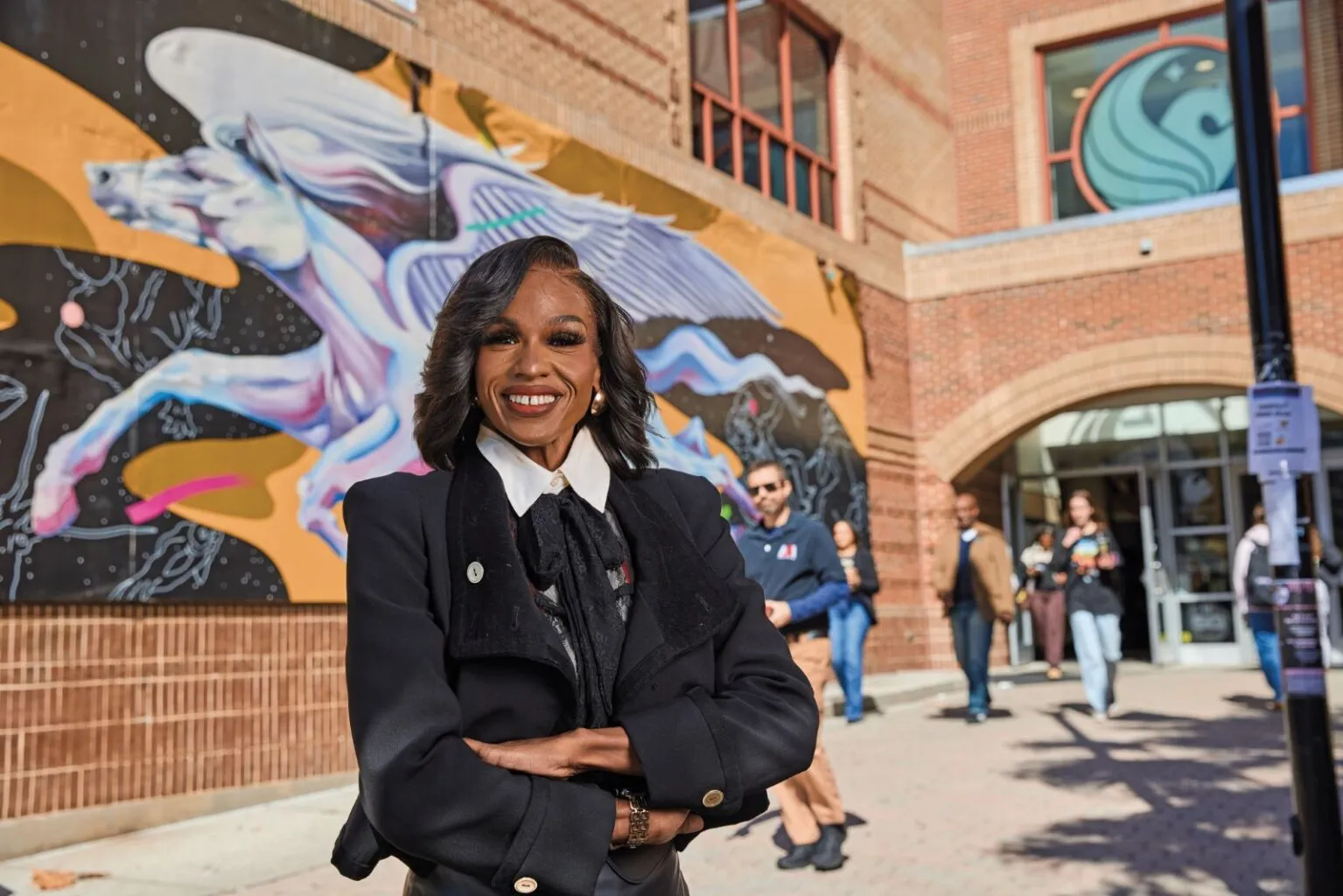
Amanda Wilkerson is an associate professor of higher education in the University of Central Florida’s College of Community Innovation and Education and a proud graduate of Florida A&M University.
Transparent moment: In spring 2025, after earning tenure, I found myself wearing mouse ears instead of academic regalia. My university offered a small summer stipend. Helpful, but hardly enough to live on. Disney filled the gap.
In the middle of a shift at “the most magical place on Earth,” where I had been helping guests on and off water rides, my phone rang. It was my faculty union president, asking me to serve as membership chair. I said yes, but reluctantly. After all, I had finally arrived! As a National Science Foundation grant awardee with more than 30 publications and tenure secured, I’d earned the right to rest from politics. Or so I thought.
My plan was to focus on my scholarship, not service. I believed the union was a necessary defense against the escalating political attacks on education in Florida and across the nation. But I saw organizing to strengthen our union as someone else’s fight. I had my career to protect.
It was this instinct for self-preservation that revealed a darker truth: Higher education’s biggest threat isn’t coming from outside, it’s the disengagement we’ve allowed to fester within.
My first semester as chair confirmed that truth. The magic was gone.
I realized union work wasn’t about negotiating contracts; it was about defending the foundational principles of academic inquiry and the field of education itself.
Unknowingly, we have become gladiators in a modern Colosseum, as the entire system of American higher education is thrown to the lions. Our predators are funding cuts and ideological surveillance by the emperors—political power brokers
who use political systems to enrich themselves and defund education—all while the academy is left to tear itself apart for survival.
Faculty enter the arena alone, fighting isolated battles for our academic lives, parrying blows against our programs, our tenure, and our very freedom to think.
I was no longer a spectator in the stands; I was in the arena, realizing we are all thrown into the fight with a wooden sword, pretending the blade we hold is steel.
This is a fatal error.
We saw what happened at Harvard and stood on the sidelines, as if the delegitimization of one of the nation’s most preeminent institutions wouldn’t become a blueprint for attacking all. We watch colleagues subjected to vicious, bad-faith scrutiny by bad-faith boards of trustees at the behest of gubernatorial power. We whisper support, but wait for our names to be called before we truly mobilize. We treat these crises as singular events, not the coordinated siege they really are.
This hit me with profound force as I began organizing. The pandemic fractured in-person faculty connectivity. Knocking on a colleague’s office door is often futile. They aren’t there. A cold call is unthinkable. The challenge is not selling membership, but facilitating a frank discussion about becoming partners in preserving our very profession.
I’ve tried to lure faculty with topical forums; but too often, the room is filled with the already-converted.
Here is the truth: My individual gladiator’s credentials—the grants, the publications, the hard-won tenure—are not enough. Fighting alone, I may win a battle, but I will surely lose the war for the soul of higher education. The arena is designed to break us one by one.
We must evolve from a collection of gladiators into a community of vanguards. A gladiator fights for personal survival. A vanguard, as historian Martha S. Jones powerfully articulates in her book, Vanguard: How Black Women Broke Barriers, Won the Vote, and Insisted on Equality for All, is an organized effort that moves forward together to protect the whole community and secure its future. A vanguard does not wait for the threat to arrive at its own gate; it fortifies every gate. It
understands that an attack on one is an attack on all.
This is the urgent work of faculty unions today. It is no longer about salary steps and benefits alone. It is about building the collective power to defend academic freedom, shared governance, and the pursuit of knowledge itself.
We must organize not out of fear for our individual jobs, but out of a collective determination to protect the educational system that upholds our democracy.
My gladiator’s spirit is not gone. I am, and will always be, a fighter. However, that spirit is now channeled into the vanguard. I fought too hard to earn this seat in the academy to watch the table collapse. So did you. The time for fighting alone has passed.
The vanguard is calling. Our collective courage will decide whether higher education survives. Our shared future depends on it.