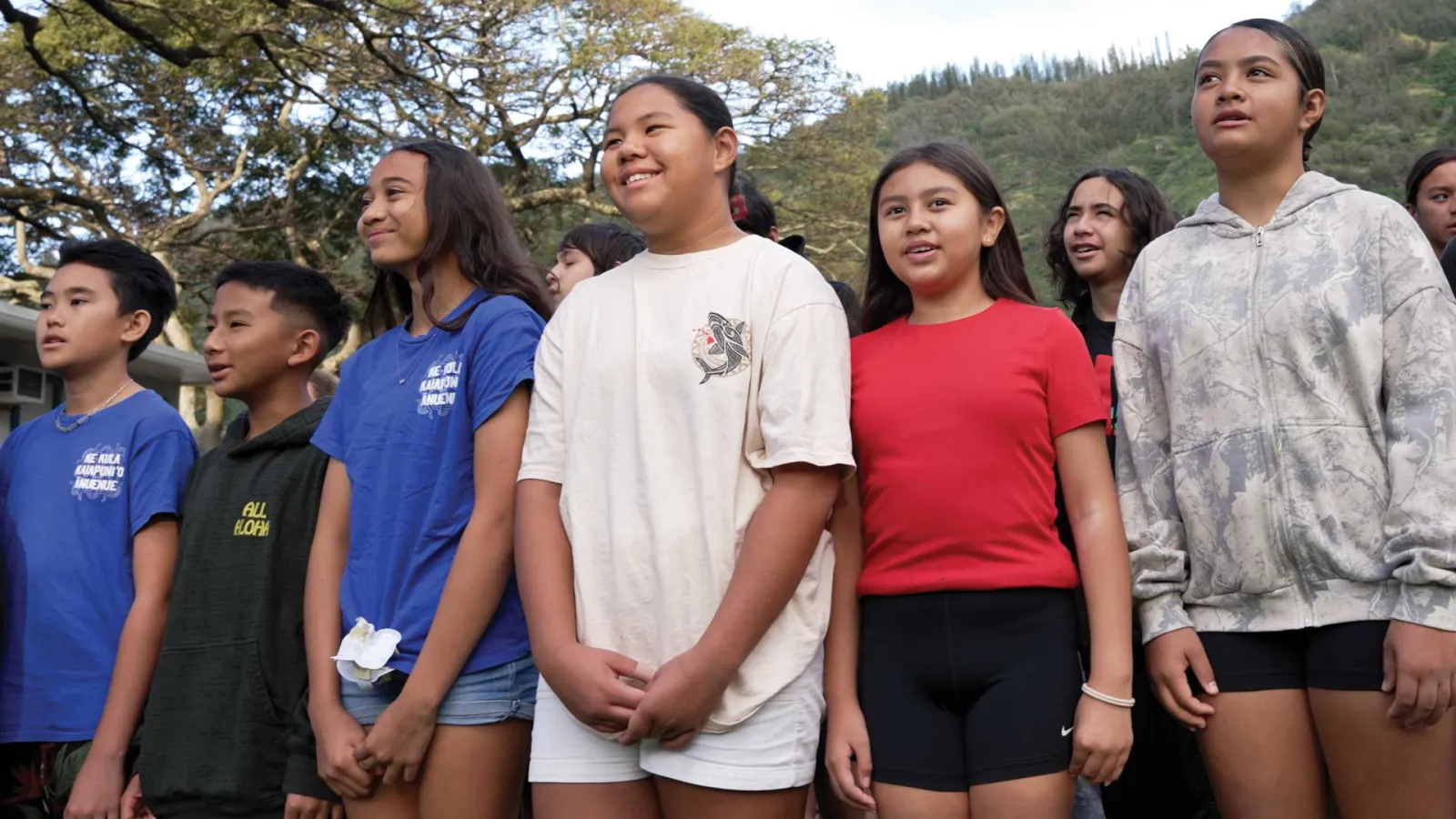
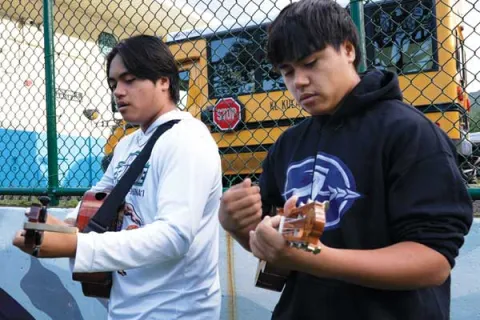
Earlier this year, an NEA Today film crew traveled to Hawai‘i and, on a sunny morning, heard and recorded the same joyful song that students at Ke Kula Kaiapuni ‘o Ānuenue have sung to their teachers every day for 30 years.
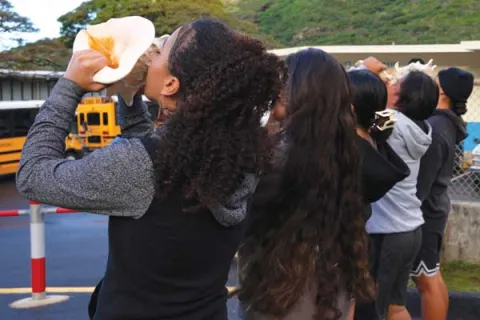
Called by the sound of the pū, or conch, “they’re asking for permission to enter, signaling they’re ready to learn,” explains Ānuenue teacher Gail Leilani Kamalani.
Across Hawai‘i, about 2,600 students go to public Kula Kaiapuni, or immersion schools, like Ānuenue. Inside, ‘Ōlelo Hawai‘i, or the native Hawaiian language, is all students hear until fifth grade, when English is introduced as an academic subject.
In part, the goal is to reclaim the language, which the U.S. government banned in schools after invading the Hawaiian Kingdom, in 1893. But educators like Kamalani also teach traditional cultural values, like “the land is the chief, the ruler,” and about a Hawaiian person’s responsibility to their family and community.
The results? Students in these schools are more likely to graduate and go to college than students who attend regular high schools. They’re also happy, Kamalani says.