Result List
Grad Expectations
What Being a Union Organizer Taught Me

‘Let’s Go Back to Our Campuses and Do What We Do’

Into the Woods

Paying Up: Minimum Salaries for Educators
Myths About Teacher Pay
10 Lessons from a Decade of Teaching
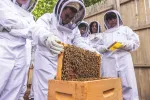
The Sweet Story of Beekeeping with High School Students

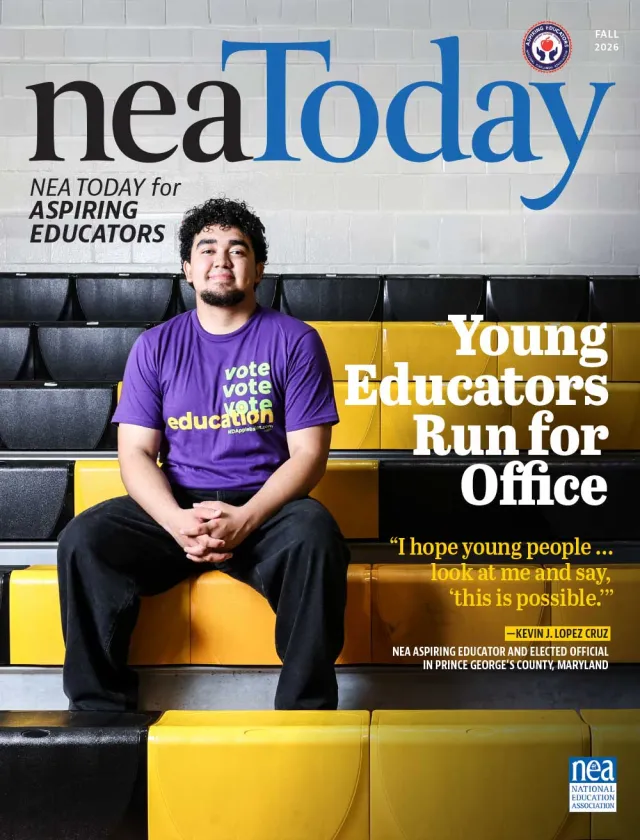
Young Educators Run for Office
The Racist Beginnings of Book Bans
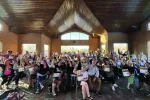
ESPs: Find Your Power!
Special Sections
-
President's ColumnMeet new NEA President Princess Moss.
-
We are NEALearn about the leaders who will help guide the union’s work in the years ahead.
-
Fast FactsCheck out these cool facts about schools, campuses, ballots, budgets, and beyond.
-
News You Can UseThe 2026 Academic Freedom Index is out, and it’s not looking good.
-
Issues and ActionA federal grab for college oversight could put students at risk.
Departments
-
HE Bulletin BoardThe facts don’t lie: Union members get paid more.
-
Member SpotlightA Minnesota computer science professor uses humanoid robots to improve quality of life for Alzheimer’s patients.
-
ResourcesLearn about resources for you, student loan forgiveness, and the HCR Awards Call for Nominations.
-
Last LookAloha! Spend a day at a Hawaiian immersion school.
What I Learned From My First Union
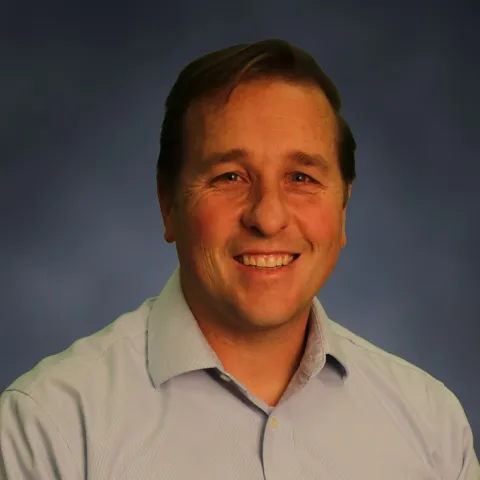
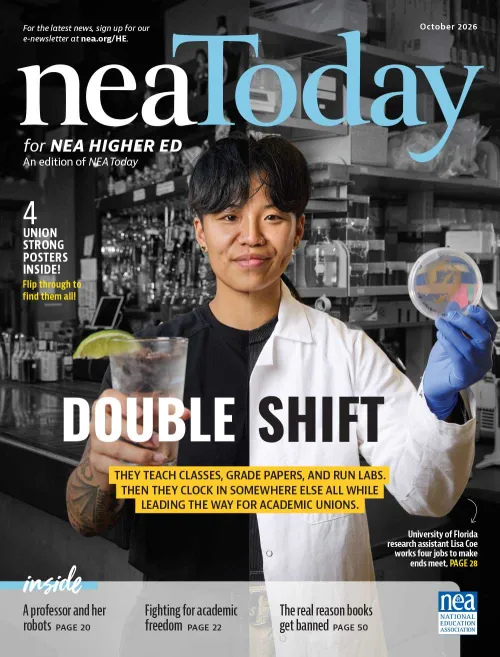
I hope you noticed that the cover of this magazine features a hardworking graduate student. I am excited to see this focus because my own journey into union activism started as a grad-student worker.
I did not enter graduate school as an activist, organizer, unionist, or agitator. But when the administration at Wayne State University, in Detroit, threatened to unilaterally reduce the health insurance of teaching and research assistants, the Graduate Employee Organizing Committee (GEOC) was created, and I became energized. In quick order, the GEOC ran a successful card drive, won a recognition election, and commenced contract negotiations.
The GEOC’s efforts reshaped Wayne State and pushed me to see colleges and universities through a different lens. These changes, institutional and personal, were directly influenced by many individuals and groups. Unionized faculty
members at my university, union organizers, and union members elsewhere—
notably the grad-student union at the University of Michigan—provided support and guidance to help me and the GEOC develop a collective vision for our union.
I carried those experiences and lessons with me when I moved on to my teaching post at a community college, where I immediately helped support and grow that local union. Today, while I advocate on a broader national level, I come back to the foundational principles of my graduate-student organizing days.
Higher education is a public good that requires collective action to preserve and promote this resource. Our success requires that we recognize and advocate for all workers laboring at our colleges and universities. Look around, make
connections with other departments and units. Those linkages make us stronger and build campuses that come closer to meeting the vision we have for higher education.
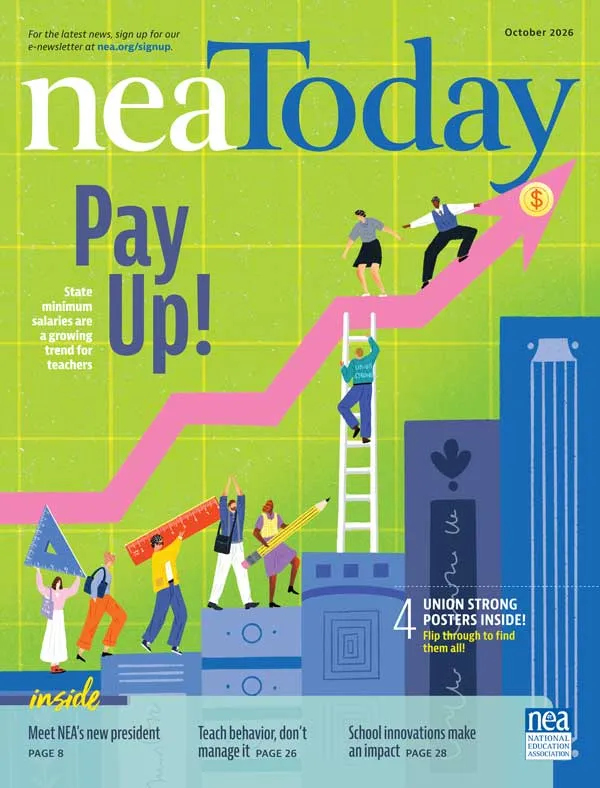
NEA Today, October 2026
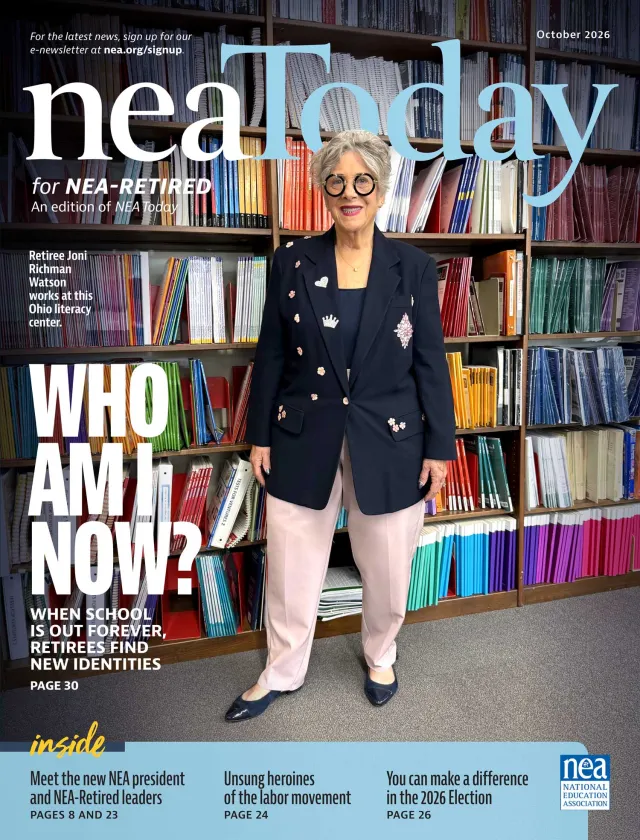
NEA Today for NEA-Retired, October 2026