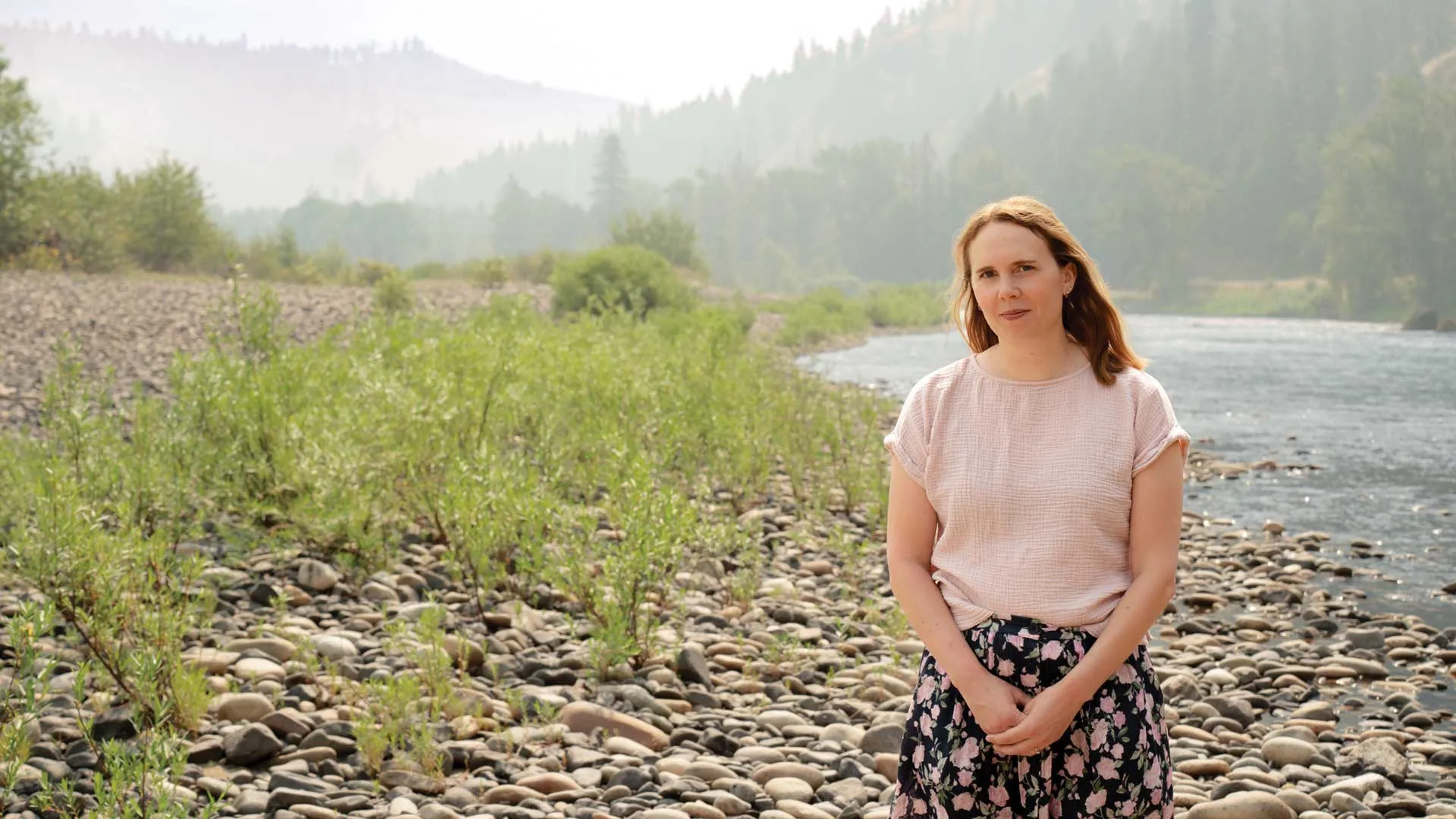
With a master’s degree in geology, Janna Privette imagined a career in a college lecture hall, not a kindergarten classroom. But she decided academia wasn’t the right fit, and life had a plan of its own.
She and her husband moved to Kooskia, Idaho, “Gateway to the Wilderness,” in 2015, for his job, and she landed at Clearwater Valley Elementary School. Privette loves the natural beauty she sees from every angle: the basalt canyon walls of the Clearwater River, the landscape of pines, firs, and cedars.
What she doesn’t love is the unreliability of a key funding source for her school: the Secure Rural Schools (SRS) program. The federal program is becoming as unpredictable as Idaho wildfires. It’s reauthorization expired on September 30, and educators in the more than 700 counties that receive SRS funds—spread across 41 states and Puerto Rico—are once again waiting on Congress.
“In most communities, public schools don’t get the resources they need,” says Privette, whose school sits on the Nez Perce Reservation, along the Lewis and Clark National Historic Trail. “But in my district, there’s always this awareness that our money is especially uncertain. It makes it hard to know what we can plan for long term and even what we can negotiate for as a union.”
Federal payments for national forests
The SRS program was created through the Secure Rural Schools and Community Self-Determination Act of 2000, and provides funding to 4,400 school districts. Payments for fiscal year 2025 totaled $253.8 million—an amount that’s dwarfed by, for example, the $19 billion in Title I funding that supports public schools in low-income communities.
But educators say that while their SRS funds may not seem like much, the money helps keep schools open, school buses running, class sizes manageable, and educators working. It also supports local road repair and maintenance, wildfire preparedness, emergency services, and other public services.
The SRS program is the outgrowth of a program started in 1908 to compensate counties for non-taxable public land. The name may call up images of Little House on the Prairie, with Laura Ingalls running blissfully through the prairie to a one-room schoolhouse, but in the context of SRS, “rural” refers to national forestland.
The payments vary widely based on acreage, and Congress must reauthorize the program periodically. Reauthorization often comes several months, if not years, after the program’s expiration.
Case in point: When the SRS law expired in April 2023, the program was reauthorized in December 2025, thanks in large part to advocacy by NEA and its partners. The legislation essentially provided back payments for the time that had already passed. That law then ended last month. Districts, anticipating another lengthy delay in reauthorization, are scrambling to make “just in case” plans. It’s a routine they know all too well.
“Every May you have PTSD,” says Joseph Hantho, a high school science teacher in the Stevenson-Carson School District, located in Skamania County, Washington, where 80 percent of the county is national forestland. “You start thinking: Am I going to have my job next fall?”
But for Hantho and his colleagues, the program is about more than the budget. It’s also about stability, dignity, and the ability to plan.

A lifeline in forested counties

In the past, timber companies had a huge footprint in forested counties as major employers and taxpayers. They leased substantial portions of these lands from the U.S. Forest Service, which then shared revenues with counties.
“When timber receipts were great, schools benefited,” says Zeke Lee, a legislative director at the National Association of Counties who oversees Western public lands.
But in the 1980s, restrictions on logging, pressure from overseas competition, forest health issues, and other challenges shrank the timber industry. The SRS law was intended to provide a six-year time frame for attracting new businesses. In many areas, however, SRS funding became a lifeline.
Mike Watkins, who served as principal of Mississippi’s Okolona High School until July, notes, “There used to be a lot of furniture factories in this area, but the main one shut down last year, around Thanksgiving. The city wants to bring in industry, but a lot of people just don’t want to come here.” Now the principal of a school in the county next door, Watkins says of Okolona High: “Not having businesses really hurt us. … So if Congress is not funding SRS, they’re hurting students, the people who will eventually be in our workforce.”
Declining funds
The original SRS law has often been extended over the past 20 years, but the funding has decreased almost every time.
After the previous expiration, in 2023, a round of SRS payments was distributed in spring 2024 that amounted to approximately 20 percent of previous payments, leaving some counties with an 80 percent decrease in SRS funding. Districts, not knowing when the law would be reauthorized, sketched out various scenarios: staff reductions, school consolidations, half-day kindergarten, and cutting sports and extracurricular programs. In some places, these weren’t just hypotheticals.
The Stevenson-Carson district decided to close the Wind River Middle School after the 2024 – 2025 school year, saving more than $600,000. Students moved to the high school. Hantho, who was already teaching three periods of science—and serving as class adviser for student government for grades 10–12—was assigned two periods of middle school math.
The school’s staff numbered 52 in the 2023 – 2024 school year, but by 2025 – 2026, only 36 staff members remained. The school district is planning more possible layoffs. And this one will bring Hantho closer to losing his job. “If you have 100 jobs and only 20 people to do them, that’s a huge problem.”
Privette’s original school district, Mountainview, spanned 8,300 square miles. It was the sixth-largest district in the continental U.S., covering more area than New Jersey. But in June, the district was split into two smaller districts. School board members believe that separate districts will be more likely to win support for tax levies that can generate additional support.
But the new Clearwater Valley district is already forecasting a shortfall for next year, partly because administrators opted not to build SRS funds into the budget. To make up some of the money, the district asked employees to contribute to the cost of their health insurance. That decision was also driven by inflation. “This is the first time in the history of our schools we’ve had to do that,” Privette says.
Jaime Green, a former superintendent in northwest California’s Trinity County and a leading advocate on rural schools, has championed SRS for years. When he meets with members of Congress, he always shares this cautionary tale: In 2016, after renewal of the SRS law was delayed, his district cut back on repairs and maintenance. The consequence was a mold outbreak that shut down two schools.
‘Your people are your school’
Privette’s town of Kooskia is in Idaho County and features 4.4 million acres of forestland, more than any other in the U.S. It’s at the high end of SRS recipients, with payments totaling $6.6 million. In Skamania County, Washington, where Hantho teaches, payments amount to nearly $2.5 million for nearly 850,000 acres of forestland.
The tiny town of Okolona, where Watkins worked, is in Mississippi’s Chickasaw County, with 26,000 acres of forestland and SRS payments of about $135,000—minuscule compared with others. But Melissa Sadorf, executive director of the National Rural Education Association, says the impact of funding cuts can be worse in very small districts. “For educators navigating tight budgets, even relatively small cuts translate into difficult decisions about staffing and programs,” she says.
Green notes: “You go to a city or suburb, they have a drama and performing arts school, a science and tech school, and other options. In towns like mine, your people are your school. We have to be the jack-of-all-trades for all kids. For us, that makes the SRS program critical.” He adds, “All we want is enough money to fully educate our kids.”
To learn more about rural schools and check for updates on legislation.