At 20 years old, Kevin J. Lopez Cruz is balancing college classes, campaign events, and a future he once imagined would unfold entirely in higher education.
“I never wanted to run for anything,” says Lopez Cruz, an English major at Bowie State University, in Maryland, and an NEA aspiring educator. “I always wanted to be a professor.”
But as he watched political decisions shape his community in Prince George’s County, he decided waiting wasn’t an option.
In June, when voters elected Lopez Cruz to the county’s Democratic Central Committee, he became the youngest Latino Democrat elected in the state’s history.
A new generation
Lopez Cruz is an alum of NEA’s See Educators Run program, which trains educators and support staff to run successful campaigns and advocate for public education. It has helped launch a growing number of educators to enter politics, years—or even decades—before conventional wisdom says they should.
Their campaigns come as the nation debates the age and health of its longtime political lawmakers. The average member of Congress is nearly 59 years old, and more than a dozen members over the age of 80 are seeking reelection, according to NBC News.
For Lopez Cruz and other educator candidates, running for public office is about expanding representation in government.
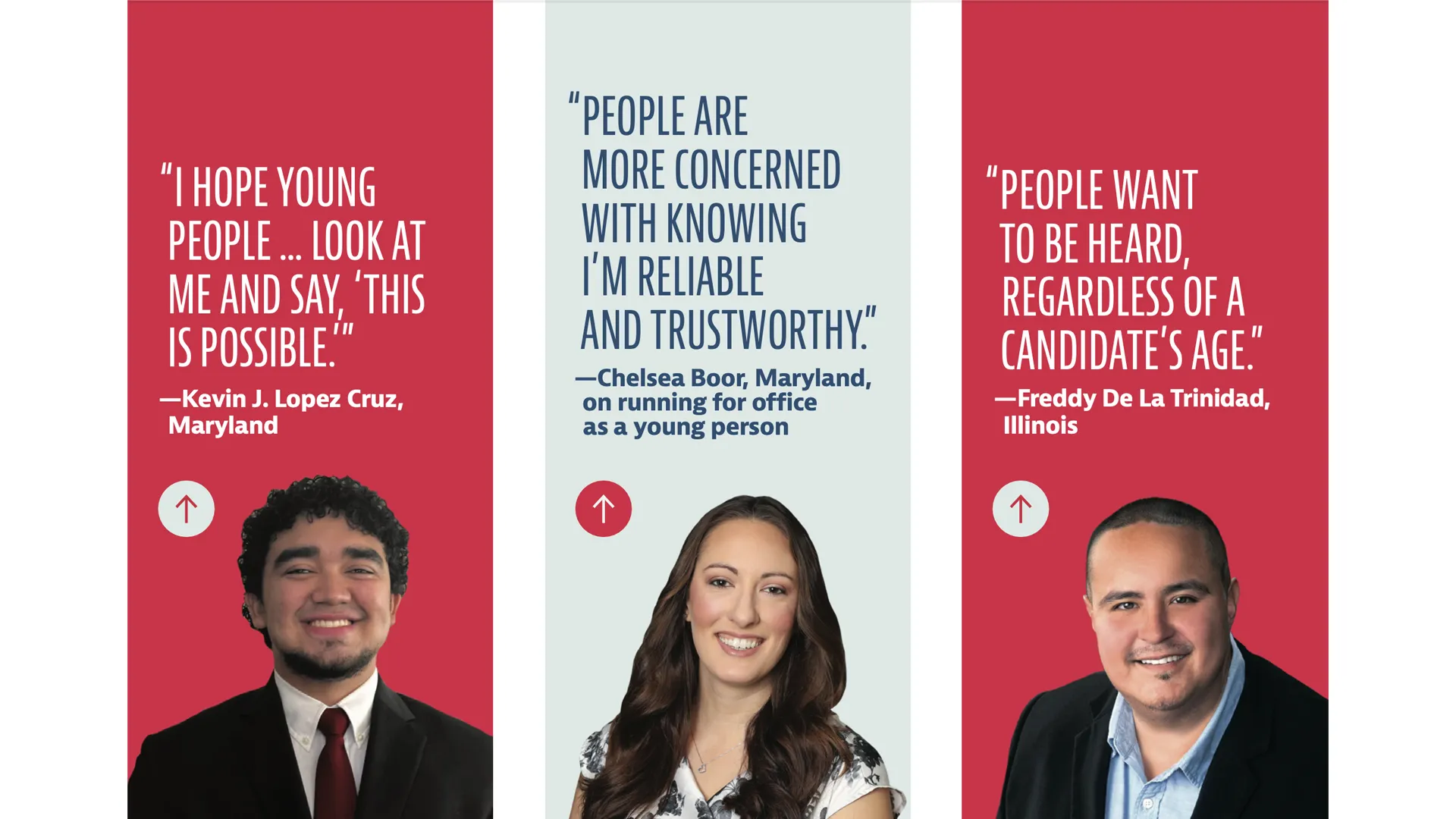
“I hope young people … look at me and say, ‘This is possible. I can do this,’” he says. “I really hope that message travels far and wide, showing people that these things are possible.”
Public service now
Unlike many candidates who spend years climbing political ladders, Chelsea Boor, 34, arrived through the classroom and also received training through See Educators Run.
A Spanish teacher in western Maryland, Boor decided to run for Allegany County Commissioner in the 2026 election so she could help shape the community her young children will inherit.
For more than a century, Boor’s family has called the county home, giving her deep roots in the community she’s now seeking to serve.
“I want my kids to not feel like they have to go somewhere else to get an education [or] a job,” she says.
Ideas across generations
Freddy De La Trinidad is a bilingual social studies teacher in Rockford, Ill. When he first decided to run for public office, with the help of See Educators Run, he was 31. Today, the 37-year-old is running for reelection, in November, as a Winnebago County Board member.
He decided to run because he wanted to represent his neighbors and believes “regular people,” such as teachers and nurses, should serve in public office.
As a younger elected official, he finds value in pairing fresh ideas with the institutional knowledge and experience of longtime leaders.
“We actually agree a lot more than we disagree,” De La Trinidad says of his colleagues of different generations. “We respect each other and are here for the betterment of our district. At the end of the day, that’s what we’re elected to do.”
Beyond the stereotype
One misconception about younger candidates, all three NEA members say, is that voters are primarily concerned about their age. On the campaign trail, they’ve found something different.
Boor says conversations rarely focus on how old she is. “People are more concerned with knowing I’m reliable and trustworthy,”
she says.
Lopez Cruz says, “People are actually relieved that someone else is running for a change.”
For De La Trinidad, campaigning taught him that “people want to be heard,” regardless of a candidate’s age.
Should You Run for Office?
Yes, you should. Go to nea.org/See-Educators-Run for support!
From the Classroom to the Ballot Box: Learn how one aspiring educator is helping her peers get informed, get involved, and get to the polls!
For College of Charleston junior Gretchen Gilmore, getting young people to vote often starts with something undoubtedly low-tech: A conversation.
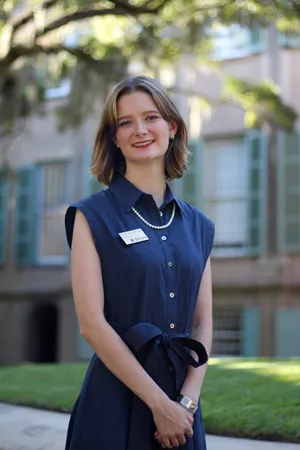
As president of the College of Charleston student chapter of The South Carolina Education Association (The SCEA), Gilmore has been visiting education classes, talking with other student groups, tabling on campus, and helping organize voter education events.
The goal is to give students information about registering to vote, introduce them to candidates, and make participation in elections feel more accessible.
“It’s a lot of word of mouth [and] meeting students where they are face to face,” she says.
Gilmore, an early childhood education major who hopes to become an English as a second language or English to speakers of other languages teacher, sees civic engagement as closely tied to her future profession. Decisions made by state and local officials eventually make their way into schools, she says.
For example:
- U.S. senators and representatives determine education spending for critical programs that help reduce inequities in schools. They also set federal standards for education.
- Governors can block harmful proposals, such as school voucher bills—which siphon money from public education to fund private schools. They can also change state education policies and programs through executive orders, executive budgets, and legislative proposals.
- State senators and representatives impact every aspect of public schools, from funding and standardized testing to educators’ right to organize and advocate for their students. State attorneys general can assemble task forces to examine school safety, bullying, and standardized testing.
- District’s school board makes key budget decisions about salaries and purchases of textbooks and technology. They also have the authority to hire and fire school administrators.
“As teachers, we need to understand what’s going on in our governments,” she explains. “All the policies that they bounce around—the result is what’s in our classrooms and what’s happening to our students.”
Finding a way to get involved
Her interest in politics began well before college. Growing up outside Washington, D.C., in Maryland, Gilmore volunteered for local campaigns while in middle and high school and became involved in student lobbying and student government. When she arrived at the College of Charleston, she began looking for ways to connect that experience with her interest in education.
She found one through The SCEA. After meeting with a state affiliate organizer who visited one of her introductory education classes, Gilmore became a member organizer, too, and later restarted the association’s student campus chapter. She now also serves as student president of the statewide organization and represents students on its board.
On campus, one of the challenges she encounters is convincing students that elections have a meaningful relationship to their lives. She sees some apathy among her peers, particularly among students who have moved to South Carolina from elsewhere and may not feel connected to state and local politics.
Sometimes, she says, students simply need to know where to begin.
Starting with a conversation
While tabling—promoting the student chapter—on campus recently, Gilmore met a student who said she was not registered and did not plan to vote because she already had too much going on. Gilmore and other organizers gave her voter information and talked through the process.
“It’s simpler than you think,” she recalls telling the student.
That kind of personal outreach is central to her approach. In addition to tabling and visiting education classes, she has reached out to students involved in programs such as South Carolina Teaching Fellows and Call Me MISTER, both a teacher recruitment and retention program. Her student chapter is also organizing voter education events where students can learn about registering and hear directly from candidates seeking state office.
For Gilmore, the message she shares with voters is based on developing a lasting sense of responsibility to the community where a person lives.
“We’re coming to this new place that already has its own history and ways of life,” she says. “We need to be taking care of the space and leaving it better than we found it,” adding that voting is one part of a longer commitment to staying engaged.
4 STEPS TO GET READY TO VOTE
-
Confirm your voter registration.
-
Research candidates and issues before Election Day.
-
Find pro-public education candidates in your state, then encourage your friends and family to vote for leaders who champion safe schools, strong educators, and student success.
-
Before heading to the polls or filling out your mail-in ballot, familiarize yourself with who’s on the ballot.
Your Voting Guide
Preview your ballot, see which candidates NEA recommends, and find helpful voting resources.