
Key Takeaways
- What’s at stake in the 2026 election?
- How electing education allies helps your school.
- Make no mistake—your right to vote is on the ballot.

When Jacob Bennett was growing up, he felt more secure at school than anywhere else—especially compared with his turbulent, abusive home. He knew by age 10 that he wanted to be a source of security and encouragement for other children, just as his educators had been for him.
Bennett didn’t understand back then how elections shaped the learning conditions at his school, in Maryland’s Harford County. But today, as a teacher, voter, and elected member of the Harford County Council, he
gets it.
“I signed up 21 years ago to be a teacher because I wanted to help take care of kids the way my teachers took care of me,” Bennett says. “I can’t really do that unless I am engaged in the political process.”
He and other educators who have been elected to office have a close-up view of how elections—at the national, state, and local levels—directly impact our students, educators, and school communities. In the midterm elections this November, they believe educators must forcefully turn back politicians who are committed to dismantling public education and other public services, and use their voices to persuade others in their communities to do the same.
Quote byAva Chiao, a teacher and school board member in San Jose, Calif.

What’s at stake in the 2026 election?
NEA members are a force in elections! We live everywhere—in cities, suburbs, and rural areas. We reside in every congressional district and ZIP code, and typically vote at twice the rate of eligible voters overall.
Even though this is not a presidential election year, educators say the issues at stake call for a supercharged turnout in 2026. A flood of anti-public education candidates are running for Congress, statehouses, county and city governing bodies, school boards, and other offices.
At every level, they are pushing policies that harm students: Book bans that give politicians the power to overrule educators’ expertise and experience; voucher schemes that siphon money and resources from public schools; union-busting measures that aim to take away workers’ rights; and the defunding of safety-net programs that help students and struggling families access healthcare and food, among other damaging proposals.
And this year, the nation watched as immigration raids near schools terrified families to the point that many kept their kids at home.

“I’ve watched for a long time the way public education is attacked by so many different forces in society,” says Timothy Surrette, a former middle school science teacher, now an associate professor of education at the University of Maine and an elected member of the Bangor School Committee. “Public education is the great equalizer, and its accessibility mission is so important. We have to band together to protect that mission.”
The president may not appear on the ballot this year, but the Trump administration’s policies are, and his party controls both the U.S. House of Representatives and the Senate. That means the candidates who win in November will determine whether the administration’s agenda goes forward or goes bust.
“To me, it is crucial that every single NEA member vote and have a voice right now. We’re talking about the future of not just our schools, but our society,” says Ava Chiao, an independent studies teacher in San Jose, Calif., and elected member of the Cupertino Union School District Board of Education. “Education is a fundamental right, and we’re the ones who can fight for our kids.”
One of the Trump administration’s signature items is especially dangerous, these educators say: abolishing the U.S. Department of Education. It has the potential to wipe out expertise and disrupt funding to states and school districts, cause layoffs, reduce special education services and resources, and increase barriers to post-secondary education.
The shift, coupled with the administration’s decimation of the offices overseeing civil rights and special education, makes students much more vulnerable to discrimination, harassment, and even certain types of assault. Without the department as a shield, they and their families will have little recourse and few assurances of protection.
“We need to be advocates for public education,” Surrette says. “One way you advocate is by looking at the candidates for office, understanding what their positions are on education, and voting.”
When Chiao’s peers sometimes question the value of their vote, she tells them, “Getting involved in politics is getting involved in the policies that govern our work. We can elect people who support public education, and we can even run for office ourselves.”
How electing education allies helps your school
A few years ago, Bennett did not imagine he’d run for office. His plan was to teach for 30 years in his town and retire. But in his first year as a kindergarten teacher, 500 educators were cut from Harford County schools. Bennett was safe, but for the next few years he never knew if he’d have a job from one school year to the next.
That experience motivated him and his wife, Abbie, also an educator, to dig into their county’s finances and priorities. He met with their representative on the County Council and was shocked by how little the politician knew about local public schools. “Abbie and I kept complaining that someone needed to run against him,” he says. “And then we decided it was us.”
Bennett, elected in 2022, says he provides colleagues on the Council with a deeper understanding of the challenges educators and students face. Recently, when the county executive proposed reducing the education budget by $20 million, Bennett persuaded the Council to cut the amount in half. “I didn’t want the school budget to be cut at all, … but ultimately we saved 120 positions.”
He also introduced a bill giving county workers binding arbitration rights that enable a neutral, third-party arbitrator to make the final—and legally enforceable—decision in a contract dispute between a union and the county. The Council unanimously passed it in 2025, even overriding the county executive’s veto. “There are people who would rather I not be a voice for working families,” he says. “But I’ve built coalitions and even partnerships with unlikely allies who believe that together, we can stand up for everyday people.”
Before Bennett took office, the county executive tried to bar him, arguing that being a teacher created a conflict of interest. The state Supreme Court ultimately ruled in Bennett’s favor. But the county executive is on the ballot this year, and he introduced a bill to rewrite the Council’s charter to explicitly exclude public-service workers from serving. Election Day will determine whether this anti-public education, anti-public worker agenda succeeds or fails.
Elevating educator voices
Surrette says that serving on the school committee means being able to “elevate the voices of educators and really make them a key part of the process.” This was especially valuable, he notes, when the board created, debated, and ultimately passed a policy, in 2025, that bars cellphones when class is in session. Surrette says the change has improved students’ focus and engagement.
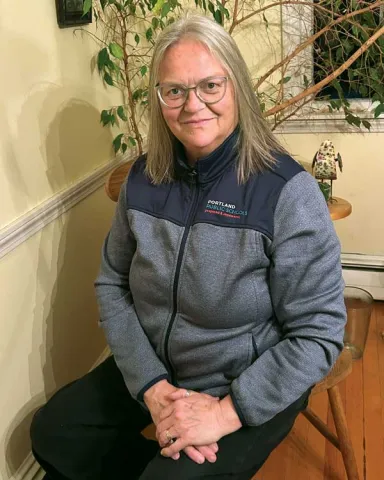
Jayne Sawtelle, a retired teacher and member of the Portland School Committee in Maine, says educators elected to governing bodies can help bring home the impact of policy choices made at the state and even national level. Sawtelle, who spent 30 years as a music teacher before running for school committee, points out that many Portland students were impacted when Congress carried out a Trump administration priority to cut the Supplemental Nutrition Assistance Program (SNAP)—a food assistance program for low-income families. Fortunately, a local nonprofit, founded to support arts and extracurricular programs in public schools, stepped in to help. But that would not have been necessary if more lawmakers in Congress used their power to support working families and students.
“The foundation saved a lot of families from going hungry—families that were also on the verge of being unhoused,” Sawtelle says. “That foundation was supposed to help provide the ‘extras,’ but because of federal policy and how it affects what happens here, they are having to work with the schools just to provide the basics.“
Chiao, elected in 2022, says that her successful campaign was fueled by educators who understand how elected leaders can either support or undermine student success as well as educators’ working conditions. She knows educators in her wealthy Silicon Valley district who can’t afford to live where they work. And that hurts staff retention. She is urging her board to convert unused property into affordable housing, perhaps specifically geared toward educators. Chiao is in the minority on that issue, but Election Day could change that.
Make no mistake—your right to vote is on the ballot
Some politicians are working overtime to make it harder for Americans to vote. With the president’s encouragement, members of his party are advancing legislation to make it harder for certain groups—particularly communities of color, older voters, and students—to vote. Politicians in many state legislatures have already passed such laws and redrawn districts to dilute the voice of people who don’t agree with them.
Earlier this year, the U.S. Supreme Court handed down a decision that dismantled a key enforcement tool of the Voting Rights Act of 1965. The decision gives states the greenlight to redraw voting maps, even if those states have historically discriminated against voters based on race.
“Educators teach students that democracy is something we practice, protect, and pass on,” says NEA President Becky Pringle. “Voting is both a right and a responsibility, and every eligible voter should have equal access to the ballot.”
But that won’t happen without the right people in office.
“Who is creating these voter suppression laws? The people we voted for,” Chiao says. “That’s why we need to vote for people who are fighting for us, not fighting to take away our voice or fighting for whatever some millionaire or billionaire is asking them to do. They’re not fighting for the students. We have to do that.”
The candidates and issues on the ballot, coupled with threats to the right to vote itself, make it even more imperative for educators to vote in 2026, Bennett says.
“The electoral process is like building a sandcastle. The sandcastle is still there when you leave the beach, but then the tide comes in and you’ve got to rebuild it the next day,” says Bennett, who likes to point out that his 2022 electoral victory highlights the importance of every vote: He won by only 92 votes. “If we want to preserve and restore the democratic values that mean the most to us, if we don’t want to lose the nation we’ve created and want to maintain it for our children and grandchildren, we can’t sit back and let the waves keep washing away what we’ve built.”