Key Takeaways
- The earliest book bans in the U.S. began with laws designed to keep enslaved people illiterate.
- Today, bans are centered on books that lift up Black, LGBTQ+, and Indigenous voices.
- Bans are often the last step in a process that starts with self-censorship, restrictions, and challenges to access information.
Why books? It’s a deceptively simple question. But when asked why books have become the latest political battleground, Hawai’i middle school social studies teacher Aaron Kubo says: “Books are where we keep knowledge. When students realize this, … they begin to understand what they can do with it: Gain power, … change the world.”
That understanding is precisely why books have so often been targeted throughout history.
While book censorship stretches back centuries, book bans throughout U.S. history have a distinctly racist and homophobic narrative. Long before school boards debated The Bluest Eye or The Hate U Give, some lawmakers banned something even more fundamental: The ability of Black Americans to read at all.
Literacy as a threat
The earliest book bans in the U.S. began with laws designed to keep enslaved people from ever opening a book in the first place.
North Carolina history teacher Tracey Barrett points to anti-literacy laws enacted across the South during the 1800s as one of the country’s earliest examples of government-sponsored censorship.
Enslavers recognized literacy as “such a powerful tool of resistance,” Barrett says.
Reading and writing gave enslaved people greater opportunities to organize, communicate, and pursue freedom. In response, many Southern states made teaching an enslaved person to read or write a crime, sometimes punishable by severe fines, imprisonment, or even death, she explains.
What gets challenged?
Book bans, Barrett explains, often seek to reinforce dominant narratives by limiting access to perspectives that challenge them. Today, those bans are centered on books that lift up Black, LGBTQ+, and Indigenous voices.
“Its intent is to stop some ideas, or set of ideas, from moving through the mainstream, because those ideas are seen as a threat to the power structure or the status quo.”
Throughout U.S. history, that pattern has repeated itself.
After the Civil War, schools and libraries that served predominantly Black student populations became symbols of freedom during Reconstruction. That progress, however, sparked fierce resistance, and many of the gains made during Reconstruction were rolled back.
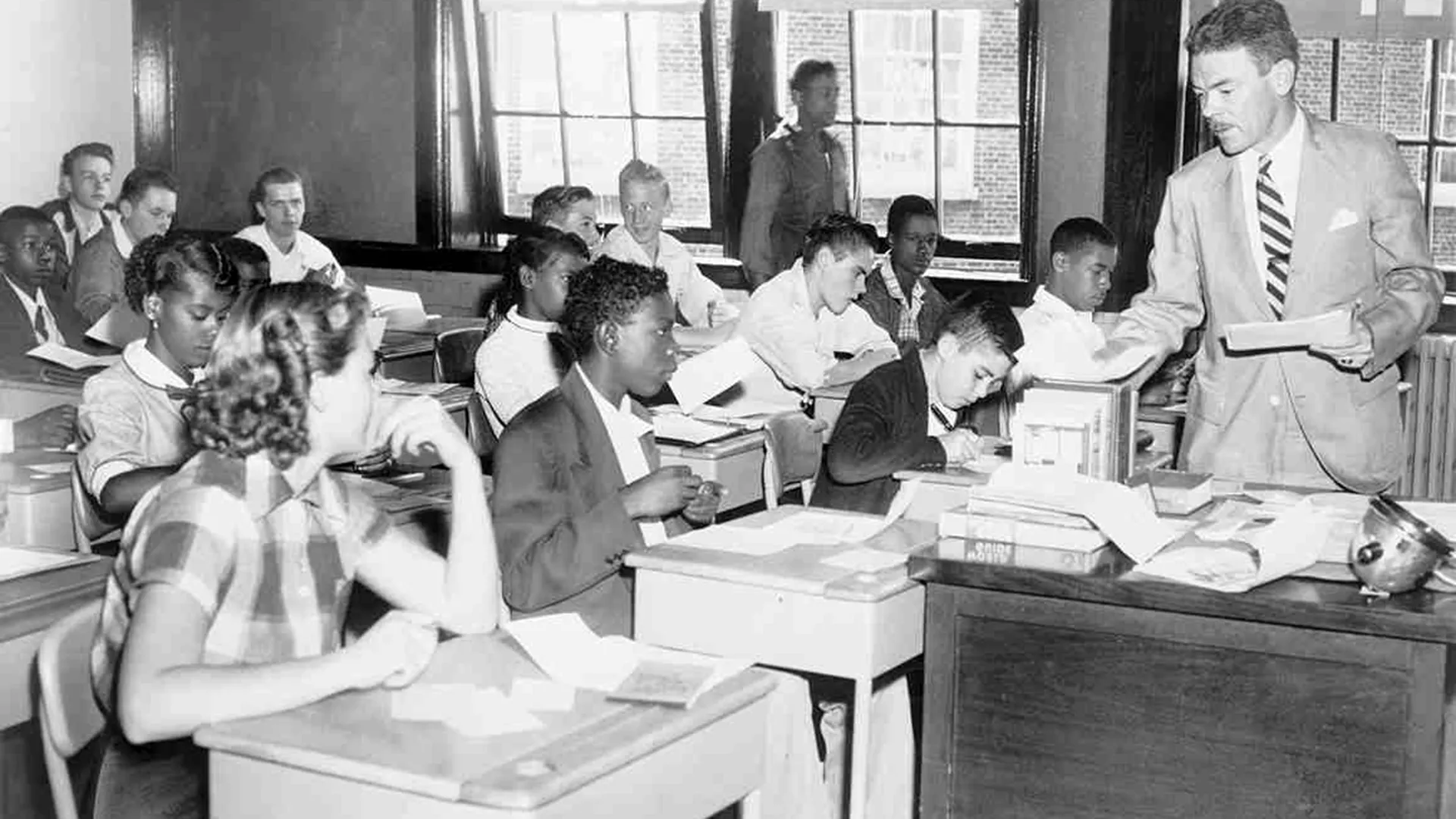
When Jim Crow laws were on the books, from the late-1800s through the mid-1900s, access to quality education remained deeply unequal.
In the mid-20th century, the Red Scare fueled efforts to remove from classrooms any books and ideas associated with communism. During the Civil Rights Movement of the 1950s and 60s, books featuring Black narratives frequently drew criticism.
Book Bans By the Numbers
The latest numbers from PEN America offer a snapshot of today’s book-banning efforts. From the books challenged most often to the states leading the nation in bans, these figures show the scope of the recent surge in school censorship.
The five most frequently banned books in U.S. public schools districts (2024 - 2025 school year) were:
A Clockwork Orange
Breathless
Sold
Last Night at the Telegraph Club
A Court of Mist and Fury
States reporting the most book bans
More than a book
School librarian Chiquita Toure, of Ohio, believes many people misunderstand what a book ban actually looks like.
“Banning is the last action,” Toure says, explaining that before that comes self-censorship, restrictions, and challenges. Librarians deciding not to purchase certain titles. Books left off displays. Parents filing formal objections.
“Those early steps matter because they create an environment where fewer ideas reach students,” she says, calling it “a form of anti-intellectualism.”
She adds: “To believe what you truly believe in, you should really be introduced to that which you do not believe in. You have to have a reasonable amount of information to make informed decisions.”
As a librarian in Columbus, she has watched challenges rise dramatically since 2020, often following national debates.
She, too, has noticed a pattern: “Most of the people who push against books … haven’t read the books in their entirety,” she says. Instead, many object after seeing an excerpt or hearing about it secondhand, she adds.
Her school district, however, requires challengers to read an entire book before filing a formal complaint and to have a child enrolled in the district. These types of policies, she says, are designed to ensure objections come from informed community members rather than outside political activists.
Most frequently challenged books about race and gender:
Gender Queer by Maia Kobabe
All Boys Aren’t Blue by George M. Johnson
The Bluest Eye by Toni Morrison
Why schools?
If the objective is controlling ideas, schools become an obvious target.
“Schools are places where ideas spread,” Barrett says. “Trying to control which books students read is therefore a really unsurprising place for repressive forces to begin.”

Educators hope schools are also where curiosity grows. In Kubo’s classroom, history lessons give students an opportunity to question, analyze, and discuss.
For example, he usually begins the school year with a relatively easy read: The Lorax. Students first discuss why anyone would object to a seemingly harmless Dr. Seuss story before gradually working toward more difficult conversations about slavery, racism, power, and oppression.
From there, his students watch portions of the 1977 television adaptation of Roots, analyze historical documentation, examine political cartoons, and compare those lessons with current events.
This, he says, “teaches them how to think.”
He repeatedly asks them questions: “Why? Who benefits? Who loses? Who wrote this? What evidence supports that claim?”
“They make these smaller connections to build bigger connections,” Kubo says.
The fear behind the pages
Across generations, efforts to restrict books have often been driven by a desire to control which stories are told and which voices are heard.
Barrett worries less about any single banned book than the atmosphere those campaigns create. “It’s more about creating a climate of fear and repression and censorship that causes teachers to second-guess what they assign and discuss in class,” she says.
Toure is concerned about what happens when students are denied opportunities to wrestle with perspectives unlike their own.
Libraries, she says, help young people “develop a sense of identity for themselves, understand lives beyond their own ZIP code, and become critical thinkers capable of making informed decisions,” she says.
Kubo worries about something different.
He worries about what students lose when history is erased. He points to Native Hawaiians, whose language and culture were pushed aside as children were forced into English-only schools.
In his classroom, he asks students to think beyond what happened and consider why it happened—and who benefited. In the end, the lesson becomes bigger than Hawai’i and centers on who gets to tell America’s story.
FAST FACTS
22,810
Nearly 7,000
3 Things You Can Do to Protect the Freedom to Read
-
Host a FREE screening of the Emmy Award winning documentary, The Librarians via Gathr. Learn how at gathr.com/films/the-librarians.
-
Unite Against Book Bans has developed book resumes to summarize the educational value of books under attack. Learn more at bookresumes.uniteagainstbookbans.org.
-
Check out NEA's Read Across America campaign and its curated selection of diverse books and resources to protect the freedom to read! Go to nea.org/ReadAcross.