Key Takeaways
- Future teachers are tackling issues that affect the profession before they enter the classroom.
- Members of NEA's Aspiring Educators program are organizing their campuses and in their states to improve the future of public education.
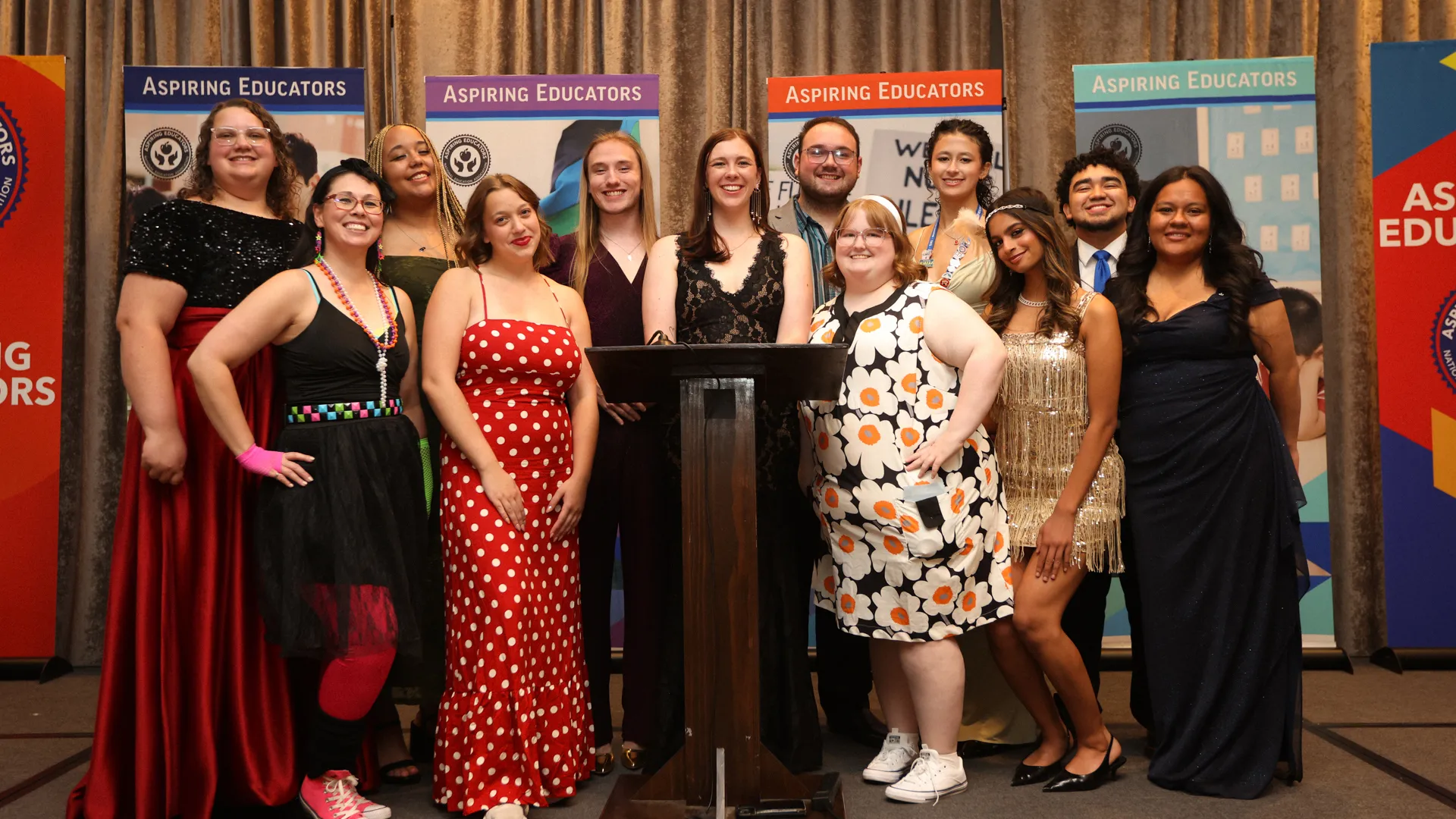
As hundreds of future educators gathered in Denver for the 2026 Aspiring Educators Conference, many arrived with something more than career goals. They came with experience organizing campaigns, meeting with lawmakers, and advocating for the future of public education.
For many attendees, advocacy is no longer viewed as something educators do after entering the classroom. It’s part of learning to become one.
Opening the conference, outgoing Aspiring Educators (AE) Chair Hannah St. Clair challenged attendees to embrace that responsibility.
Quote byHannah St. Clair

NEA President Becky Pringle built on that message, acknowledging the challenges awaiting future educators while reminding them they would not face them alone.
“This is one of the most challenging times public education has ever faced,” said Pringle, who is serving her final term as NEA president. “Lean on your union. It’s your place of safety and where you will find your people.”
The three-day conference reflected this call-to-action, underscoring the work members of the AE program are already doing in their states and communities.
Fighting for paid student teaching
For Hannah Spinner of Connecticut, advocacy has meant spending the past year helping lead a statewide campaign for paid student teaching.
Connecticut Aspiring Educators helped to advance legislation that would compensate student teachers for the work they perform during student teacher placements.
“We started again early with this year-long advocacy,” Spinner says. “We’re happy with the growth that the advocacy has made on this topic.”
Although the bill ultimately stalled over funding concerns, Spinner says the effort produced momentum that organizers plan to build on during the next legislative session.
To get real-time information on the issues that most impact AE members, the group also surveyed current and former student teachers. Most striking about this work was what the survey revealed and why members continue to push the issue.
For example, more than 96 percent of respondents reported concerns about their finances during student teaching. One participant shared that they had lived in their car while completing the required clinical experience.
“What a difference that money would have made for them during their student teaching,” Spinner says.
Making policy personal
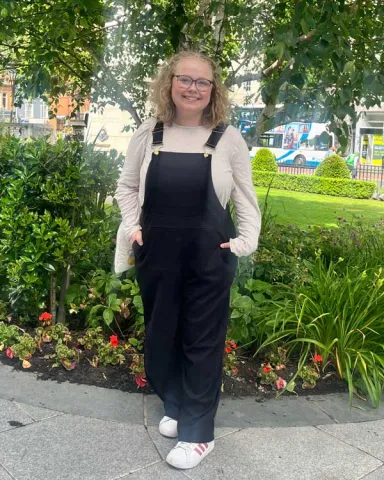
For Audry Gilbert of Kentucky, advocacy has been part of her life long before college.
A self-described “union baby,” Gilbert remembers attending rallies with family members as a child during Kentucky’s fight over teacher retirement benefits.
“There were hundreds and thousands of teachers wearing Red for Ed t-shirts,” Gilbert recalls. “I realized at that point I wanted to be a teacher, but this just made me want it more because I can be a teacher and an advocate.”
Today, among the issues Gilbert advocates for is more equitable licensure, stronger student representation in education policy, and assessment systems that measure students as whole people rather than standardized test scores alone.
Gilbert believes advocacy becomes more effective when complicated policy conversations are grounded in people’s lived experiences.
“One of the goals of our sessions is taking the issues and being able to break them down to a personal level—and in a way that’s not terrifying,” says Gilbert, who was a part of a team leading an advocacy training during the conference.
Building a more representative profession
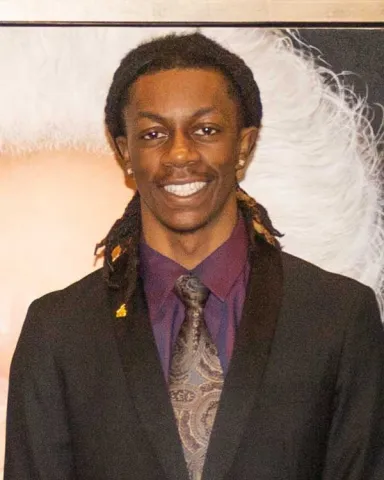
For Solomon Clemons, a business administration major at Morehouse College, in Atlanta, who plans to become a middle or high school teacher, advocacy begins with showing students they belong.
As one of relatively few Black men preparing to enter the profession, Clemons says representation matters. Working as a school-based social worker, he discovered that sometimes the most important work wasn’t a formal intervention.
“It was quite literally just me being there for them,” Clemons says. “A high five in the hallway was everything to them.”
That experience strengthened his commitment to increasing the pipeline of Black male educators.
“It starts with seeing us first,” he says, referring to the importance of students seeing Black male educators and other educators of color in front of the classroom.
Speaking up for future teachers
Travis Barnes, a recent graduate of Fort Valley State University, in Georgia, says his advocacy started in high school, when he pushed school leaders to recognize academic achievement with the same enthusiasm given to athletics. That instinct continued in college, where, as president of his AE chapter, he became the voice for peers frustrated by the student teaching placement process.
Many Aspiring Educators weren’t told where they would complete their student teaching until the middle of the semester, leaving little time to arrange transportation or prepare for placements that could be 30 to 40 minutes from campus.
“I had to have a conversation with the dean,” says Barnes. “I explained some of the problems and … what we needed to fix it.”
The conversation helped prompt change.
Barnes says now students are notified of their placements much earlier, giving them time to plan.
Looking back, Barnes says the experience reinforces a lesson he hopes other Aspiring Educators can take with them: “You can advocate for small things, too.”
Looking ahead
Delegates elected a new AE chair during the conference, ushering in the next chapter of the program’s leadership.
With nearly 80% of the vote, the newly elected chair, Stephanie Chávez of Illinois, said: “I feel so incredibly thankful to be standing here with the leaders who have helped build me as a leader. I’m so excited to step into this role.”
The incoming leader outlined priorities that include strengthening member engagement, expanding leadership opportunities for AE members, and ensuring future educators have a stronger voice in shaping the profession.
Chávez emphasizes her commitment to making the program more accessible and inclusive, building coalitions, and centering members’ voices while expanding opportunities for future educators.
Taking the work home
As St. Clair ends her time as chair, her parting words focused on the responsibility Aspiring Educators will now carry back to their campuses.
“Thank you for believing in education as a tool to change the world,” St. Clair said. “Thank you for putting your values into action and committing to positive change in your community and our country."