Key Takeaways
- In the wake of Charlie Kirk’s assassination in 2025, many faculty, teachers and other public employees were disciplined for social media posts that called him racist or anti-gay.
- Educators still have First Amendment rights, as private citizens—and NEA attorneys have advice for them on safely posting to social media.
- Karen Leader faced death threats and an administrative investigation. What helped? Her union membership, her union attorney, her tenure, and the fact that she didn’t do anything wrong.
Recently, Florida Atlantic University (FAU) professor Karen Leader reposted on X—she still calls it Twitter—an American Medical Association graphic about the importance of vaccines to children’s health. She added three emojis: a red-and-white megaphone, the “look here” arrow, and a syringe.
Around the same time, Leader reposted a U.S. congresswoman about President Trump’s 300 Capitol One bank accounts that were closed “because of money-laundering concerns,” a CNN reporter’s fact-check of Trump’s misleading vaccine claims, and a post by Hillary Clinton about the value of Head Start, the early-education program targeted by the Trump administration. Leader also reposted about the disappearing middle class, the rapacious ways of billionaires, and a Florida congressional candidate who favors single-payer healthcare to benefit all Americans.
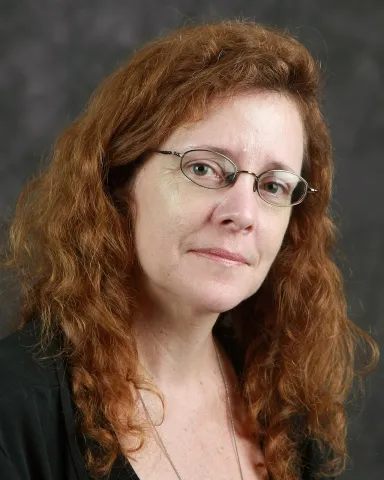
Leader is on social media a lot, she admits, but for her own good reasons. “[Posting] is a release for me,” says Leader. It’s her way of coping with the unkind and dangerous things happening in her state and in her nation. The racism. The bigotry. The lying. The coordinated disinformation between fake media and radical politicians about vaccines, COVID, the January 6 attacks, and more.
She wants to tell the truth, she says.
These days, however, it can be risky for a public-school teacher, faculty member, or staff member to tell the truth on social media—as Leader knows.
In the fall of 2025, Leader was suspended with pay following her reposts on X about Charlie Kirk, the assassinated right-wing activist. After targeting by the far-right “Libs of TikTok,” she was doxed and received death threats by phone and email. Nearly a year later, she looks back at these terrifying weeks, understanding that she was traumatized and still is.
And yet, today, she’s back in her FAU classroom and back online. “There’s no way I can make myself invisible,” she says.
Do Educators Have the Right to Post on Social Media?
Nicole Cennamo, from NEA's Office of the General Counsel, recently wrote for NEA Today about educators’ rights and responsibilities when it comes to social media, and how faculty, teachers, and staff can “engage meaningfully in public discourse while reducing risk to [their] professional standing.”
A key factor: Did the speech occur off duty? Public employers, like schools and universities, do have authority to regulate their employees’ on-duty speech that falls outside the educator’s academic freedom. But when workers are off duty, they have much broader First Amendment protection.
To increase the odds that off-duty speech qualifies for First Amendment protections, educators generally have to show three things, Cennamo advises.
- You are speaking as a private citizen—and not in relation to your official job duties. Avoid references to your students, school, or university. Use personal devices when posting.
- Your post addresses a matter of public concern. “Even if you are speaking as a private citizen, your speech must relate to a matter of public concern—or an issue of political, social, or community importance—for it to be protected under the First Amendment,” Cennamo notes.
- Your speech will not disrupt school/institutional operations. “Schools and universities must demonstrate actual or reasonably foreseeable disruption, such as interference with your job performance, the institution’s educational mission, or day-to-day operations,” Cennamo adds.
Additionally, Cennamo advises union members to keep in mind any state laws that may provide additional protections or limitations, and to be aware of district or institutional social media policies.
NEA and its state and local affiliates can help members who face discipline for social media posts, Cennamo notes.
In Karen Leader’s case, this was helpful.
Who is Karen Leader?
Leader is a longstanding member of NEA Higher Ed, through the United Faculty of Florida chapter at FAU, and a popular professor of modern and contemporary art history at FAU for nearly 20 years. She’s white, middle-aged, has adequate money in her retirement account, and been tenured since 2016. Her students love her.
In other words—in her own words—she “has a lot of privilege,” and she’s determined to use it in defense of people who don’t.
When the fall semester began last year, the big issue on FAU’s campus was what’s known as a “287(g) agreement,” between recently hired FAU President Adam Hasner, a former private prison executive whose hiring many FAU students opposed, and U.S. Immigration and Customs Enforcement (ICE). “It’s almost his first act as president, to invite ICE on campus,” says Leader, and it’s a move that terrified many of the students at FAU, a federally designated Hispanic-serving institution.
In early September, Leader was invited by students to speak at a student-organized, FAU-permitted, anti-287(g) protest. “I was standing on the steps of the administrative building,” she recalls. “Hasner invited four other law enforcement agencies to be present [in addition to FAU police.] There were horse-mounted police, bike police, state police in riot gear, and roof snipers for a student-organized protest that had crossed all the T’s in terms of permitting.
“So, I added a line to my speech, pointing to the various police officers, and said, ‘This is not normal!’” Leader recalls.
For this speech, and especially that line, Leader went a bit viral in South Florida media. She figures this likely—almost definitely—irritated Hasner and his coterie.
Four days later, Charlie Kirk was shot and killed on a stage in Utah.
Investigated, Exonerated, Compensated
In life, Kirk railed against American diversity and claimed Jewish people control colleges and Hollywood. According to a New York Times recounting of his political messages, he called the Civil Rights Act a “mistake,” and, in 2024, said, “If I see a Black pilot, I’m going to be like, ‘Boy, I hope he’s qualified.’”
When he was killed, social media blew up. While his followers mourned, thousands of others called Kirk racist and anti-gay, offering versions of ‘sorry-not-sorry.’ In response, conservative activists went on the hunt, seeking and publicizing posters who were critical of Kirk, tagging their employers and calling for them to be fired.
A retired law enforcement officer in Tennessee was jailed for 37 days after posting a meme that quoted Trump after a school shooting, saying “We have to get over it.” An Austin Peay State University professor, also in Tennessee, was fired after reposting an old Newsweek headline that said, “Charlie Kirk Says Gun Deaths 'Unfortunately' Worth it to Keep 2nd Amendment."
A Florida biologist who posted to her personal Instagram that Kirk wouldn’t care about kids being shot in a school? Fired. A Missouri sheriff’s deputy who posted that Kirk was the kind of person who wanted to see gay people, like her son, stoned to death? Fired—and stalked in her neighborhood. A Ball State University health educator who called Kirk’s death a “reflection of the violence, fear, and hatred he sowed”?
Also fired.
In the wake of Kirk’s assassination, more than 600 people were fired, suspended, or investigated for statements about his death, according to a Reuters investigation. In Texas alone, state officials investigated hundreds of public-school teachers.
Today, many are winning free-speech lawsuits with big-money settlements. The jailed Tennessee officer? He won $835,000 from the state. The Austin Peay professor? He got $500,000 and is now suing U.S. Senator Marsha Blackburn. The Florida biologist won $485,000; the Ball State educator $225,000.
“Abhorrent, Evil, Vile, Sick”
In the hours and days after Kirk’s killing, Leader reposted dozens of posts from other X users. “It was evidence of [Kirk’s] misogyny, homophobia, transphobia,” she says.
A former Florida Gov. Ron DeSantis campaign worker found Leader’s reposts, likely through a keyword search. She took screenshots and shared them on X, tagging FAU. "Commentators began painting me as a lunatic, genetic mutation, abhorrent, evil, vile, sick, deranged and nasty (those are just some of the G-rated terms used)," recalled Leader, in an essay she wrote for PEN America as part of their "Snapshots of Censorship" project. Within hours of the staffer's post, Hasner, the FAU president, announced on Facebook and X that Leader had been placed on leave.
That post, by the FAU president who had days earlier heard Leader denounce his administration, was the match that lit a national firestorm around Leader, she says. Libs of TikTok (LoTT), the account that once called for openly gay teachers to be fired, posted to its roughly 4 million followers about Leader, saying “another one bites the dust.”
Death threats piled in, both to Leader’s personal phone and to the FAU art history department. Her home address was doxed. "I had joined LoTT‘s daily doxing docket, a strategy the account’s owner, Chaya Raichik, has profited mightily from by exploiting the algorithm’s incentivization of inflammatory rhetoric," Leader explained, to PEN America. In other words, while Leader heard death threats, account owners and posters on social media heard the the ka-ching of profits that follow their "rage bait" on social media.
Leader reached out to FAU and local police for help, but not only were they uninterested in investigating the violent callers, “They didn’t even know the word ‘doxing,’ Leader says.
Leader was trapped in her home but refused to be cowed. “I have a lot of privilege, including having a union lawyer!” she says. Leader talked to state and national journalists, asserting faculty’s First Amendment rights. She pointed to the U.S. Constitution—and her union contract.
FAU paid for a former Florida Supreme Court justice to investigate Leader and two other professors who had posted around Kirk. After interviewing them, reading the United Faculty of Florida collectively bargained contract and other local and state policies, the hired attorney's report concluded their posts were “speech by private citizens on matters of public concern” and there was “no credible evidence of disruption to instruction, student welfare, or University operations.”
Exoneration didn’t surprise Leader. “I knew I hadn’t said anything threatening. I hadn’t celebrated the shooting. I hadn’t said he deserved it. I hadn’t said anything violent. And I had posted as a private citizen,” she says.
Today, Leader is back in the classroom—and yes, still on X. “I want them to know they didn’t scare me away,” she says.
But the trauma from 2025 remains. The people who sent death threats are still out there, uninvestigated and uninhibited. Leader still works for an administration that failed to protect her, and in fact made everything worse, she says. “I know it could happen again,” she says, “and I don’t have any control over that. I could leave social media today and it wouldn’t matter.
"So much damage has been done.”