Key Takeaways
- Marfan syndrome affects about 1 in 5,000 people, and is a disorder that affects the body's connective tissues.
- When Monty LaBelle was in Lindsey Massey's third-grade classroom, a few years ago, they began working together to educate others about Marfan.
- Today, they have developed a new resource for educators, sharing information about Marfan and how best to support students with Marfan.
For Massachusetts special education teacher Lindsey Massey, what began as an effort to better support one of her former students has grown into a resource designed to help other educators support students with Marfan syndrome.
The condition can make navigating the classroom more difficult and create challenges that teachers may not immediately recognize.
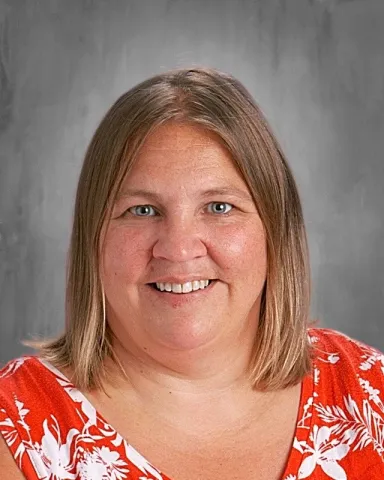
“Every single one of them, every single student or person with Marfan is different and they all need to be...understood and listened to. It impacts every person differently so they all need to be treated as individuals and not as students with Marfan," says Massey, who now teaches at Paxton Center School in Paxton, Mass. "They're more than just a condition.”
Her former student, 11-year-old Monty LaBelle, lives with Marfan syndrome, a condition her father also has. Her mother, Stefanie LaBelle, is a strong advocate for greater awareness and understanding of the condition.
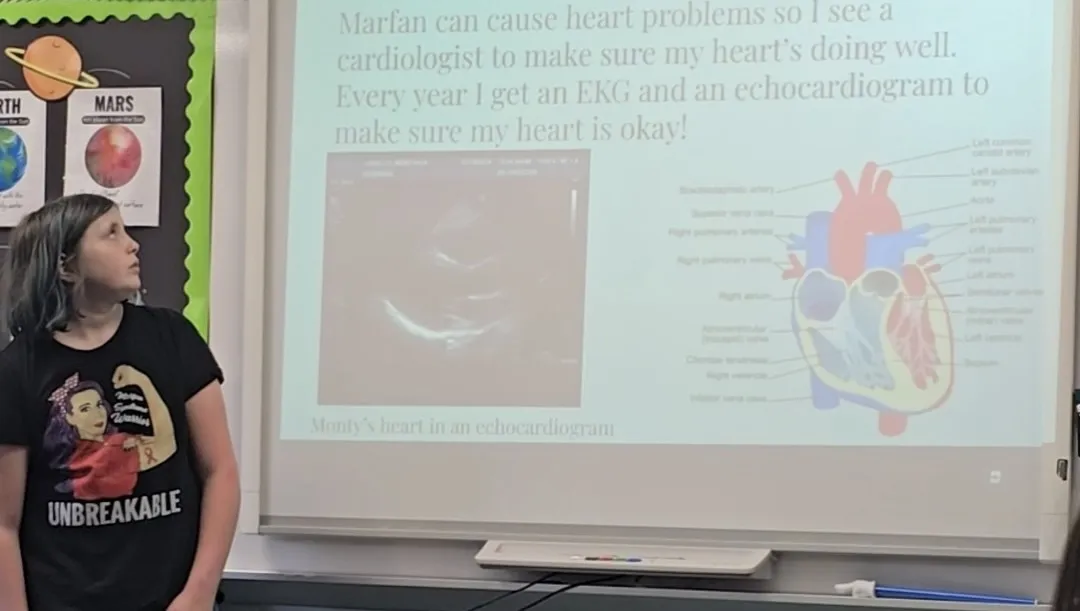
In 2024, when Monty was in third grade at Heritage School in Charlton, Mass., her mother mentioned to Massey how other students struggled to understand aspects of Monty's condition. Massey suggested that she and Monty research Marfan syndrome and create a presentation to share with her classmates. She hoped to give Monty the opportunity to advocate for herself while helping answer her peers' questions.
Monty went on to present alongside her physician, helping her classmates understand that while her condition makes some aspects of her life different, she still enjoys many of the same activities they do.
Monty is proud to speak openly about her condition and hopes sharing her experience will help other students with Marfan syndrome.
"I think it could help a lot of people because there's one more kid that I had found out in my old school, that had it. I never got to meet her, but she didn't stand up and speak a lot about it, so I wonder if she gets that, if it will help her," Monty says.
What To Know
According to the Marfan Foundation, Marfan syndrome is a genetic disorder that affects the body’s connective tissue, which supports organs, bones, and other structures. The condition primarily affects the heart, blood vessels, bones, joints, and eyes. While it does not affect intelligence, it can impact physical growth and development.
Marfan syndrome affects approximately 1 in 5,000 people, although specific data on how many children it impacts is limited. About three in four people with the condition inherit it from a parent who also has Marfan syndrome.
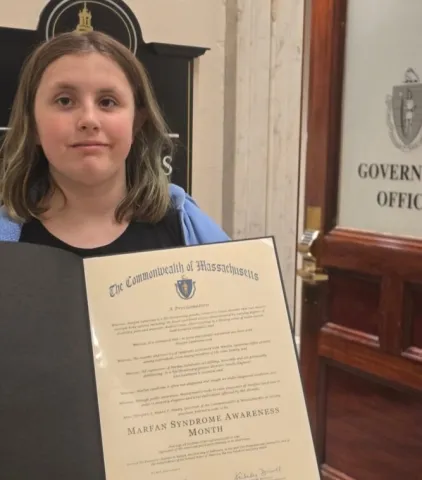
For Monty, some of her more visible signs include her tall stature, as she stands nearly 5 feet, 6 inches at age 11, plus long fingers and larger shoe size. However, many of the challenges she experiences, including scoliosis and difficulties with muscle strength, aren't immediately identifiable.
According to a Marfan Foundation spokesperson, many young people with Marfan syndrome struggle with fatigue, eyesight issues, and joint pain. Some may also face restrictions on contact sports and heavy lifting. Monty, however, is able to stay active, participating in travel soccer and basketball.
Some of the less visible challenges Monty faces include needing frequent bathroom breaks, frequently visting the school nurse, and missing classes for medical appointments. These needs can sometimes lead to questions from classmates and teachers who may not fully understand her condition.
LaBelle recalls the frustration of having Monty's medical needs questioned by previous teachers.
"It's one thing if it's peer-to-peer but when it's your teacher asking those questions in front of a classroom, it's frustrating," LaBelle says.
Massey emphasizes the importance of educators looking beyond what they can see and recognize that students may face challenges that aren't immediately apparent.
"You don't understand what they're going through. And I think it's important for people to realize, even when it comes to more than just Marfan's, that there's a lot going on in these kids that we can't see," Massey says. "And just because you can't see it doesn't mean it's not there."
Turning Awareness into Action
Massey also emphasizes the importance of understanding the potentially life-threatening risks associated with the condition, noting that a person's health can change suddenly.
For Massey, these risks are particularly personal. Her best friend from high school has Marfan syndrome and experienced the tragic loss of her daughter in 2024 to heart complications associated with the condition.
The loss was especially difficult for Massey, who had already begun working with Monty on a presentation about Marfan syndrome when she received the news. Despite the emotional toll, she returned to school the following day and continued working with Monty on the project.
“I did learn more as I went. It was probably semi therapeutic to go through it and tell her mom, like I know sometimes like teachers or school staff thinks you're being over overbearing," Massey says. "I was like, I never will think that. I said please don't ever stop advocating for her.”
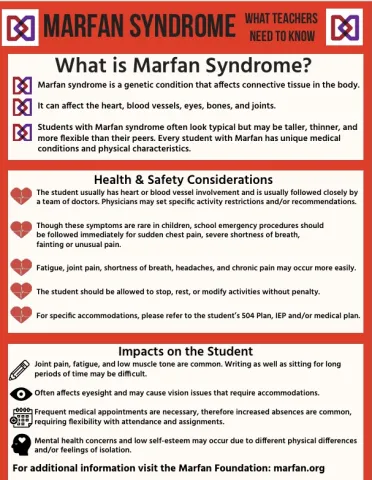
As Monty prepared to transition to middle school, Massey and Monty worked to create a more concise resource to help educators understand the challenges students with Marfan syndrome may face.
Massey recognized that teachers often have limited time and many students to support. With the existing educational resource from The Marfan Foundation being 36 pages, she knew they needed to create something shorter and more manageable to distribute to Monty’s future teachers.
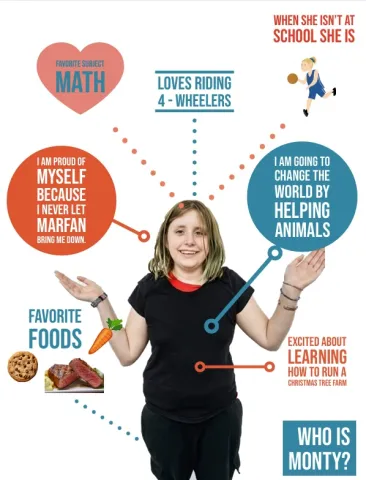
The two-sided flyer gives a quick overview of the condition, including how it may impact students and important health and safety considerations.
“So the front is all about Marfan's and how it can affect the kids but the back side is who Monty is as a child, like who is she, not what is her symptoms,” LaBelle says. “And that's probably my favorite part of the one pager is... you get to know about what she has, but more importantly not what is she from a medical standpoint.”