Meet the 2026 National Teacher of the Year

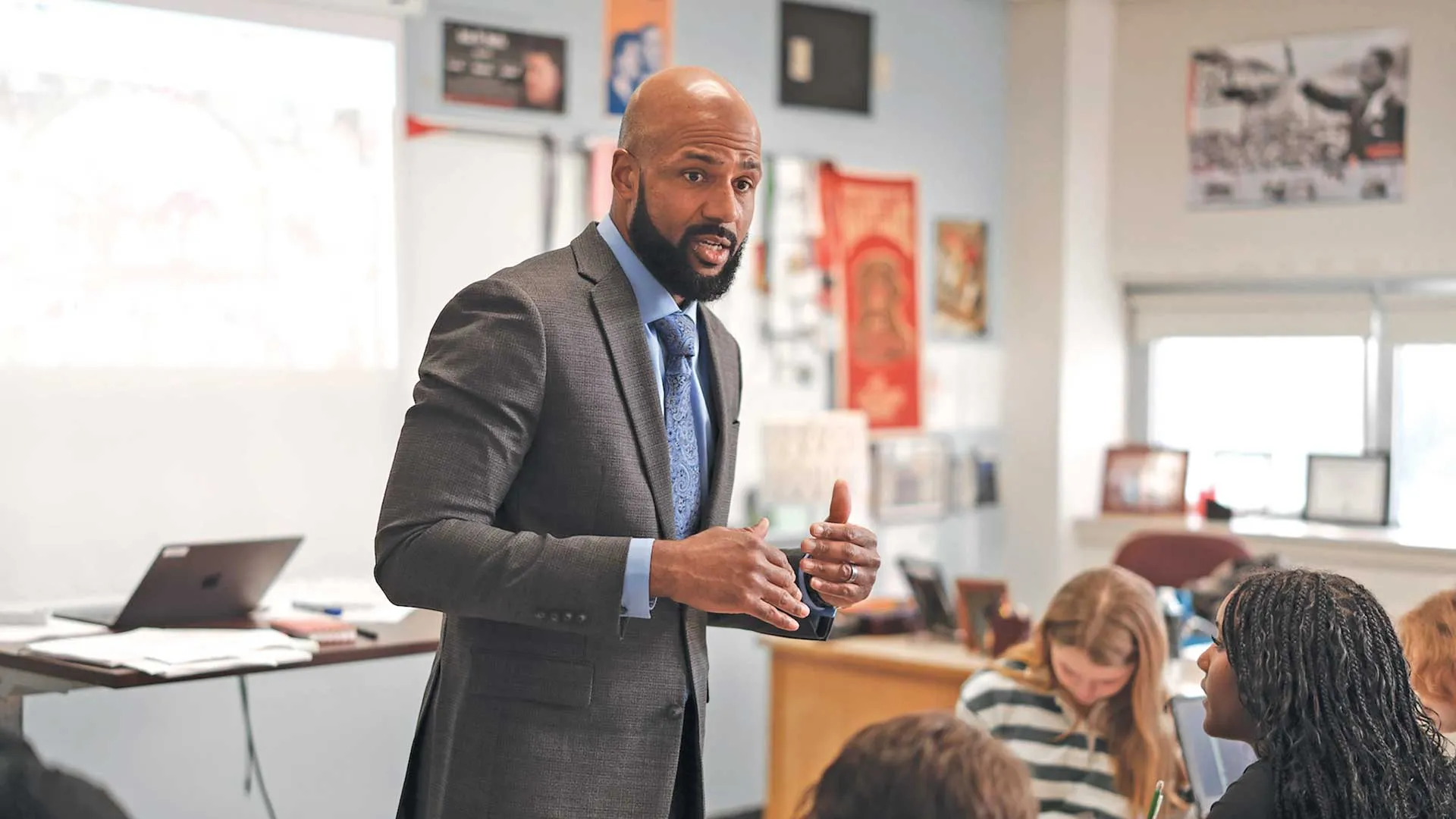
Pennsylvania social studies teacher Leon Smith won the 2026 National Teacher of the Year Award—the nation’s highest honor for the profession. Upon announcing the award, the Council of Chief State School Officers lauded Smith’s commitment to critical thinking, civic engagement, inclusion, and elevating student voices.
NEA President Becky Pringle also congratulated Smith, an NEA member who teaches advanced placement (AP) U.S. history and AP African American studies at Haverford High School. “Leon embodies the core values of an exemplary educator, sparking imagination, curiosity, and critical thinking, and creating an inclusive environment where every student feels welcome,” she said. “His work paves the way to ensure a better and brighter tomorrow for all students.”
When Haverford students expressed frustration at the lack of diverse perspectives in the curriculum, district leaders turned to Smith to co-lead an effort to establish a culture of more inclusivity and belonging. Smith’s dedication and work contributed to the development, language, and implementation of these goals across the district.
“It was important for me to use this opportunity to uplift the voices of students and mentees who felt the school environment was unsafe and exclusionary,” he recalled.
Smith’s leadership was instrumental in the creation of the first African American history course in the district, first as an elective, then as an AP class.
Smith’s leadership also extends to championing the recruitment and retention of teachers, especially educators of color. For most of his career at Haverford, Smith was the only Black teacher in his building.
“Being the only Black teacher motivated me to deepen my learning on the state of the teaching profession and advocate for greater educator diversity at both the state and federal levels. That passion has led me to leadership roles while still in the classroom.”
—Leon Smith, 2026 National Teacher of the Year
NEA Data: A Look at Educator Pay Trends
This spring, NEA released its annual educator pay data for K–12 teachers and education support professionals (ESPs). Although average pay increases in 2024 – 2025 slightly outpaced the rate of inflation, a look at the past 10 years shows teachers and support staff have actually lost ground when accounting for inflation.
Here are some of the highlights:
The average public school teacher’s salary increased from $72,000 in 2023–2024 to approximately $74,500; in 2024–2025, a gain of 3.5 percent.
More school districts than ever pay starting salaries of at least $40,000; 10,303 districts (91 percent of districts surveyed) have starting teacher salaries of that amount or more.
Among full-time support staff in K–12 schools, average earnings in 2024–2025 were $36,360—about $1,400 more than the prior year. Adjusting for inflation, ESP pay has fallen nearly 8.9 percent over the past decade.
Teachers earn 24 percent more on average in states with collective bargaining, and ESPs earn 15 percent more than their peers in states without collective bargaining.
Section with embed
Is Grade Inflation That Big of a Deal?
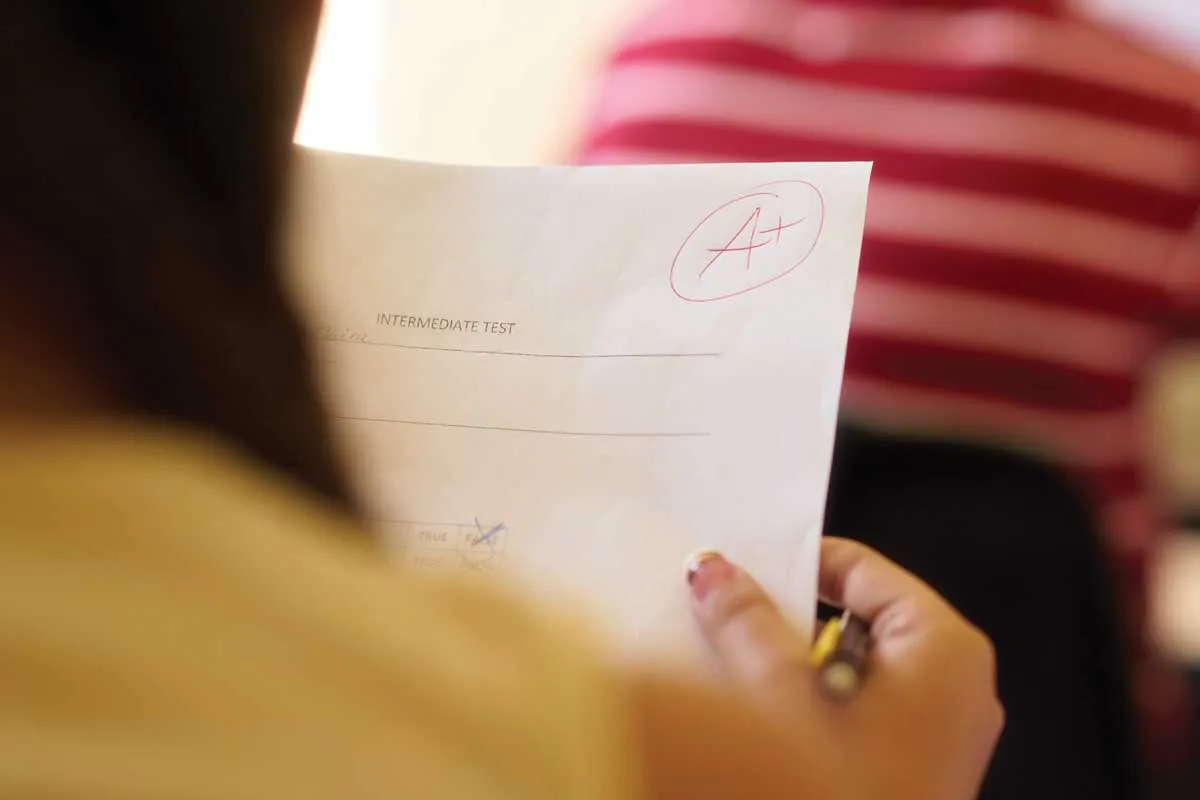
The most common grade today in U.S. high schools and college classrooms is an A, according to the College Board.
And it’s not because all students are above average. Even as grades go up, student achievement—as measured by the National Assessment of Educational Progress—is going down.
The cause is “grade inflation,” or the common, decades-old practice of handing out A’s for lesser work, due to constant, consequential demands by students, parents, and administrators.
For example, take Harvard University, where last year, 84 percent of all undergraduate grades were an A or A-minus. Meanwhile, in 2019, a high school in Arlington, Va., had 213 valedictorians among its graduating class of 595—and every one of them had a GPA of at least 4.0.
Grade inflation is prevalent—but does it really matter? New research says it may. A study co-written by a University of Texas at Austin economist found that high school students who experience more lenient grading are less likely to pass subsequent courses, to graduate from high school and go to college, and will earn significantly less money over the course of their lives.
Still, many educators say the outrage around grade inflation is misplaced and it’s just another way to vilify educators, pile on “kids today,” and distract public attention from real problems facing education. Grading often has nothing to do with learning, they say, and research has shown that it can increase anxiety and make students avoid more challenging courses. When it comes to incentivizing students or assessing what they’ve learned, there are better ways to do it than grading. “We need to end our reliance on traditional grades and create new systems based on what we know is true about learning and motivation,” Massachusetts teacher Seth Czarnicki writes in an essay for local public radio.

Many Teachers Change Lessons to Avoid Backlash
According to the 2026 iCivics Teacher Survey, 52 percent of teachers believe teaching civics “now feels difficult,” and 59 percent are concerned about a potential backlash for teaching something “the wrong way.”
Thirty-five percent report that the climate in their schools and communities has caused them to change or remove lessons to prevent any sort of potential backlash. The divisive political environment has made 21 percent of teachers think about leaving their position.
Overall, large majorities of teachers report a strong preparedness to teach civics (76.2%) and meaningful support from school or district administration (65.2%).

Are Students Still Reading Full Books?
Amidst widespread national concern about student reading habits (or lack of) and excessive time spent in front of screens, a perception that books are disappearing altogether from schools has begun to take hold. Many believe that English language arts (ELA) teachers have mostly stopped assigning complete books or texts.
But is that really happening? A recent survey suggests that this concern may be exaggerated, but the picture is murky.
According to a 2026 RAND survey, during the 2024 – 2025 school year, two-thirds of secondary ELA teachers said that they planned to assign one to four full books to their students. And 24 percent said they assigned more books than were in their curricula.
“Altogether, these results suggest that nearly all secondary ELA teachers—about 90 percent—assign full books to students, although a sizable proportion of teachers assign a small number of books,” the authors of the report conclude.
RAND also found that roughly 80 percent of elementary school teachers reported assigning at least one full book a year but are generally more likely than their secondary school counterparts to not assign full texts at all.
Fewer books, however, are being assigned in low-income schools and in schools with a majority of students of color, revealing inequities in access, the researchers noted. Most teachers in these schools reported assigning about three full books in the school year—one full book less than their counterparts in more affluent schools and majority white schools.
These teachers were also more likely than their counterparts to report assigning no books or few books (one or two) and were less likely to assign a higher number of books (five to nine).
What Would Make You Feel More Appreciated?
NEA recently asked 1,000 educators what would make them feel truly appreciated. More than a third said better pay would be most meaningful, followed by greater respect and support. Teachers were also asked what would make the biggest difference in their daily lives.
Seventy-seven percent again said better pay, followed by more planning time, and smaller class sizes.
Section with embed


We Want to Hear from You
Do you have a story to share? Or some feedback for the NEA Today team? Click on the link below to contact us.
Get more from
We're here to help you succeed in your career, advocate for public school students, and stay up to date on the latest education news. Sign up to stay informed.

Great public schools for every student
The National Education Association (NEA), the nation's largest professional employee organization, is committed to advancing the cause of public education. NEA's 3 million members work at every level of education—from pre-school to university graduate programs. NEA has affiliate organizations in every state and in more than 14,000 communities across the United States.