Key Takeaways
- A new survey by the RAND Corporation suggests fewer teachers are reporting frequent job-related stress. The survey also asked about symptoms of depression, the ability to cope with stress, and burnout.
- The survey found, however, that teachers in 2026 were more likely than similar working adults to report experiencing poor well-being on all four indicators—a consistent pattern since 2021.
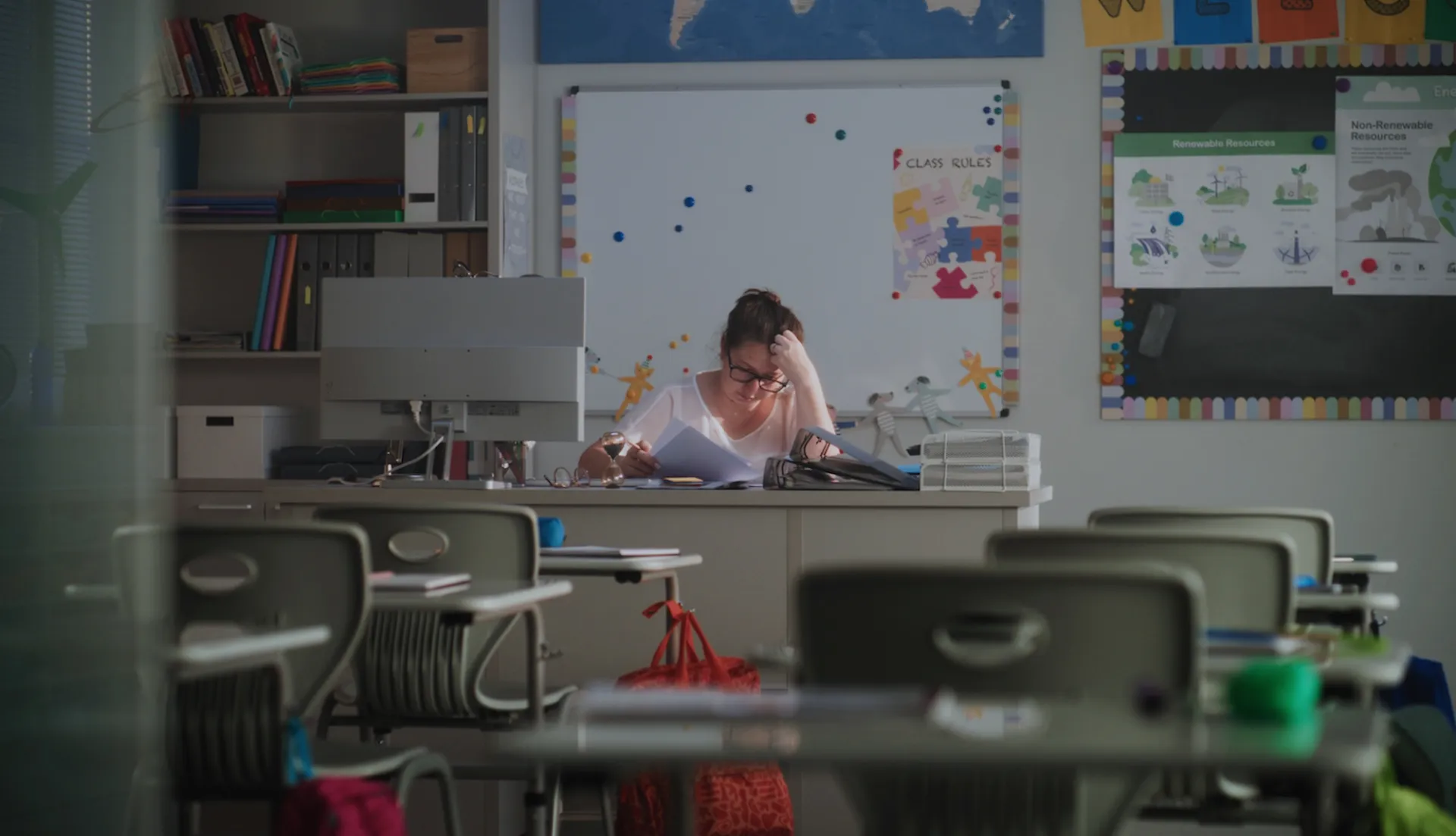
- Top sources of job-related stress for teachers include student behavior, low pay, working too many hours outside of their contract, and administrative work outside of teaching.
When teacher Stephanie Castro became pregnant a few years ago, the district she works for—Los Angeles United School District, the second largest in the country—didn’t offer any paternal leave (California has no statewide law family leave policy for public employees).
“I had to go on leave a month before I was due, and I had to use all my sick leave,” she recalls. “I wasn’t even sure if I could even afford to start a family. The stress and anxiety were terrible.”
In April, Castro and teachers across the district celebrated when United Teachers Los Angeles (UTLA) secured an historic win at the bargaining table—four weeks of paid parental leave. The California Teachers Association is now leading the charge to pass a statewide law granting public school employees up to 14 weeks of leave with full pay.
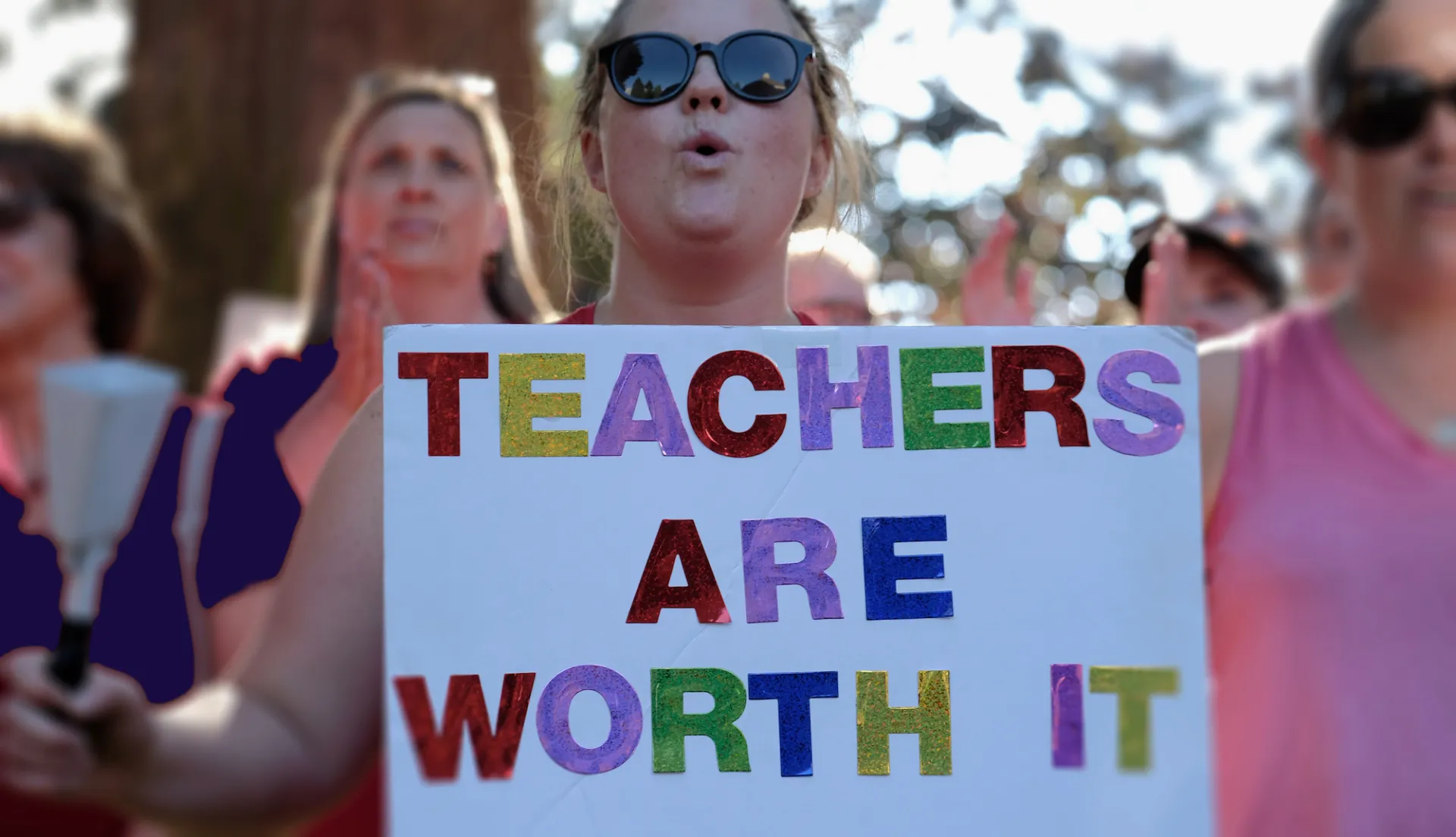
Union members know that teacher well-being is a key driver in their decision to stay in the profession, and addressing burnout and exhaustion among educators should be a national priority. A new study by RAND underscores this urgency.
RAND researchers found that in 2026, teachers were more likely than similar working adults to report experiencing poor well-being on every indicator. That gap has been consistent since RAND began tracking it in 2021.
There is some encouraging news, however. The number of teachers who reported experiencing frequent job-related stress has declined—from 62 percent in 2025 to 55 percent in 2026. And the share of teachers who reported difficulty coping with job-related stress dropped from 21 percent in 2025 to 15 percent in 2026.
The numbers are still high, says Elizabeth Steiner, lead author of the RAND report, especially when compared to other workers.
“Teacher well-being has leveled off since the worst of the pandemic and improved slightly this year, but teachers still fare worse than other college-educated working adults,” Steiner told EdSource. “For many teachers, high stress and financial strain remain a persistent part of the job.”
Section with embed
Four Measures of Well-Being
RAND’s State of the American Teacher Survey, funded in part by the National Education Association, collected responses from 829 K-12 public school teachers across the country. For this new report, RAND compared responses with a separate survey of similar working adults (defined as between the ages of 18 and 65, holding at least a bachelor’s degree, working at least 35 hours per week and not as a K-12 teacher).
Overall, the survey found that the share of teachers who intended to leave their jobs was 18 percent. About one in four teachers plan to stay in teaching “as long as they are able.”
On each of the survey’s four measures—frequent job-related stress, difficulty coping with job-related stress, symptoms of depression, and burnout—teachers reported experiencing poorer well-being than other working adults in 2026.
For example, 55 percent of teachers reported frequent job-related stress, compared to 34 percent of similar working adults. And fifty-seven percent of teachers reported feeling burned out, compared to 36 percent of similar working adults.
Fewer teachers in 2026 reported frequent job-related stress, difficulty coping with stress and depression symptoms than in 2021. The percentages of teachers reporting burnout, however, have been hovering around 55 percent consistently since 2021.
The top source of job-related stress? Managing student behavior was selected by more than half of the respondents. Nearly one-third of respondents also cited low salary (33%), working too many hours outside of contract hours (32%), and too much administrative work (32%) as top sources of job-related stress.
Female Teachers More Likely to Report Job-Related Stress
RAND also found that female teachers are consistently more likely to report experiencing frequent job-related stress than their male counterparts and male or female similar working adults. In 2026, 59 percent of female teachers experienced frequent job-related stress compared with 44 percent of male teachers—a consistent gap since 2021. Female teachers are also more likely to report feelings of burnout than male teachers.
The authors cite a few possible reasons for this trend, including differences in how female teachers experience working conditions, lower pay (In 2026, female teachers earned about $7,400 less in base pay, on average, than male teachers), or differences in family demands and responsibilities that impact work-life.
For example, according to the RAND survey, teachers with children reported spending 20 more hours per week on household duties, on average, than those without children. And female teachers with children spend more hours per week on household duties than male teachers with children. Female teachers with children also reported the fewest hours of leisure time at 30 hours per week. Male teachers without children reported the most leisure time, at 56 hours per week.
“So many teachers are women, and so many have children,” says Stephanie Castro. “We need to feel more supported in our decision to start families and relieve the physical and mental pressures. So fighting for parental leave and other things that help work-life balance is a gender equity issue.”
Other highlights from the RAND survey:
- Teachers' average base salary was $75,599 in 2026. Similar working adults reported an average base salary of slightly over $105,000.
- The average teacher reported spending roughly 54 hours per week on teaching and school-related activities (50 hours) and jobs outside the school system (4 hours).
- Thirty percent of teachers reported holding a job outside their school systems, spending 13 hours per week, on average, working at this job.
- Roughly 94 percent of teachers report spending their own money on school supplies. The average teacher spent $665 in 2024-25.