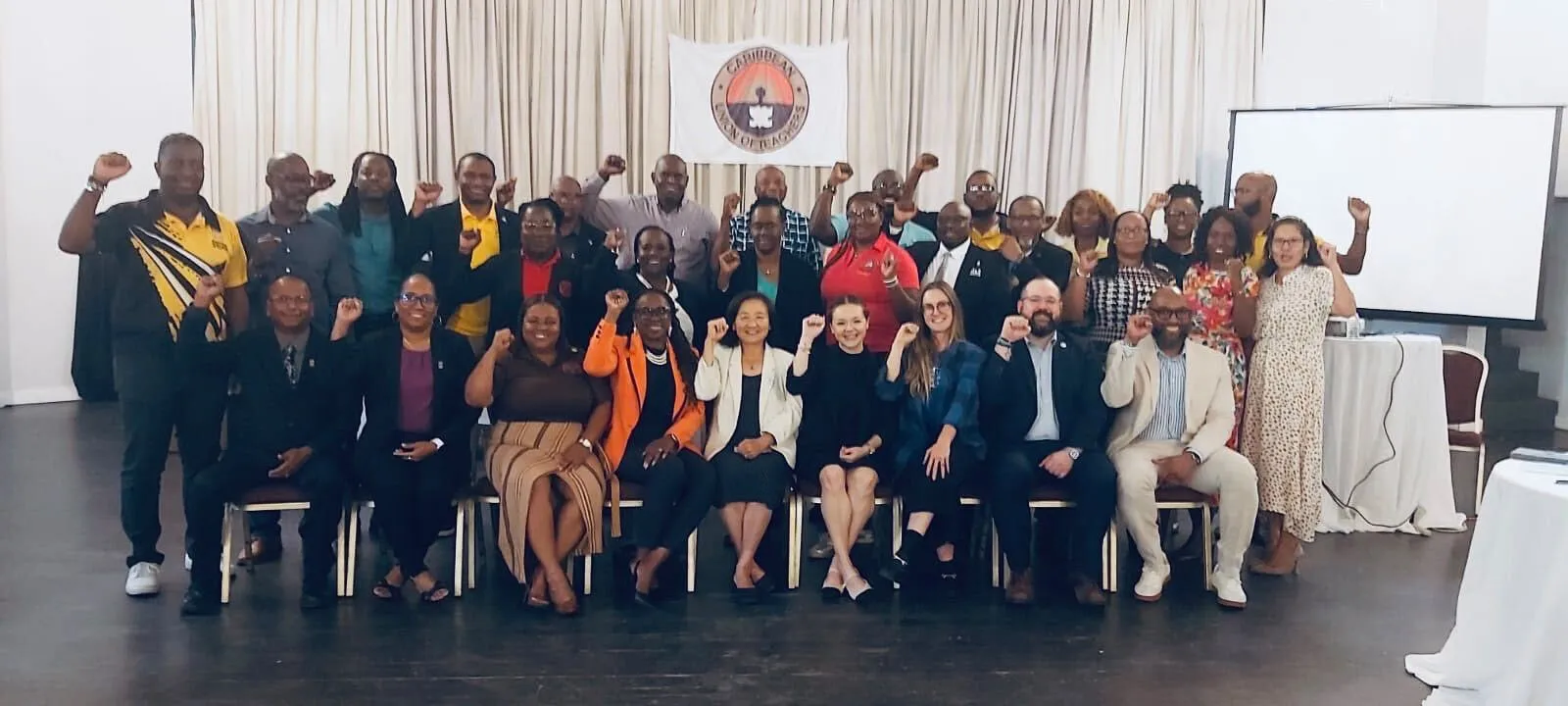
For Melissa St. Rose, the Status of Women Chair for the Caribbean Union of Teachers (CUT), and the General Secretary of the Grenada Union of Teachers, the training was more than an opportunity to deepen the connection between CUT and the NEA. It showed her that educators in the Caribbean are not alone, and that they can rely on educators around the world for support.
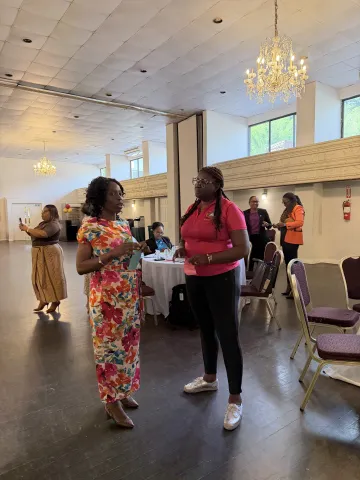
“The fact that the NEA came to us showed that, while we are within the Caribbean context, there are educators elsewhere who are willing to partner with us around shared values and objectives,” she said.
St. Rose was among about 50 leaders from CUT who joined a mid-July training through a partnership between CUT and NEA that focused on understanding, practicing, and communicating power among educators.
What is the Caribbean Union of Teachers?
CUT was created in 1935 in Trinidad and Tobago as a way for the working class to fight against and dismantle Spanish and British colonial structures in the country and improve their working conditions.
In 1999, Education International officially recognized the organization as a representative body for teachers in the Caribbean, and in 2015, CUT officially registered as a trade union.
The relationship between CUT and the NEA has steadily grown in recent years. NEA has supported the organization and the region through initiatives such as EI Go Public! Fund Education Campaign, development cooperation, leadership development, organizing support, and humanitarian assistance following hurricanes and earthquakes in the Caribbean.
These efforts have strengthened regional advocacy for greater investment in public education and created new opportunities for collaboration among education unions across the region.
Why the Training Was Successful
The training worked because it was designed around the specific needs and priorities of CUT and approached the training as a partnership where leaders were prepared to listen and learn from each other.
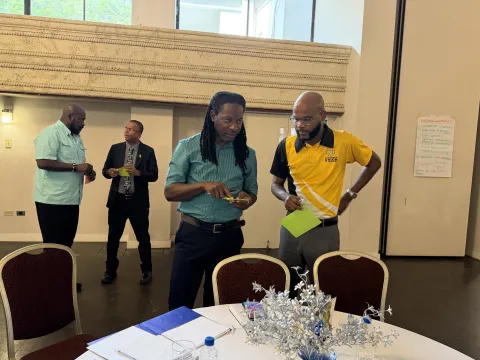
Educators present were trained in practical skills like power mapping, building strategic alliances, message framing, and navigating conflict in an interactive manner where hands-on learning was encouraged.
Gilbert Carmichael, the General Secretary of the Barbados Union of Teachers, touched on why this training was special to him.
“Sometimes we operate in a vacuum and only see the space in which we are operating. Having the experiences of others across the Caribbean, and an international perspective, can help reshape our view of leadership,” he said.
Why International Solidarity Matters
International solidarity matters because educators around the world face many of the same challenges—from attacks on public education and workers’ rights to war, inequality, and threats to democracy. By standing together, we can learn from one another, support each other, and make our voices stronger.
As a founding member of Education International, the NEA is part of a global network representing more than 33 million education workers in 180 countries. We’ve seen the power of that network firsthand. Thousands of educators around the world have sent messages, photos, chants, and letters of support to American educators fighting for public education, diversity and inclusion, freedom of speech, and democracy. These connections remind us that we are not alone—and that we are stronger when we stand together. They also help us build the kind of world we want our students to inherit.