Key Takeaways
- A bachelor's degree typically is awarded after 120 credits (and four years). But colleges and universities are rapidly introducing shortened, 90-credit degrees, in an attempt to manage costs.
- These degrees seem engineered for low-income, working-class students—but they will further deepen the gulf between rich and poor in America, union members warn.
- Given a choice, employers will surely prefer graduates with broader education, say academic advisors—and these new 3-year degrees will likely prohibit gradate school and professional licenses.
The next bad idea coming to your state’s higher education board may be the 90-credit degree—a watered-down approach to higher education that union members say will deepen wealth divides and dig bigger holes for working-class students.
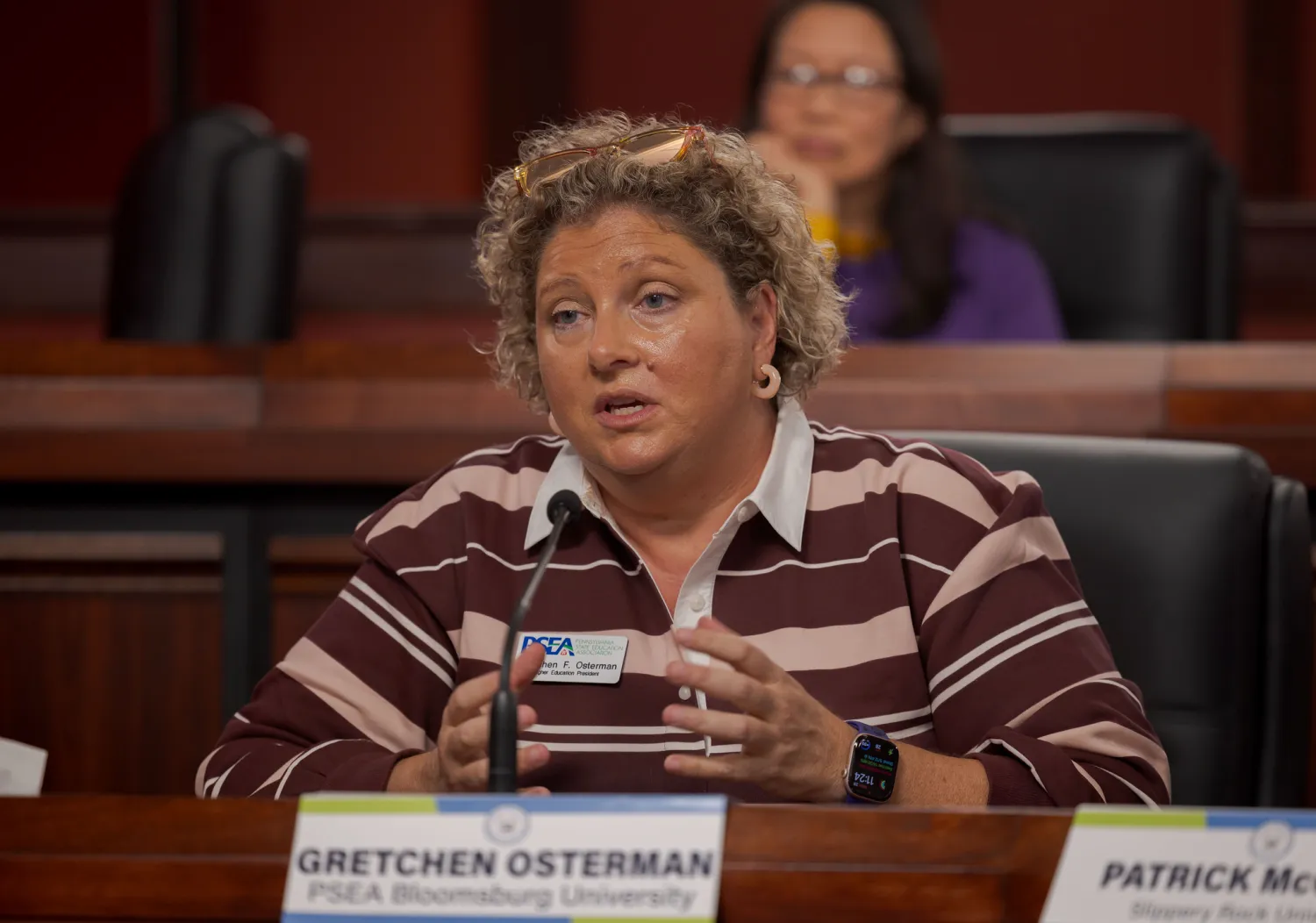
“To me, it’s problematic for a lot of reasons,” says Gretchen Osterman, who recently addressed Pennsylvania lawmakers on the prospect of a 90-credit degree. Chief among those reasons? “This really targets our poorest students from underprivileged backgrounds,” says Osterman, an academic advisor at the Commonwealth University of Pennsylvania-Bloomsburg and president of the Pennsylvania State Education Association’s Department of Higher Education.
“As an academic advisor, this is what I do all day: help students prepare for jobs, graduate school, their next steps,” she says. “There is zero data that this would be a good idea for them.” In fact, say NEA Higher Ed members, there are many reasons to think it would be terrible for them, as future employers and graduate schools will favor graduates with the full college experience.
Nonetheless, states are jumping on the bandwagon, from Ohio to Texas to New Hampshire. In June, Massachusetts officials joined them, approving two proposals to reduce the amount of coursework required to get a bachelor’s degree, over the forceful objections of faculty and staff.
“The solution to financial difficulty is not to lower our standards or further reduce the place of liberal arts in our curricula,” said Dr. Kevin Young, Ph.D., an associate professor of history at University of Massachusetts Amherst, in testimony submitted to the state Board of Education. “The solution is stronger public funding, administered democratically at the campus level. We can easily provide debt-free higher education — or better yet, free higher education for all — rather than joining the race to the bottom.”
What is the 90-credit degree?
Higher education has an affordability problem, as states have cut funding over the past decades and pushed the cost of college onto families and students. The 90-credit degree aims to cut costs by cutting the time students spend in college, from the standard four years for a 120-credit degree to just three.
In May, the think tank RAND reported that 119 90-credit degree programs already existed, compared to just nine programs in 2023, but “a significant number have launched this fall, meaning that number is already outdated,” notes Inside Higher Ed. Among the newest is Arizona State University, which launched two 90-credit bachelor’s degrees in elementary and special education this fall.
More are coming. Next fall, the University of Oklahoma will launch a 90-credit bachelor’s degree in social work. And, in Massachusetts, two private institutions—Suffolk University and Merrimack College—received the state’s go-ahead for shortened degrees in business administration, communications, criminal justice, psychology, and healthcare administration, launching in Fall 2027.
By 2028, Virginia and Ohio also have promised to also have 90-credit pathways, which they are developing together.
Typically, the 90-credit degrees cut electives from students’ schedules, which may include liberal-arts classes or ground-level, developmental courses. Is this a well-rounded education? No, say faculty. The shortened degrees also deprive students of the ability to double major or double minor (which makes them more flexible candidates on the job market), or to participate in the things that often happen in the fourth year of college, like faculty-guided research, co-ops, and internships.
The standard degree also is necessary for many professional licenses and graduate-school admissions.
Who Are These For—and What Will It Cost Them?
While the cheaper degree may be attractive to students from working-class families especially, it’s going to cost them in the long run, union members warn. We already have a two-tier system in America, as students from wealthier families can pay for college without having to juggle two or three additional jobs. Now, we’re going to steer low-income students into lesser degrees, too?
Quote byDr. Rachel Trousdale, Ph.D., English professor, Massachusetts’ Framingham State University
“My students are already disadvantaged by having to work full-time while taking classes. To offer them less of an education, as if it were an accommodation of that disadvantage rather than a kind of enhancement of it, is at best dishonest and at worst cruel,” wrote Dr. Heike Schotten, Ph.D., a faculty member at the University of Massachusetts Boston. “If the Commonwealth wants to support low-income and working-class students, it should properly fund public higher education so that UMass Boston has the same resources and support for its students that the privates do.”
The answer to the college-affordability problem is this: States need to fund higher education, Osterman says. “Pennsylvania is 50th in the nation in higher education funding,” she notes. “This [3-year degree] won’t solve anything. It’ll just exacerbate our problems” as public colleges and universities lose 30 credits worth of auxiliary fees for every student who opts into it, she adds.
In advance of Pennsylvania’s roundtable discussion, in September, Osterman reached out to business owners in her community, “just to ask them what they thought,” she says. “I was ready for anything, but none that I talked to were in favor of [a 90-credit degree].”
Hiring managers want more qualified candidates, not less, she notes. And students need more flexible degrees, not less.
“Makes Students Less Employable.”
In its fact sheets and “issue explainer,” the Massachusetts Teachers Association names several ways that 90-credit degrees harm students. They include:
- Fourth-year opportunities disappear. Capstones, senior theses, research, internships and co-ops—experiences that deepen learning and lead to jobs—could be lost to students.
- Makes students less employable. Employers will likely prioritize students with full, 120-credit degrees. They want college graduates who “see the big picture,” who can lead diverse teams and adapt to rapid change, according to the 2024 UC-Davis Corporate Recruiters Survey.
- Puts graduate school off the table. Many graduate programs will not accept students who lack the standard 120 credits.
- Puts professional licensing at risk. Many professions have minimum credit requirements for licensure.
- Could cost students more. Pell Grants typically do not cover coursework after a degree is awarded. If a student needs to take additional classes for licensure or graduate school, they’ll pay out of pocket or take loans.
