Key Takeaways
- Voters sent an unequivocal message on Election Day: We want strong public schools, not voucher schemes and more breaks for the ultra-wealthy.
- Pro-public education candidates made stunning gains across the country at every level of government.
- Educators helped power these wins, and they are ready to work with any policymakers who support public education and working families.
In Tuesday’s historic midterm elections, roughly 124 million voters came together to elect candidates up and down the ballot who support working families and public schools and reject extremist politicians who degrade public education, terrorize immigrant communities, and put the desires of billionaires before the needs of students and families.
Change is urgently needed. Educators are among the millions of Americans struggling in an economy designed for the wealthy, working second and third jobs and canceling doctors’ appointments, all while spending an average $600 of their own money on classroom essentials so their students don’t have to go without.
“For NEA and its members, this election was about the second grader sitting in an overcrowded classroom, about the teacher working two jobs to make ends meet, and the bus driver who can’t afford health care for her own kids,” said NEA President Princess Moss.
“It’s about parents paying more for groceries, gas and school supplies, and still falling behind. It’s about students too afraid of masked immigration agents to go to school. We cannot afford to continue in this direction.”
The will of the voters to change the direction of the country outweighed unprecedented campaign spending in some races and decades of gerrymandering in some districts.
Here are three reasons to believe we have entered a new era for public education:
1) Voters want strong public schools—not vouchers—and they cast their ballots accordingly.
Candidates who voiced strong opposition to unchecked voucher schemes resonated broadly with voters across party lines and the rural-urban divide.
Nowhere was this more evident than in Texas, where the state’s voucher program has cost taxpayers $1 billion in its first year of operation. Gina Hinjosa, who walloped three-term Texas Gov. Greg Abbot in the governor’s race, has vowed to undo the state’s voucher program, and told supporters in her victory speech that “the days of treating our public schools like they are for sale are over.”
During his successful run for Texas’ open U.S. Senate seat, state Rep. James Talarico called vouchers “a scam that will take our tax dollars out of underfunded public schools and give those dollars to unaccountable private schools” primarily to support the wealthy. Talarico, a former 6th-grade teacher at a public school in San Antonio, opposed vouchers and book bans as a representative in the state legislature.
In heavily rural Iowa, state auditor Rob Sand promised voters that as governor, he would demand oversight of the state’s voucher program and restore income limits for voucher recipients removed in 2025, which increased the expense to taxpayers nearly three-fold. An investigation released by his office determined that nearly 80% of Iowa voucher recipients were already attending a private school.
Sand—whose mom was a physical therapist in the public school system and a long-time member of the Iowa State Education Association—promised to reverse more than a decade of disinvestment in the state’s public schools. He beat his voucher-supporting opponent, Zach Lahn, by 10 percentage points.
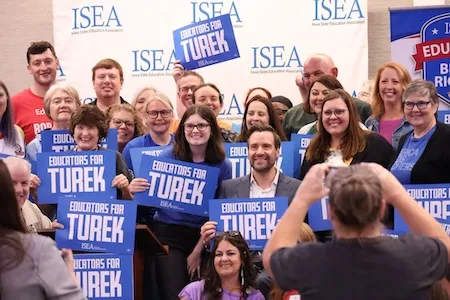
Josh Turek, who won Iowa's open U.S. Senate seat, was outspoken about the damage that vouchers do to public schools while serving in the Iowa legislature and has vowed to fight against them as a senator.
Arizona’s school voucher program—a marquee example of the waste, fraud, and abuse that goes on in unchecked voucher programs—was a central issue that led to a sweeping change in leadership in both houses of the Arizona state legislature. Votes are still being counted in the race for superintendent of public instruction, but Teresa Leyba Ruiz, the candidate who wants transparency and a third-party audit of Arizona’s disastrous voucher scheme, is currently in the lead.
Similarly, Ohio governor-elect Amy Acton opposes the state’s private school voucher program and wants to fully fund public schools. Her opponent, Vivek Ramaswamy, full-heartedly supported the voucher scheme that cost over $1 billion for the second year in a row to subsidize tuition for families who were already using private schools.
Across the country, many state legislators who rammed through voucher programs that voters did not want lost their seats.
These results fit with a long-running trend: When voters have had the opportunity to weigh in on voucher programs, they have rejected them time and again.
2) Voters rewarded candidates who put the needs of students and families over breaks for the billionaire class.
Americans are struggling to make ends meet, and there’s no mystery why things have become so difficult. President Trump’s reckless actions—tariffs, a war, and cuts to essential safety net programs like Medicaid and SNAP that keep students healthy and fed—have taken a toll on people’s everyday lives. Many candidates whose records aligned with Trump’s agenda paid the price.
At the state level, 12 state chambers have changed leadership and many more became less deeply stacked against working people.
Just a few weeks before the election, Colorado music teacher Lyric Johnson had to move to a cheaper apartment after going without a cost-of-living raise. The second-grade teacher works in a Title I school near Denver and estimates that she spent around $1,500 this year on school supplies and classroom essentials.
Seeing this week’s election results made her hopeful.
“We have to start investing more in public schools, to make sure students’ academic needs are met, and to provide mental health supports and free school meals,” Johnson said. “My students deserve so much more, and maybe now we will finally get the funding we need.”
3) Educators powered election wins and remain energized and ready to work with policymakers.
The National Education Association runs one of the largest voter contact and turnout programs in the country.
NEA has nearly 3 million members, with affiliates in every state and more than 14,000 communities. Nearly one in every 100 Americans is a member of the NEA; one in 40 voters is an NEA member.
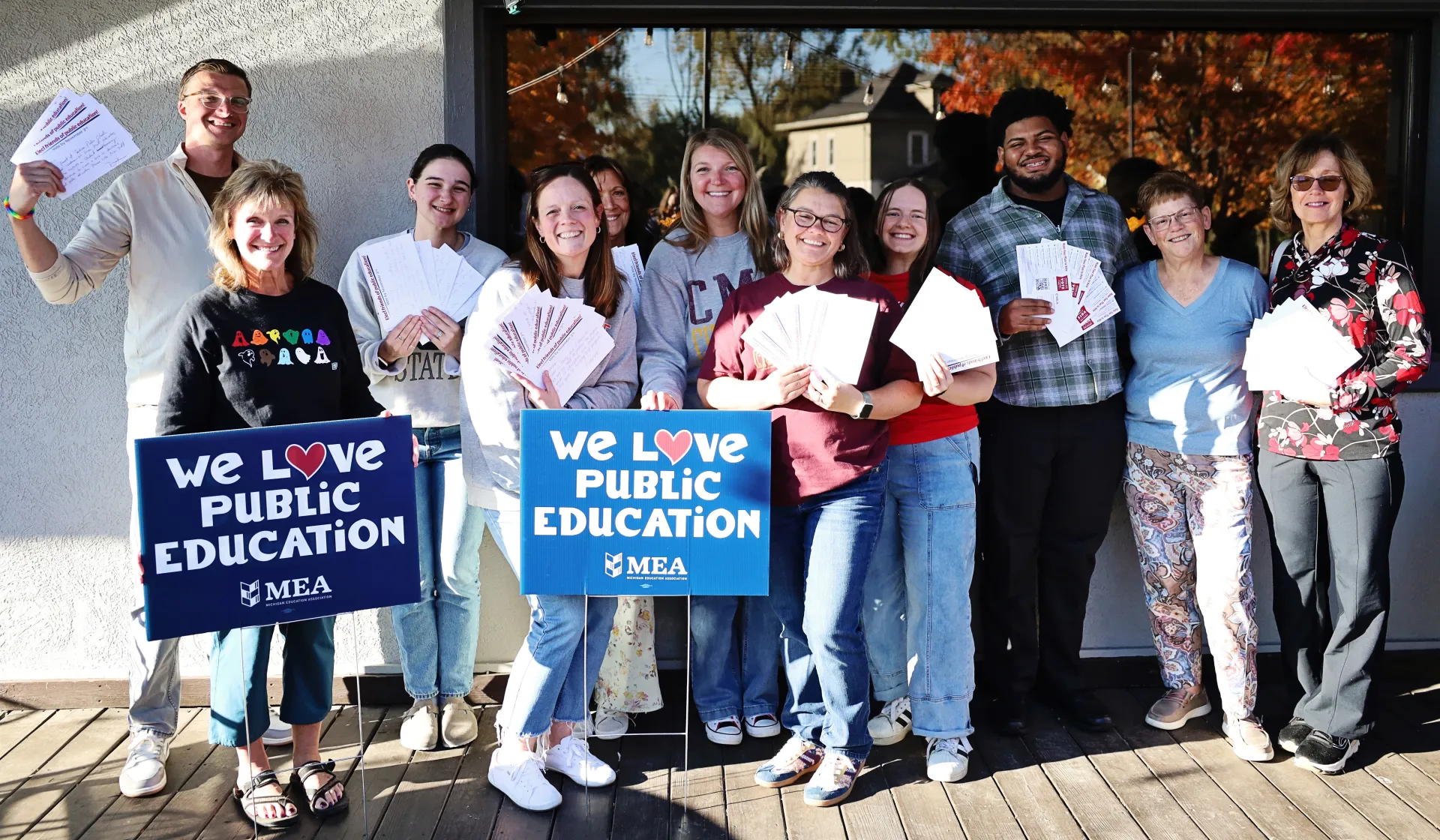
In the run-up to Election Day, NEA members spent their evenings and weekends educating voters about the issues and encouraging them to make their plan to vote. Educators wrote postcards, knocked doors, and organized the folks in their networks to elect public school champions and pass measures that will bolster school funding and ensure protect collective bargaining rights.
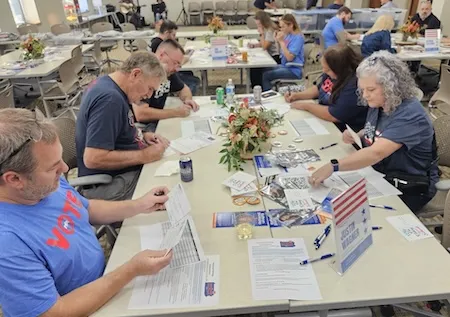
Gavin Mitsdarfer, a first-year teacher in Harrisburg, organized fellow members of the Pennsylvania State Education Association (PSEA) to join him in canvassing efforts in Pennsylvania’s 10th Congressional district. He also donated to his union’s political action committee: “I know the importance of giving to [the PAC]—even if it means giving up a night out to eat every once in a while,” he said. His commitment paid off: Janelle Stelson defeated incumbent Scott Perry by 10 percentage points, becoming one of the many new members of the U.S. House of Representatives.
The daughter of a public-school teacher, Stelson earned PSEA’s recommendation because she strongly opposes cuts to public school funding, respects the contributions of school support staff, and supports expanding career and technical education programs.
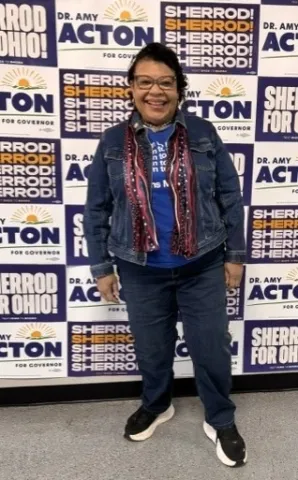
With so many pro-public education leaders taking office, educators are excited to advocate for the resources their students and families urgently need.
“We stand ready to partner with anyone—regardless of political affiliation—who shares the same values as our educators, students and their families,” said NEA President Moss. “This means stopping the dismantling of public education; standing against voucher schemes that drain resources from public schools; making sure that students and families have access to the services they rely on, such as food assistance programs; and creating schools and communities where every student feels safe and welcome.”
“Americans voted on the issues that matter most to them. We’re ready deliver real results.”
Ballot Measures that Matter for Students
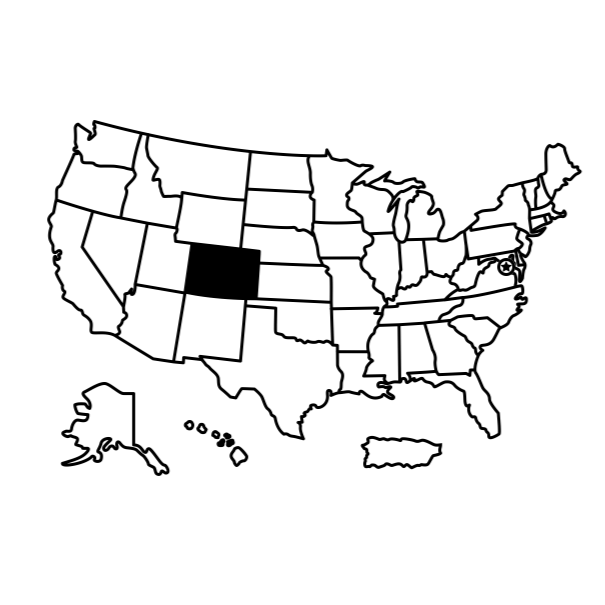
COLORADO
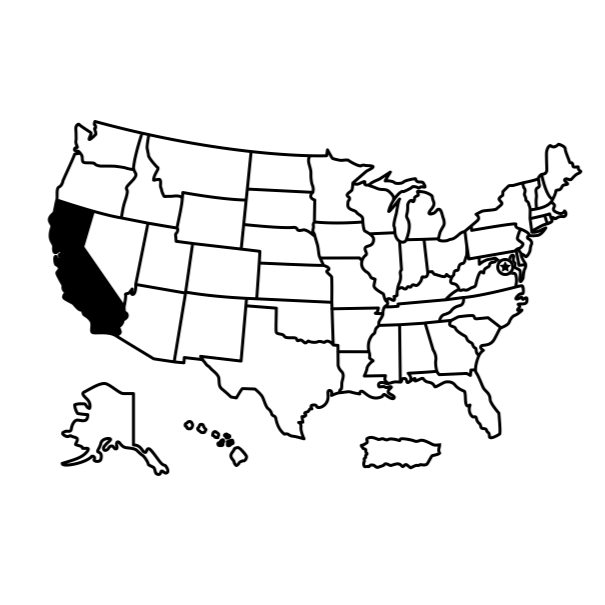
CALIFORNIA