Summer 2026 was one for the record books with sweltering heat domes, rising inflation and gas prices, and an on again off again ceasefire in the Middle East. But through it all educators found ways to form lessons for their students from some of this summer’s hottest headlines.
Kicking things off with the FIFA World Cup 2026, the historic two-month tournament was an action-packed thriller with unforgettable moments that brought people from across the globe together in celebration of football (aka soccer). It was hosted across North America, including the hometown of Nancy Smith, a first-grade teacher from Kansas City who volunteered at the FIFA Fan Festival in the heart of downtown.

“It was one of the best experiences I’ve had in my life,” Smith says. “It was a trillion degrees outside, but everyone was so friendly – they were all in a great mood and having fun. It really brought people together!”
Smith will bring that excitement and sense of unity to her classroom this fall with lessons ranging from math and social studies to agriculture.
An “ag state,” Kansas is roughly 85% farmland and its economy and culture is heavily influenced by farming. Last spring, in anticipation of the World Cup coming to Kansas, Smith taught lessons centering on agriculture education, which she’ll continue this fall.
“The World Cup can’t happen without agriculture, from the fibers used to create uniforms to the materials the balls are made of to the grass or turf of the fields,” she says. “I invited members of the Farm Bureau and parents who work in agriculture to talk to students about where everything in the World Cup comes from.”
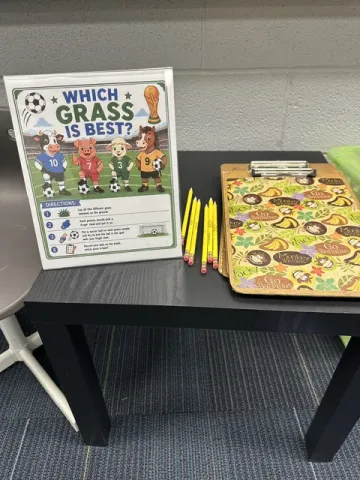
In a lesson on turf and grass and how they are manufactured, she brought in samples of “fields” with rectangular pieces of a green rug, astro turf, and real grass. The students donned finger cleats and used them to flick little soccer balls across the fields. They recorded the data and then explained what surface was best and why.
They also designed and made their own shin guards with recycled materials, another lesson Smith is eager to try with her new class of first graders.
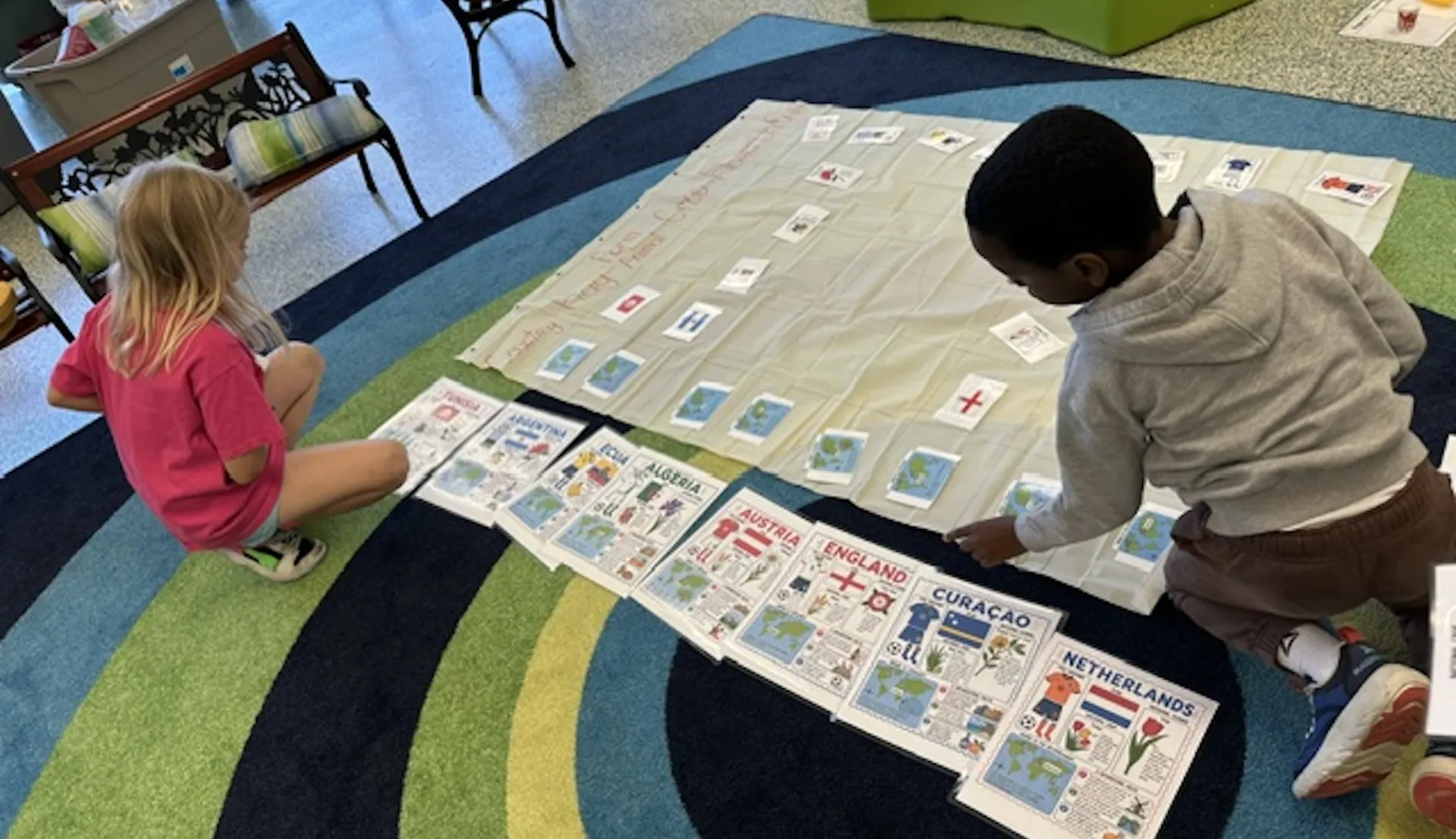
She plans to continue focusing geography and social studies lessons on the teams that played or practiced in Kansas and will share videos of community support for their global visitors, like the University of Kansas marching band that learned and performed the Algerian national anthem for the team training in Lawrence.
Her students will learn about the culture, food, flags, and other details about the 12 teams that visited their state. “When we did this last spring, they were amazed more by what is the same than what is different,” Smith recalls.
“I’ll bring in my FIFA volunteer uniform and encourage them to wear their own soccer jerseys or their favorite team jersey and bring in their medals,” Smith says. “I’ll also show all of the photos of the celebrations happening at the fan festival so everyone can experience the excitement if they weren’t able to go.”
For Smith, the best lesson is the positivity of the human spirit that energized the World Cup, in Kansas and throughout the venues in North America.
“It felt like the whole world embraced each other,” she says.
Wildfires Spark Climate Change Lessons
Though wildfire smoke didn’t delay the final match of the World Cup in New Jersey as some news stories predicted, it blanketed communities across the country, triggering unhealthy air quality warnings and cancelling many outdoor events.
This summer, wildfires roared through Canada, Europe, and the U.S., prompting massive evacuations and incinerating forests, homes, and businesses. These large, intense wildfires have been attributed to prolonged droughts, record-breaking heat waves, and dry vegetation tied to a rapidly warming climate.
The new school year is already underway in Arizona, and Dylan Wince, who teaches U.S. history and psychology at Tempe High School is using the wildfires in his lessons on “Land, Peoples, and Systems.”
“We talk about American history and Arizona history and connect it to the history of land use,” Wince explains. “We explore Indigenous conservation traditions that show the interconnectedness of people and land, and discuss how we can create positive relationships with our environment to mitigate the effects of climate change.”
Arizona has built wildlife bridges around the state that allow animals to travel over highways to reduce vehicle collisions while also offering them escape routes to flee wildfires.

It is this kind of localized strategy that Wince emphasizes when teaching about climate change.
Excessive heat in Tempe is one effect of climate change that every one of his students experiences, and they discuss the problems it causes in their own lives, like grid failures during massive spikes in electricity use, cancellation of outdoor activities, or heat-related health problems.
Wince’s students give presentations to administrators from the City of Tempe Office of Sustainability and Resilience. Using the framework of their own experiences to illustrate problems caused by climate change, the students offer ideas on what the city could do, like providing more shade at local bus stops.
“When we see a proliferation of devastating wildfires and other climate disasters, it can lead to feelings of helplessness because the problem is so big,” Wince says. “Creating action plans for local issues helps student build hope, capacity, and agency to make positive changes.”
Finding a local focus is the best way to teach these big topics, says Wince, because helping to solve local problems related to climate change is what inspires many students to fully engage. That was the idea he kept in mind when helping create NEA’s Micro-Credentials on Climate Change and Environmental Justice.
“What I’m teaching in Arizona will not look identical to what teachers in Minnesota and Florida are teaching about,” Wince says. “Starting with our students’ lived experiences and helping them ask the right questions is the best place to start.”
Finding Inspiration in a Unique Raccoon
Wildfires in Washington certainly impacted students’ lived experiences, says Rachel Pendergast-Weiss, a 2nd and 3rd-grade teacher in Seattle. Thick smoke blanketed her community, preventing her young students from going outside to play.
But fortunately, they had Jimothy, the lovable round raccoon with short-spine syndrome who loped across screens the world over in one of the summer’s biggest viral sensations.
“Jimothy really is a special little guy,” says Pendergast-Weiss, who plans to use him for lessons on wildlife conservation, literacy, and inclusion. “He’s a real hero.”
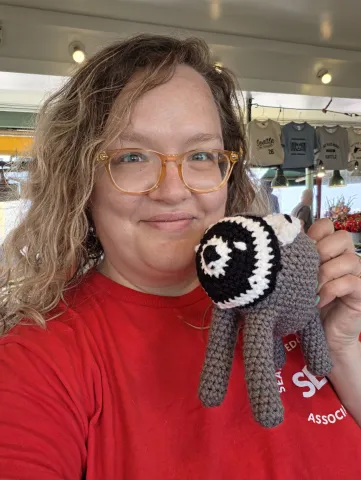
Pendergast-Weiss crochets stuffed animals and sells them at a booth at Pike Place Market in Seattle, and she’s made dozens of Jimothies, which she says fly off the table each weekend.
“If people don’t buy one, they take pictures of him,” she says. “People have really clung on to him this summer.” (She is donating some proceeds from sales of Jimothy stuffies to the city’s parks and recreation department.)
She crocheted a bigger stuffed Jimothy who will serve as the class mascot this school year.
She plans to talk to her students about how some animals born with differences are abandoned by their mothers, but Jimothy’s mother and his siblings take care of him.
“Jimothy doesn’t know he’s different, he’s totally accepted for who he is, and that’s a good lesson on inclusion for our kids who have classmates with differences,” Pendergast-Weiss. “It will remind the students that everyone deserves to belong and feel safe and cared for.”
She’s planning Jimothy-themed morning writing prompts as well. One prompt is to write about Jimothy’s life as if he knows he’s a celebrity and how he deals with his fame. Another will be to write from his perspective as a regular raccoon leading an ordinary raccoon life, completely unaware of his internet stardom.
“This will really stretch their imaginations, and I know they’ll take it and soar with their ideas,” she says.
Throughout the school year, students will be able to earn raccoon “paw prints” for kind acts that help their community, like including someone in a recess activity so nobody is left out, helping a classmate, or picking up litter.
Pendergast-Weiss says it’s been a scary time for students as wildfire smoke and an increased ICE presence has kept them inside (many of her students are from immigrant families).
But she plans to use Jimothy as a way to help her students look for the good in the world amid all the bad. Just like Mr. Rogers said, she’ll remind them to look for the helpers.
“People are helping keep Jimothy safe, and to me he represents happiness and community,” she says. “In my lessons around Jimothy, I’ll remind my students to look for the sunshine. Just like you look for the helpers, look for the sunshine, too.”