How to use this action guide
NEA affiliates can use the information and resources in this action guide to take the lead in advocating for a policy and program response that:
- Limits student use of cellphones and other personal devices from bell to bell
- Presses for social media corporations to be held accountable for products that affect school climate and students’ physical and mental health and psychological well-being
- Ensures all students receive media literacy education so that they can navigate digital spaces with critical thinking, self-awareness, and resilience
Protecting Students
Educators see firsthand the problems caused by social media and student device use in schools. They face the challenge of safeguarding students’ health and safety and maintaining engaging learning environments while also navigating the ever-changing digital terrain in schools. At the same time, educators are increasingly expected to manage disruptions, conflicts, and supervision demands that stem from student cellphone and other personal device use, which can directly affect their working conditions, instructional time, and emotional bandwidth.
Although social media can create opportunities for student expression, connection with others, and learning, social media corporations designed platforms that more often undermine learning environments. These corporations have prioritized and continue to prioritize profits over the privacy and safety of our students, and states, school districts, and educators are left to deal with the harmful consequences.
Social media and student personal device use can pose severe physical and mental health risks. And, as topics like artificial intelligence and student screen time gain greater national attention, the related issues of student personal device restrictions, corporate accountability, and media literacy become even more important.
Sample Policies and Guidance for Responsible Personal Device Use in Schools
Developing Local Policy on Limiting Student Personal Device Use in Schools
State and Local Advocacy and Action to Protect Students
Collective Bargaining and Labor-Management Engagement to Support Student Personal Device Restrictions
What Are the Risks of Personal Device Use to Students?
What Are the Risks of Personal Device Use to Students?
NEA is committed to ensuring students remain safe and healthy and have access to learning environments that promote active engagement through educator-driven policy. Social media and student personal device use in schools can distract from this commitment, posing digital risks.
These risks can be divided into three main categories:
- Mental health, psychological well-being, and physical health
- Learning environments
- Social development and interaction
Risks across categories can and very often do impact one another.
Risk Categories and Associated Behaviors
- Hazardous substance use, eating disorders, and self-harm
- Bully victimization at school and virtually
- Stress, anxiety, and depression
- Suicidal thoughts and behaviors
- Cyberbullying
- Decreased physical activity and obesity
- Poor sleep quality, reduced sleep duration, and sleep difficulties
- Distraction
- Shortened attention span
- Reduced academic performance
- Increased academic dishonesty (“e-cheating”)
- Reduced collaboration between students
- Lower quality of face-to-face peer interactions
- Constant monitoring
- Student redirection by educators
Are States Banning Student Use of Cellphones and Other Personal Devices in Schools?
Are States Banning Student Use of Cellphones and Other Personal Devices in Schools?
In the last few years, states have moved to pass laws in response to the presence of student cellphones and other personal devices in schools, reflecting the concern educators and families have shared about the risks students face and learning disruptions personal device use cause. NEA member polling showed 83 percent of respondents supported a policy restricting student personal devices for the entire school day with appropriate exceptions. National Education Association. (2024, August 12). Impact of Social Media and Personal Devices on Mental Health. Retrieved May 2, 2025, from https://www.nea.org/resource-library/impact-social-media-and-personal-devices-mental-health. Go to reference This position also was held by many families, with 74 percent of U.S. adults Gottfried, J., Park, E., Anderson, M. (2024, July 16). Americans’ support for school cellphone bans has ticked up since last year. PEW Research Center. Retrieved March 3, 2026, from https://www.pewresearch.org/short-reads/2025/07/16/americans-support-for-school-cellphone-bans-has-ticked-up-since-last-year/. Go to reference supporting classroom bans and almost half (49 percent) stating students’ smartphones should not be allowed or used during school hours. Adolescents (74 percent) would also prefer limits on personal device use. Eng. J. (2024, October 9). What Parents Really Think about School Cellphone Policies. Parents Together. Retrieved February 18, 2026, from https://parents-together.org/should-phones-be-allowed-in-schools/. Go to reference
In general, most states are requiring school districts to adopt policies that:
- Restrict student cellphones and other personal devices for the entire school day (bell-to-bell) or during instructional time
- Require districts to make the decision on what type of restrictive policy they will implement in their schools
These laws demonstrate a growing consensus that limiting student personal devices in schools is a core component of protecting students and creating safe, welcoming, equitable learning environments.
The Need for Clear Implementation and Enforcement Policies
Whether or not a state has a law restricting student personal device use during school, clear schoolwide policies are instrumental in reducing the conflict and enforcement fatigue that educators experience, providing a sense of support from the school administration.
NEA research showed that more than half of the respondents ‘somewhat or strongly agreed’ the student cellphone policy at their school was implemented using:
- ‘Clear and consistent rules’ (68 percent)
- ‘Clearly defined exceptions’ (58 percent)
- ‘Consistent enforcement’ (57 percent)
However, educators shared that policies are hard to enforce due to:
- ‘Pushback from students’ (58 percent)
- ‘Pushback from parents’ (55 percent)
- ‘Discomfort confiscating cellphones’ (49 percent) RAND American Educator Panels, American Teacher Panel, “Fall 2025 American Teacher Panel Omnibus Survey,” Survey Instrument, RAND, Santa Monica, CA, January 2026. (TEACHERS Survey) Go to reference
To help educators navigate these roadblocks, school districts should collaborate with administrators, students, families, and educators to develop policies that ensure expectations are uniform across schools. When educators enforce these policies, school districts must support their efforts and implement communication plans that help families and students understand the restrictions in place.
- National Education Association. (2024, August 12). Impact of Social Media and Personal Devices on Mental Health. Retrieved May 2, 2025, from https://www.nea.org/resource-library/impact-social-media-and-personal-devices-mental-health.
- Gottfried, J., Park, E., Anderson, M. (2024, July 16). Americans’ support for school cellphone bans has ticked up since last year. PEW Research Center. Retrieved March 3, 2026, from https://www.pewresearch.org/short-reads/2025/07/16/americans-support-for-school-cellphone-bans-has-ticked-up-since-last-year/.
- Eng. J. (2024, October 9). What Parents Really Think about School Cellphone Policies. Parents Together. Retrieved February 18, 2026, from https://parents-together.org/should-phones-be-allowed-in-schools/.
- RAND American Educator Panels, American Teacher Panel, “Fall 2025 American Teacher Panel Omnibus Survey,” Survey Instrument, RAND, Santa Monica, CA, January 2026. (TEACHERS Survey)
State Policies on Restricting Student Personal Device Use in Schools
How Are Cellphone and Other Personal Device Restrictions Affecting Students?
As research on student personal device restrictions continues to grow, the core finding is the same: Reducing student personal device use during the school day improves the conditions educators need to teach and students need to learn.
Across studies, researchers found that student personal device restrictions:
- Sharply reduced distraction and off task behavior
- Resulted in clear gains in some settings and neutral to no effect in others, with no study indicating academic harm
- Reduced cyberbullying, conflict, and safety concerns
The most current data has shown academic achievement improving after the first year of implementation, especially in secondary grades. Allcott, H., Baron, E. J., Dee, T., Duckworth, A. L., Gentzkow, M., & Jacob, B. (2026). The effects of school phone bans: National evidence from lockable pouches (NBER Working Paper No. 35132). National Bureau of Economic Research. Retrieved May 11, 2026, from https://tom-dee.github.io/files/w35132.pdf. Go to reference , Figlio, D., & Özek, U. (2025). The impact of cellphone bans in schools on student outcomes: Evidence from Florida (EdWorkingPaper No. 25-1315). Annenberg Institute at Brown University. Retreived May 11, 2026 from https://doi.org/10.26300/9y5r-yx11. Go to reference , RAND Corporation. (2025). Youth and principal perspectives on cellphone policies in schools (Research Report No. RRA3988‑2). RAND Corporation. Retrieved May 20, 2026, from https://www.rand.org/pubs/research_reports/RRA3988-2.html. Go to reference
New data from NEA also showed implementation of student cellphone policies had a positive impact. Educators reported:
- ‘Decreasing student distractibility in class’ (62 percent)
- ‘Increasing student engagement with peers’ (58 percent)
- ‘Increasing student engagement with adults in school’ (57 percent)
- ‘Improving student behavior in class’ (53 percent) RAND American Educator Panels, American Teacher Panel, “Fall 2025 American Teacher Panel Omnibus Survey,” Survey Instrument, RAND, Santa Monica, CA, January 2026. (TEACHERS Survey) Go to reference
- Allcott, H., Baron, E. J., Dee, T., Duckworth, A. L., Gentzkow, M., & Jacob, B. (2026). The effects of school phone bans: National evidence from lockable pouches (NBER Working Paper No. 35132). National Bureau of Economic Research. Retrieved May 11, 2026, from https://tom-dee.github.io/files/w35132.pdf.
- Figlio, D., & Özek, U. (2025). The impact of cellphone bans in schools on student outcomes: Evidence from Florida (EdWorkingPaper No. 25-1315). Annenberg Institute at Brown University. Retreived May 11, 2026 from https://doi.org/10.26300/9y5r-yx11.
- RAND Corporation. (2025). Youth and principal perspectives on cellphone policies in schools (Research Report No. RRA3988‑2). RAND Corporation. Retrieved May 20, 2026, from https://www.rand.org/pubs/research_reports/RRA3988-2.html.
- RAND American Educator Panels, American Teacher Panel, “Fall 2025 American Teacher Panel Omnibus Survey,” Survey Instrument, RAND, Santa Monica, CA, January 2026. (TEACHERS Survey)
Resources to Empower and Protect Students and Educators
Social Media Corporate Accountability
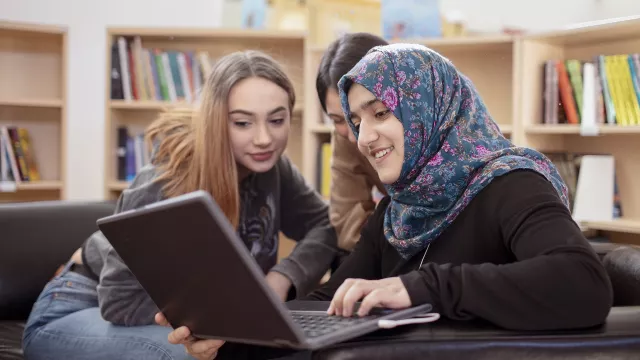
Media Literacy: Building the Knowledge and Skills of Students
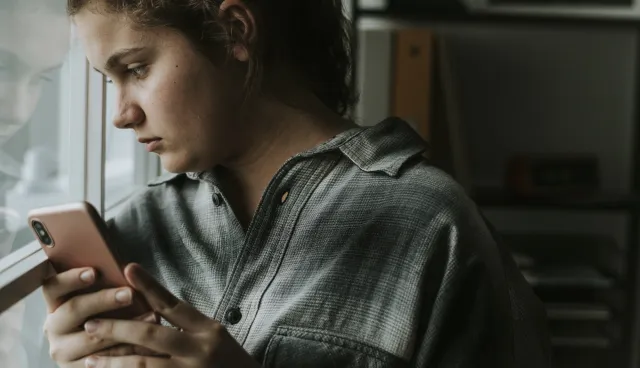
Cellphones, Social Media and Mental Health
Acknowledgments
Join Our Movement