Key Takeaways
6.1%
50%
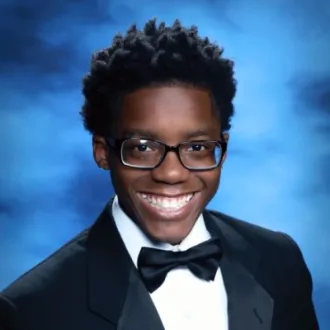
“Every student has a significant moment in school,” says Tymaine Holt, who grew up in South Carolina and is now a sophomore at Claflin University, the first historically Black college and university (HBCU) in the state. “My significant moment was in tenth grade, when I had the first teacher who looked like me, who had hair like me, who sounded like me. I wasn’t accustomed to that.”
He adds, “I’m not saying I had bad teachers up until then, … but this was different. And research shows that students, if they have somebody who looks like them, it makes a difference.”
“I want to be that difference,” says Holt, an elementary education major who also serves as president of his school’s NEA Aspiring Educators (AE) chapter and sits on The South Carolina Education Association’s board of directors.
Building future black educators
While research consistently shows that all students, and especially students of color, benefit from diverse teachers, only about 6.1 percent of U.S. public school teachers are Black—and only 1.3 percent are Black men, according to the National Center for Education Statistics.
Meanwhile, about 1 in 6 students are Black.
The numbers don’t match. While student population is diverse, teachers are not as much. Changing this calculus—so that students can learn from more diverse teachers—is complicated, with many variables, including college affordability, teacher pay, and more.
What is clear, however, is that HBCUs—and the AE chapters on those campuses—play a key role in the Black teacher pipeline.
“This is something we’ve been doing successfully at HBCUs for many, many years,” noted Katherine Norris, of the Howard University College of Education, in a recent webinar produced by The 74. In fact, in the late 19th century, many HBCUs—including Alabama A&M University, Florida A&M University, and Winston-Salem State University, in North Carolina—started out as “normal schools” to train teachers.
Today, while HBCUs account for just 3 percent of all U.S. colleges and 15 percent of Black college graduates, they produce 50 percent of the nation’s Black educators, according to United Negro College Fund’s Frederick D. Patterson Research Institute.
“The reason we’ve been able to be successful, and I can’t emphasize this enough, is [because we offer a space] where you can walk into a room and be welcomed and feel that you belong there,” said Norris. “We have no doubt that our students are great learners and going to be great teachers.”
Why Does This Matter?
The research is overwhelming: Having a Black teacher—and especially having an HBCU-educated teacher—has wide, positive effects on Black students.
- A study published in the American Economic Journal in 2022 found that Black students randomly assigned to at least one Black teacher in grades K–3 are 13 percent more likely to graduate from high school and 19 percent more likely to enroll in college compared with Black schoolmates who did not have a Black teacher.
- A 2023 Stanford University study of North Carolina elementary students found that Black students did better in math the years they were taught by an HBCU-educated teacher (regardless of whether the students were white or Black). In years with non-HBCU-trained teachers, their scores went down. The graduate student who conducted the study, Levar Edmonds, told NBC News, “There’s something to be said for the environment that’s cultivated, the way they connect with their students, the inspiration, the vulnerability that they may have with their students.”
- The benefits of Black teachers also extend to white students, a University of Maryland professor found. In a working paper, David Blazar shows that having a Black teacher produces greater outcomes for all students, compared to having a white teacher. It increases students’ math and reading test scores and decreases chronic absenteeism by roughly 60 percent—“all at the same rates for Black and non-Black students,” notes the Hechinger Report referring to the UMD study. Black students, specifically, self-reported an increase in sense of self-efficacy.
Quote byTyMaine Holt, NEA Aspiring Educators chapter and state president
Making Progress!
If you were going to make a Venn diagram of rare teachers, elementary Black male educators might be at the center—and yet, here is Holt. Growing up, he had teachers who didn’t look like him and, even worse, didn’t believe in him. “I’ve had teachers ask me what I want to be. In fourth grade, I told them, I want to be a teacher, and they told me, ‘You want to be like me? You can’t be like me.’”
“The narrative is an obstacle,” says Holt. “When I saw my first African American teacher, I was speechless. It was like a dream come true,” Holt says. “Because I was told my whole life that somebody who looked like me couldn’t achieve my dream.”
Today, not only is Holt achieving his dream, but as an Aspiring Educator leader and a South Carolina House of Representatives intern, he’s helping other Black students achieve theirs.
His goals?
First, to find state funds to make Praxis free for students. “No student should worry about those funds coming out of their pocket,” he says.
Second, Holt aims to help create more “resourceful resources” for new teachers, hooking them up with peers and mentors. As Aspiring Educator members at an HBCU, Holt and his classmates receive dedicated support from each other and mission-driven faculty. He wants that kind of conversation to extend into educators’ early career years.
“Like doctors have peer-to-peer [support], I want teachers in the first three to five years to have peer-to-peer conversations … with teachers supporting them, who will cry with them, who will give them a shoulder to lean on.”
Finding Your Family at an HBCU
When Catherine Wilson left Hemingway, S.C., and arrived on campus at North Carolina Agricultural and Technical State University (N.C. A&T), she went from a tiny town with 381 people to a university with more than 15,000 students and 2,000-plus employees.
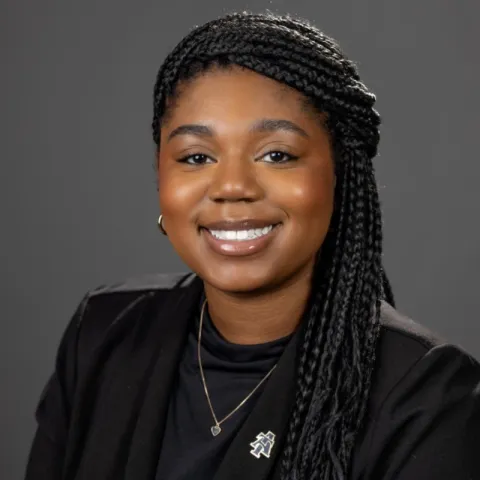
She needed to find her people—and fast! She saw an Instagram post by the Student North Carolina Association of Educators (SNCAE), advertising an ice cream social, and she showed up. “Really, they had me from ‘ice cream social.’ I love ice cream,” she laughs.
Today, Wilson is a secondary math education major and vice president of the school’s SNCAE chapter.
One of the many obstacles that students face along the road to a teaching career is money, or the lack of it. Students can’t become teachers when they can’t afford to become teachers. That is often the case with Black Americans, who, on average, have to borrow about $25,000 more than white Americans to pay for college.
HBCUs tend to be more affordable options—and students say the faculty and administrators are really invested in their success. Wilson’s school honored her with the esteemed “February 1” scholarship, named after the “Greensboro Four”— the N.C. A&T freshmen who launched the famous Woolworth’s lunch counter boycott on February 1, 1960.
Wilson notes that her HBCU education includes culturally relevant pedagogy. So, not only will her future students see somebody who looks like them, they’ll also have a teacher prepared to validate their experiences and make them feel like they belong. And through her school’s AE chapter, Wilson and her classmates visit local high schools, teaching brief lessons, sharing their stories, and hopefully inspiring high school students to follow in their footsteps.
“I see myself as a living lesson that you can do anything you put your mind to, if you have a good support system,” she says. “[My AE chapter] is my support system and my family in college.”