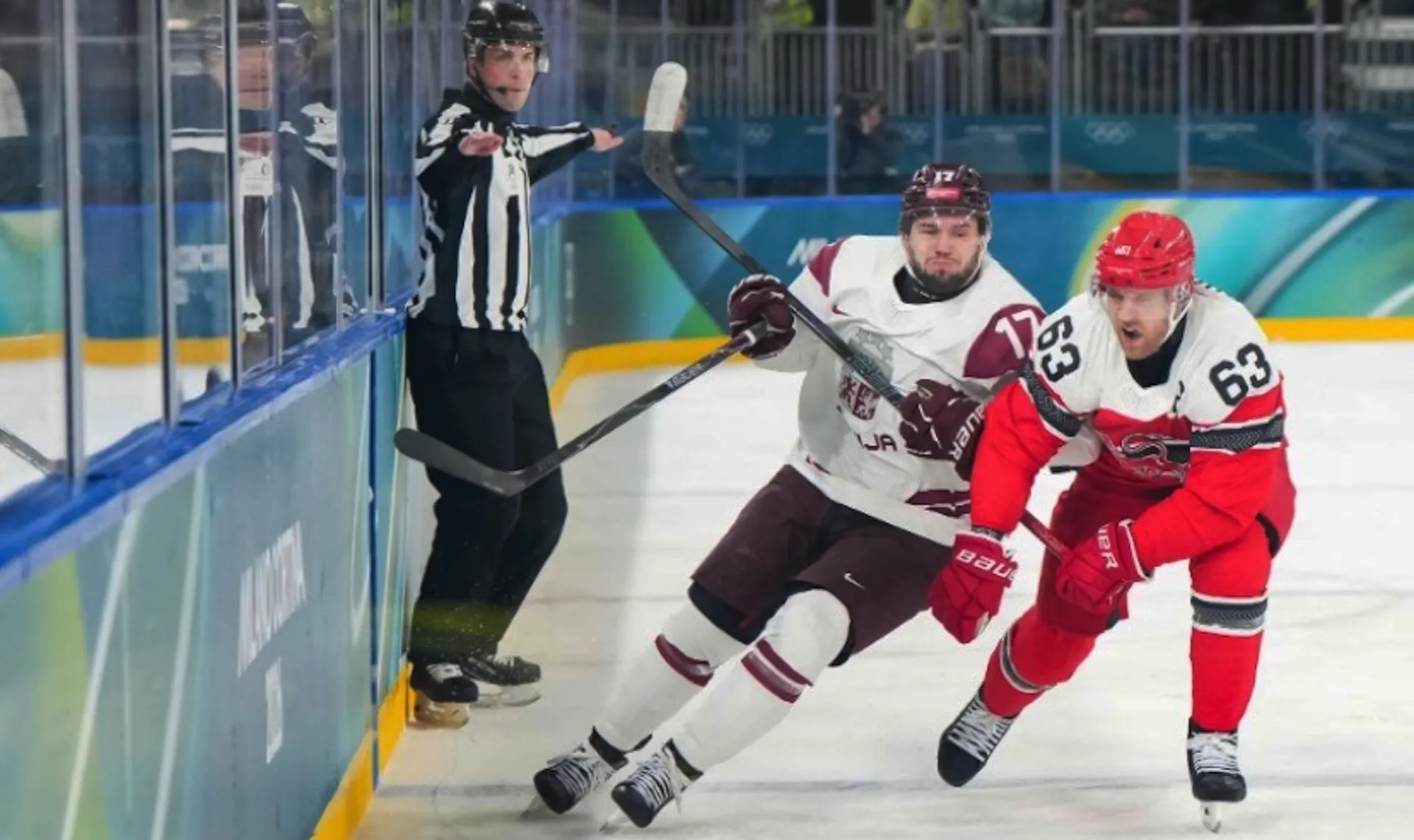
When Jake Davis stepped onto Olympic ice in Milan, he was not just a chemistry teacher from Michigan anymore. Davis was now one of the few officials in the world who would referee the 2026 Olympic men’s hockey.
“Stepping on the ice was surreal,” said Davis. “Just being on the ice with the best hockey players in the world and the international stage was a once in a lifetime experience.”
Jake Davis, NEA member and science teacher at Lincoln Park High School, just achieved his lifelong goal of being an Olympic referee after an incredible journey to the top.
Selection and Process
The Olympic selection process runs in cycles. Davis was chosen based on a tryout system out of a pool of IIHF (International Ice Hockey Federation) referees. With great performance results after working the Olympic qualifiers, World Juniors in Ottawa, and the World championships in Stockholm, Davis was selected in July 2025.
He was one of only three officials from USA Hockey chosen to go to Milan.
“It was a big honor,” said Davis. “It’s been a long process, a lot of commitment and sacrifices to be at the top for sure.”
The Olympic tournament would mean Davis would miss a significant amount of time from school with men’s games starting on February 11th and the gold medal game on February 22nd.
Getting to the games wasn’t easy. In August, Davis attended a training session in Buffalo, NY, where officials discussed penalties and rules to get on the same page since each league has different standards for penalties.
“We did physical training, classroom sessions, and team bonding,” said Davis.
To stay in shape, he worked NCAA games and some minor pro league games like the Canadian Hockey League and American Hockey League while also continuing to teach full-time.
As anticipation grew and time got closer to February, it was finally time to get on the plane and fly to Milan.
Inside the Olympic Experience
Although he missed the opening ceremony, Davis started his own Olympic training after arriving in Milan.
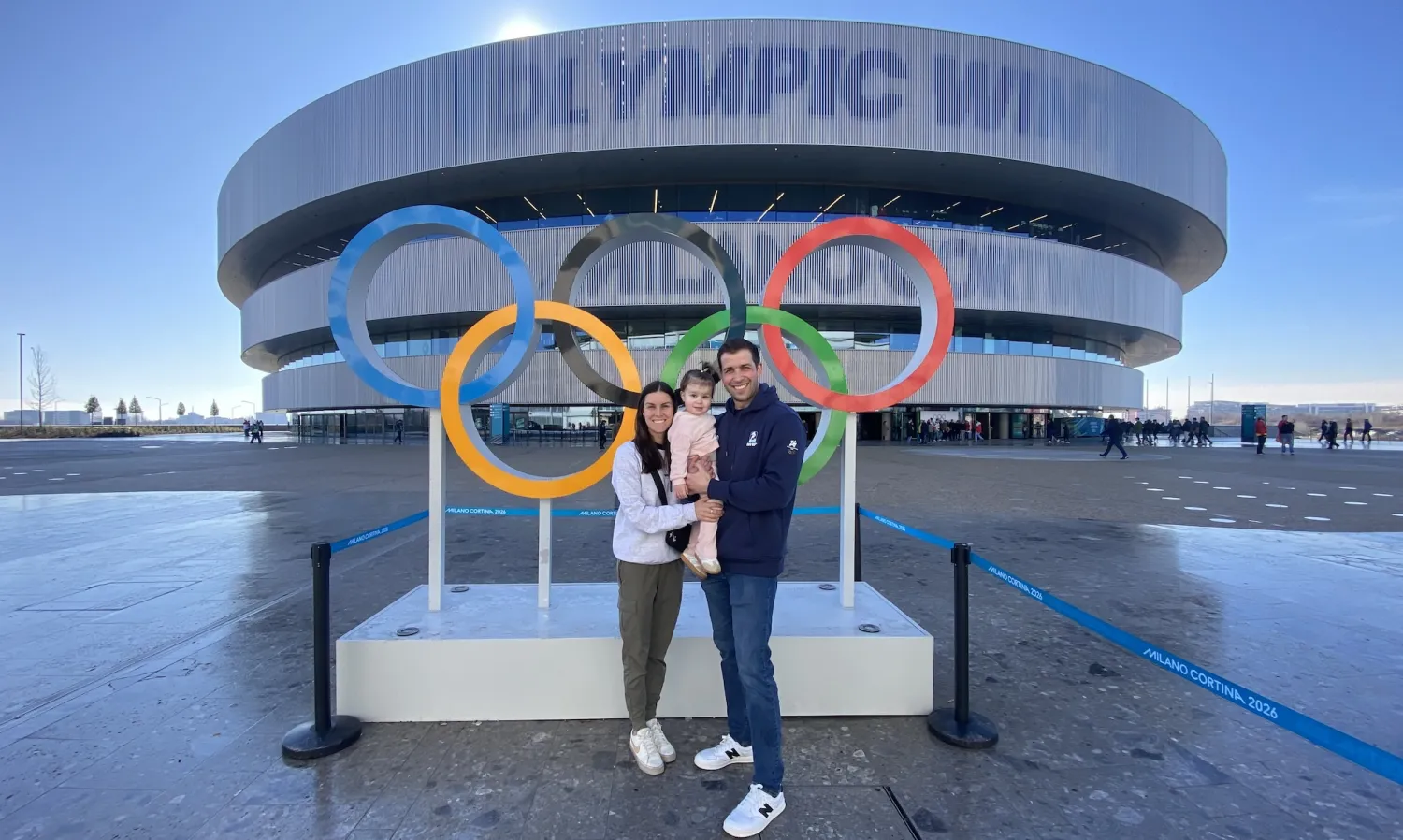
“We had a couple of ice sessions to get the legs warm because a lot of us flew from North America,” said Davis. “It was a great opportunity to take pics on the Olympic ice.”
The skate sessions allowed the referees to acclimate to the new rink and learn about the things no one thinks about when they watch a hockey game like: if the puck hits the camera, what a referee is required to do.
Olympic hockey referees did not stay in the Olympic Village. Instead, they are “technical officials”, therefore they were separated from the players. The officials stayed in the hotel and would be shuttled to the rink.
Davis worked four games while in Milan.
-
Switzerland 4-0 France
-
Finland 4-1 Sweden
-
Denmark 4-2 Latvia
-
Czechia 3-2 Denmark (qualification round)
He worked alongside referees from the U.S., Canada, Czechia, Latvia, Germany, Denmark, Finland and Sweden, many of whom officiate in the NHL as well.
“I can keep up with that pace of hockey, and all of my training and preparation has allowed me to be successful,” Davis said.
Davis collected some incredible memories, skating with the best of the best, watching the US men’s take home the gold from the stands, and enjoying the city of Milan.
“The top highlight was probably [that] my family came,” he said. “They had never really seen much of a national competition, so it was cool to have them in the stands to root me on.”
Becoming an Olympic Referee
Getting to the Olympics wasn’t easy. With a passion for the game and a friend's suggestion, he started up refereeing hockey at 13 years old doing grassroots games and slowly worked his way up higher levels.
He credits his dad as his “shield and mentor” while refereeing at a young age in a high-pressure environment. However, those moments built him into the referee he is today. His strong refereeing caught the attention of USA Hockey.
“They liked what I did and from there I started doing Junior Hockey, like the North American Hockey League and United States Hockey League (USHL),” said Davis.
After refereeing the final North American Hockey league in his first year, he attended a camp for introduction to international hockey in 2014 and from there his Olympic journey began. Davis earned his license from USA Hockey to work in the International Hockey League. For the past 10 years, Davis worked in international tournaments from U18s, world juniors, to men’s world championships.
Becoming a Teacher
The traveling and refereeing hockey tournaments took place on weekends, which meant Davis needed something to fill his time during the week. He started as a substitute teacher because of the flexible schedule and grew a passion for teaching which could coexist with his love for refereeing.
He got his interim teaching certification and began at a charter school before moving to Lincoln Park High School.
“I’m happy I got into [teaching] later because you realize it’s a passion of yours,” said Davis. “You see change, you make positive impacts on students, it’s an awesome thing.”
However, when the weekends approached, Davis often traveled far and wide to the tournaments.
As he shifted into a full-time teaching role, clarity and communication helped balance both jobs. With some tournaments leaving him away from the classroom for long periods of time, Davis made sacrifices to fulfill his Olympic dream.
“During the intro to the school year, I would say a little bit about myself, and I got selected to go to the Olympics and they [his students] were super pumped for me,” said Davis.
While working in two very different fields, Davis finds that the skills in each job apply to one another.
“Patience is huge,” said Davis. “I’ve learned to be a calming presence.”
Going Out on Top
While still carrying a passion for refereeing, Davis now has a family. His daughter is young and growing up right before his eyes.
“That’s been the priority: being present,” said Davis. “As she’s getting older, I want to be in her life. I don’t want to be traveling and missing those moments.”
While he may taper back his refereeing work, hockey will never leave Jake Davis. With memories to last a lifetime and incredible achievements, the Olympics might be the cherry on top.
“It's not fair to the kids [at school],” said Davis. “It’s nice to go out on top. Say ‘job well done’ and give opportunities to other USA Hockey officials.”