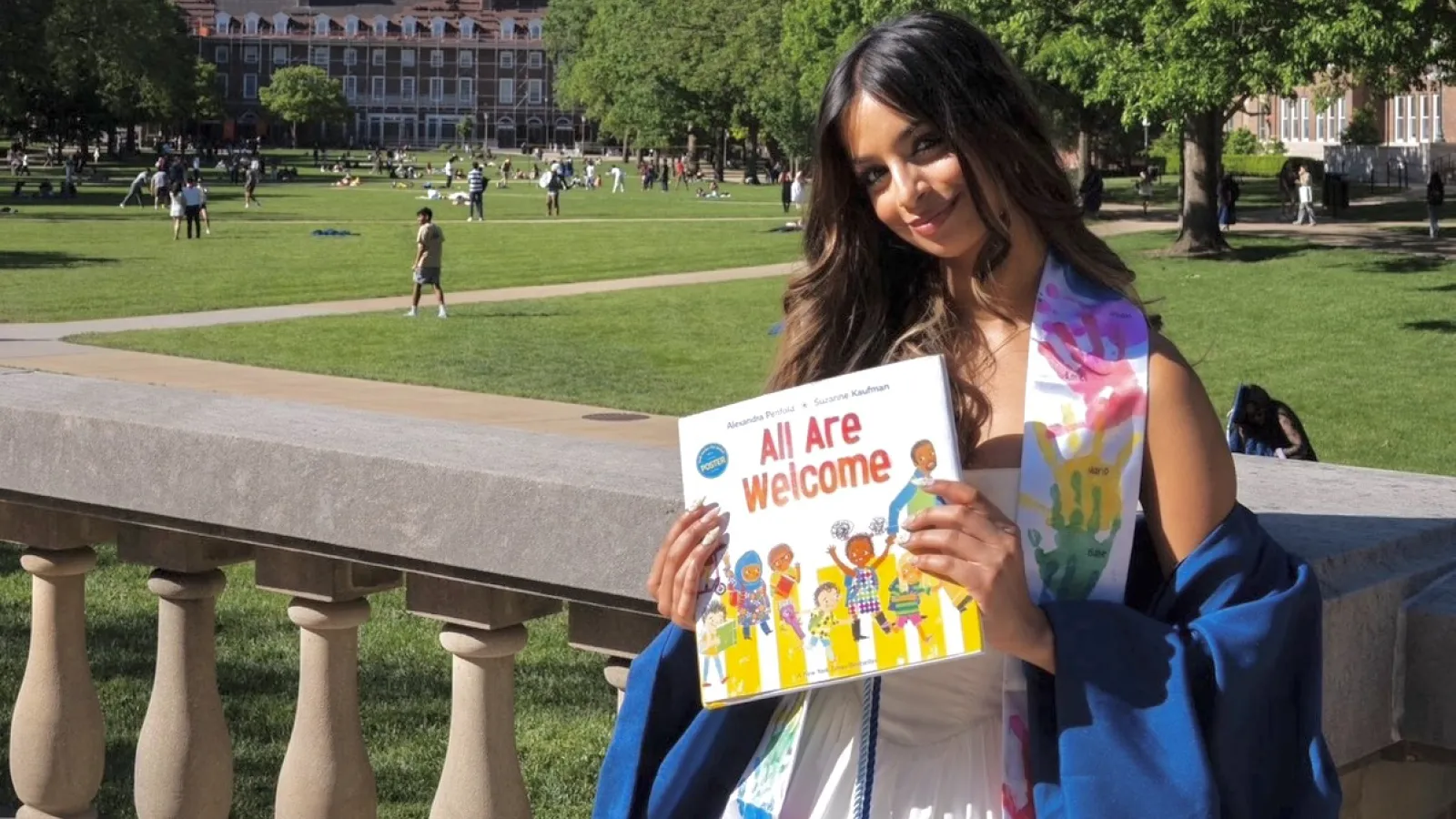
Growing up in Michigan, Mishal Nizar (pictured above) never had a teacher who looked like her. Her classmates were another story.
Nizar, who is Pakistani American, remembers going to school with students from a wide range of cultures. Although her teachers didn't share her identity, some took the time to understand the children in front of them.
“They saw us for our identities, experiences, and cultures, and they wanted to get to know us on a deeper level,” she says.
One teacher learned about the traditions her students observed and found ways to acknowledge them at school. Nizar remembers a Diwali celebration when students were either encouraged to wear cultural attire or specific to their own traditions. She didn't celebrate the holiday herself, but she participated.
When she arrived at school, other students were dressed for the occasion. Their teacher joined them, wearing a sari.
“It was just so beautiful to see,” Nizar says.
Years later, those moments are informing how Nizar approaches teaching herself.
For aspiring educators who have spent their school years alongside people whose lives differ from their own, that exposure can offer an early lesson in building a classroom community.
Learning what it means to belong
Nizar earned her bachelor’s degree in early childhood education in May from the University of Illinois Urbana-Champaign and is now pursuing a master’s degree in curriculum and instruction, with a focus on play-based learning.
As a child, she didn't fully understand what it might have meant to learn from someone who shared her heritage. That realization came later, when she began encountering educators who looked like her.
“When I see educators who are already in the profession and they look like me, I’ll think: ‘Wow, that could have been amazing for me to see growing up,’” she says and explains that she was quiet as a young child. “Getting to see my experiences on a page or even someone who looks like me, could have given me the ability to speak up.”
Now she considers what her own presence could mean to a student.
“It makes me realize how powerful it can be for my future students to see someone who looks like them,” she says, adding that “they might even see themselves teaching one day.”
But Nizar also learned that a teacher doesn’t have to share a student’s race or culture to make a meaningful connection.
She points to learning to pronounce a student’s name correctly, knowing their interests, recognizing the traditions and languages they bring to school, and choosing material that connects to their lives.
Putting those lessons to work
Over the summer, Nizar worked with preschoolers, most of them three years old. During one lesson, she read a book depicting different faces and family structures.
Teaching about different groups was not the primary purpose. Still, she wanted children to encounter characters who resembled the people in their own lives.
They noticed, too.
“I’m not even exaggerating,” she says. “A majority, if not all, were saying, ‘Oh, that’s me,’ or ‘I see myself right there.’”
With elementary school students, she found a different entry point. A book about a girl going through the immigration process prompted a discussion about moving somewhere new without speaking the language. Students began talking about languages they spoke or words they had learned in other languages.
The book didn’t mirror every child’s life, but it gave them an opening to talk about their own, says Nizar.
Who stands in front of the classroom matters, too
Michael Dozier, a history major with a concentration in social studies at Grambling State University, understands the issue from another angle.
Growing up, he had Black male coaches but no Black male classroom teachers. That didn’t happen until college.
“It hits on a different level when you can relate and speak to somebody knowing that they understand where you’re from, where you want to go, and where they see you going,” he says.
At times, he says, teachers didn’t understand cultural or socioeconomic parts of his life. Those memories have influenced how he thinks about inclusion and belonging now.
Quote byMichael Dozier, aspiring educator at Grambling State University in Louisiana

Making the connections
During his student teaching, several students in a 10th-grade civics class struggled to understand how the Bill of Rights applied to them. Dozier changed his approach, using real-world movements, including Black Lives Matter, to ask students how people exercised their rights and made their voices heard.
The material began to click.
“I was so happy,” he says when his students connected to the lesson.
He’s also learned the value of building personal connections with students through his work outside of the classroom.
Dozier is a part of Call me Mister, a college-based program focused on recruiting and retaining diverse male educators. Through the program, Dozier has had opportunities to provide representation for younger students. He and other aspiring educators visit schools to mentor students, share stories about their own lives, and encourage students to do the same.
Those conversations, he says, helps build personal connections that students might not otherwise have had.
Expanding who gets to lead
Nizar is connecting with others outside the classroom as well. She serves as the Asian Pacific Islander Caucus representative for the NEA Aspiring Educators program.
As a South Asian woman, she knows people don’t always picture someone like her when they hear the word Asian. She is Pakistani American, an identity that has sometimes prompted surprise from people who didn’t realize Pakistan is part of Asia.
Taking on a leadership role gives her an opportunity to widen that understanding while showing other aspiring educators where they, too, might lead.
“Not everyone’s going to look the same,” she says.
Nizar also doesn’t assume that all young people have grown up in multicultural communities like hers. She points to rural areas where children may have fewer opportunities to interact with people from different cultures. School can give those students another window into perspectives and ways of life they may not otherwise encounter.
For Nizar, the goal is a classroom where children recognize that their own lives have a place while remaining curious about others.
“I want them to walk into a classroom and know that this is their space as well,” she says. “They are seen, they’re heard, and they belong in that space, and that we create that community together.”
