State voucher schemes. Mass deportations and detentions. A lack of support for special education students and their educators. The myriad of ways that some politicians are sabotaging public schools and educators goes on and on, and has been the focus of discussion among the nearly 7,000 educators at this year’s NEA Representative Assembly (RA) in Denver.
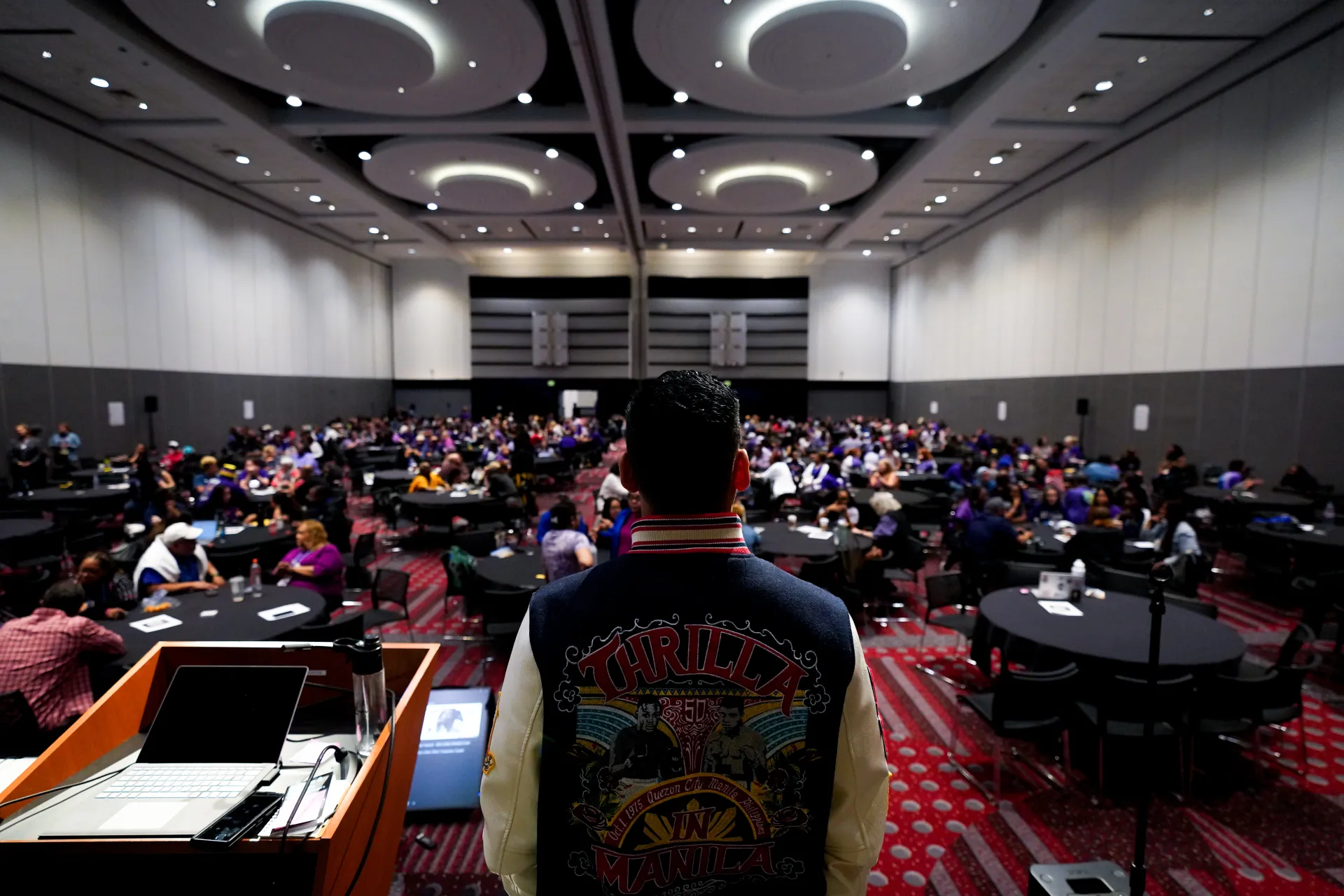
This week, NEA RA delegates stopped talking about these issues and instead starting writing action plans, learning new skills, and gaining tools to take back to their communities, during the second annual “Days of Learning and Organizing for Power,” which took place on Monday and Tuesday at the Colorado Convention Center.
Eighty 90-minute sessions were on the menu for delegates, ranging from new strategies to use at the bargaining table to new tools to engage members in elections—or even to run for office themselves.
Safe Zones for Students
“I see the hurt and pain that our babies are dealing with,” a Washington State teacher said, in a Tuesday workshop about Safe Zones resolutions and policies to protect immigrant students and families.
“We’re here for power,” he added.
Since January, when President Trump withdrew protections for churches, hospitals, and schools and campuses from immigration enforcement activities, NEA members have seen the pain and terror among their students and colleagues. While parents disappear, their children hide at home. “I’ve got copies of their birth certificates… I’m just here to see what else I can do,” one New Jersey educator said.
One answer? Get your school board to pass a Safe Zones resolution. These resolutions, which have been passed by hundreds of districts, reaffirm that every child has the right to attend a public school, regardless of immigration status. They prohibit the collection of student immigration information; establish procedures for school districts to respond to immigration enforcement; and create rapid-response teams if there is ICE enforcement. They do not provide immunity if educators or students do not follow the law.
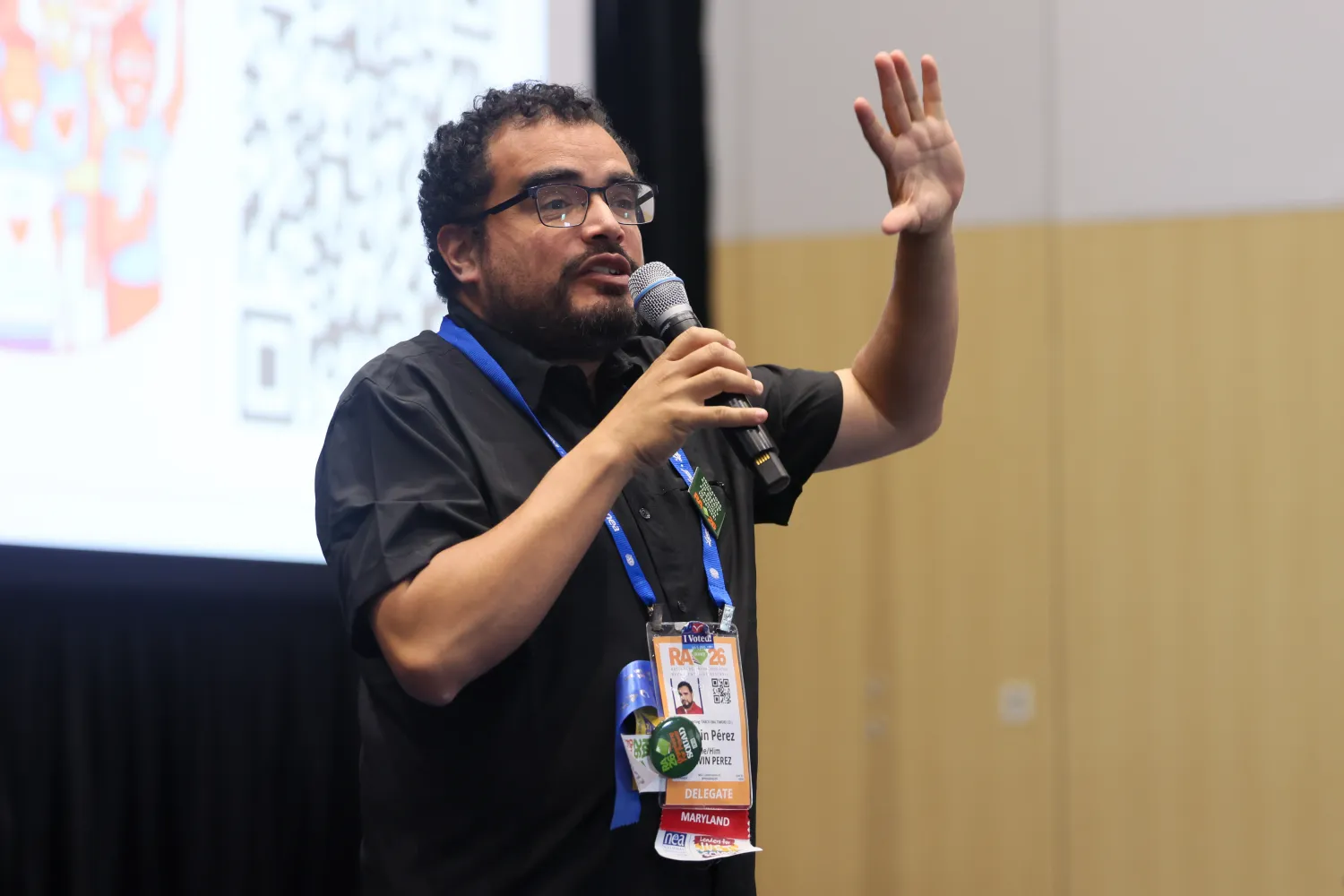
A Safe Zones resolution can lead to school board policy, suggested Edwin Pérez, a Maryland high school teacher, who helped lead Baltimore County’s school board to adopt a policy that increases protections for immigrant students on campuses. The new policy, just approved in recent months, also guarantees that educators and school-board contractors will get training in protecting students.
Check out the NEA toolkit for safe zones resolutions.
Learning to Lobby and More
In another convention center room, delegates learned about how corporate tax breaks hurt schools—and how to fight back. “We’re not here to bore you to tears with the ins and outs of tax policy. Our goal is… to help you to ask the right questions,” said an NEA presenter. “These are billions and billions of dollars at stake that should be devoted to public schools instead of lining corporate pockets.”
Down the hall, delegates learned how to respond to disinformation, or the untruths that are spread on social media and elsewhere about public education and unions. Many of the strategies shared were straightforward. Don’t engage with disinformation online; don’t like, comment, share or amplify the untruths. Do repeat your pro-public education, pro-union message. “You are trusted,” Michigan middle-school teacher Missy Dodge told her colleagues. “Your voice and your experience equal your authentic authority on education.”
In another room, hundreds of educators talked about how to get more and better services for their special education students. “There’s no such thing as one-size-fits-all when it comes to special education policy,” said San Leandro, California, special-ed teacher Thomas Morse. “But where we are, we can build.”
The common goal of all these sessions? To take all of this learning and make a difference in school districts around the U.S.