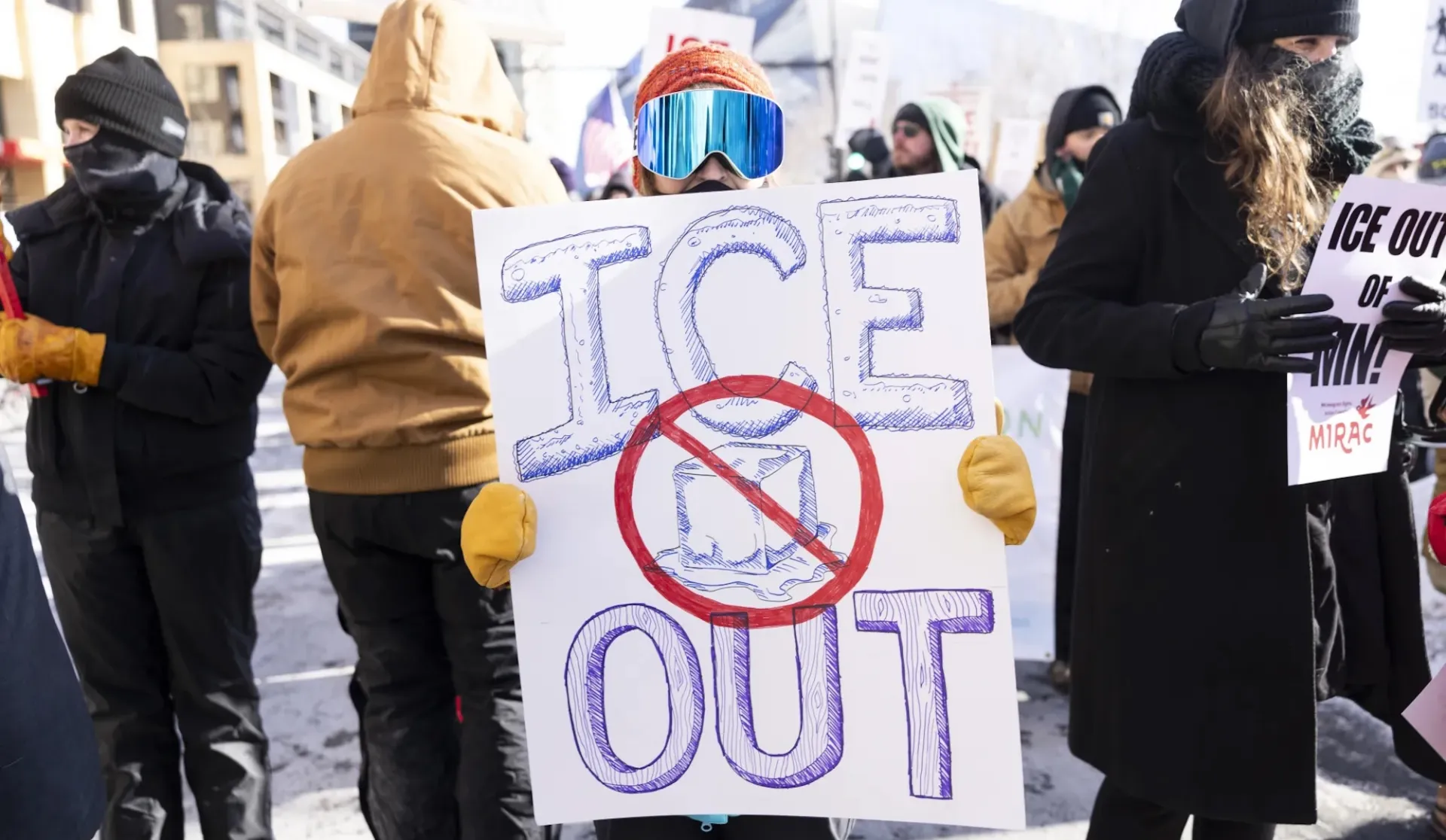
Key Takeaways
- Since the Trump administration withdrew longstanding protections from schools, churches, healthcare facilities, and other “sensitive locations,” immigration and border patrol agents have terrorized students and families.
- Last year, NEA joined a lawsuit asking a federal court to restore these protections; this week’s emergency motion demands immediate relief.
- The motion includes dozens of stories from educators, detailing the challenges of teaching and learning while armed and masked federal agents have free reign to conduct immigration enforcement at and near schools.
First-grade teacher Langston Hamilton Huezo hasn’t had a good night’s sleep since school started. “Every night, I lay awake thinking, ‘What if ICE shows up at school? What if somebody lets them in?’”
“Other teachers I’ve spoken with have shared the same thing—we’re not sleeping out of pure worry,” he says. This worry is, of course, for their immigrant students and their families, but it’s also for themselves and their own families. Many of the educators at Hamilton Huezo’s school in Portland, Ore., are either immigrants or the children of immigrants. “What’s happening is impacting our kids, but it’s also impacting staff who serve kids,” he says.
This week, NEA and the American Federation of Teachers (AFT) filed an emergency motion in an Oregon federal court to stop ICE from terrorizing schools, colleges, churches, hospitals, and other community-serving “sensitive locations.”
This motion includes the testimony of 60 NEA and AFT members who detail the devastating impact that ICE’s presence at and near their workplaces is having on them and their ability to do their jobs.
“The mere presence of ICE near school grounds terrorizes students and educators and disrupts teaching and learning. Fear and cruelty have no place in public education or our democracy,” said NEA President Becky Pringle. “We are taking this legal action to demand that long-standing protections for sensitive locations be restored. The places we go for care, education, and worship must never become places of intimidation and cruelty at the hands of federal agents.”
"ICE Needs to Stay Away from Schools"
For more than 30 years, federal policies around immigration enforcement in the United States respected “sensitive locations,” such as houses of worship, schools and colleges, healthcare clinics, social services and community-based organizations. In other words, these places were safe havens for children and families, free of the violence and trauma of immigration raids and arrests.
In January 2025, within hours of taking office, the Trump administration withdrew those protections—and the results have been terrifying.
In Columbia Heights, Minn., where 5-year-old Liam Ramos was used as bait to capture his father, school officials say ICE agents have been “circling our schools, following our buses, and coming into our parking lots to take our kids.”
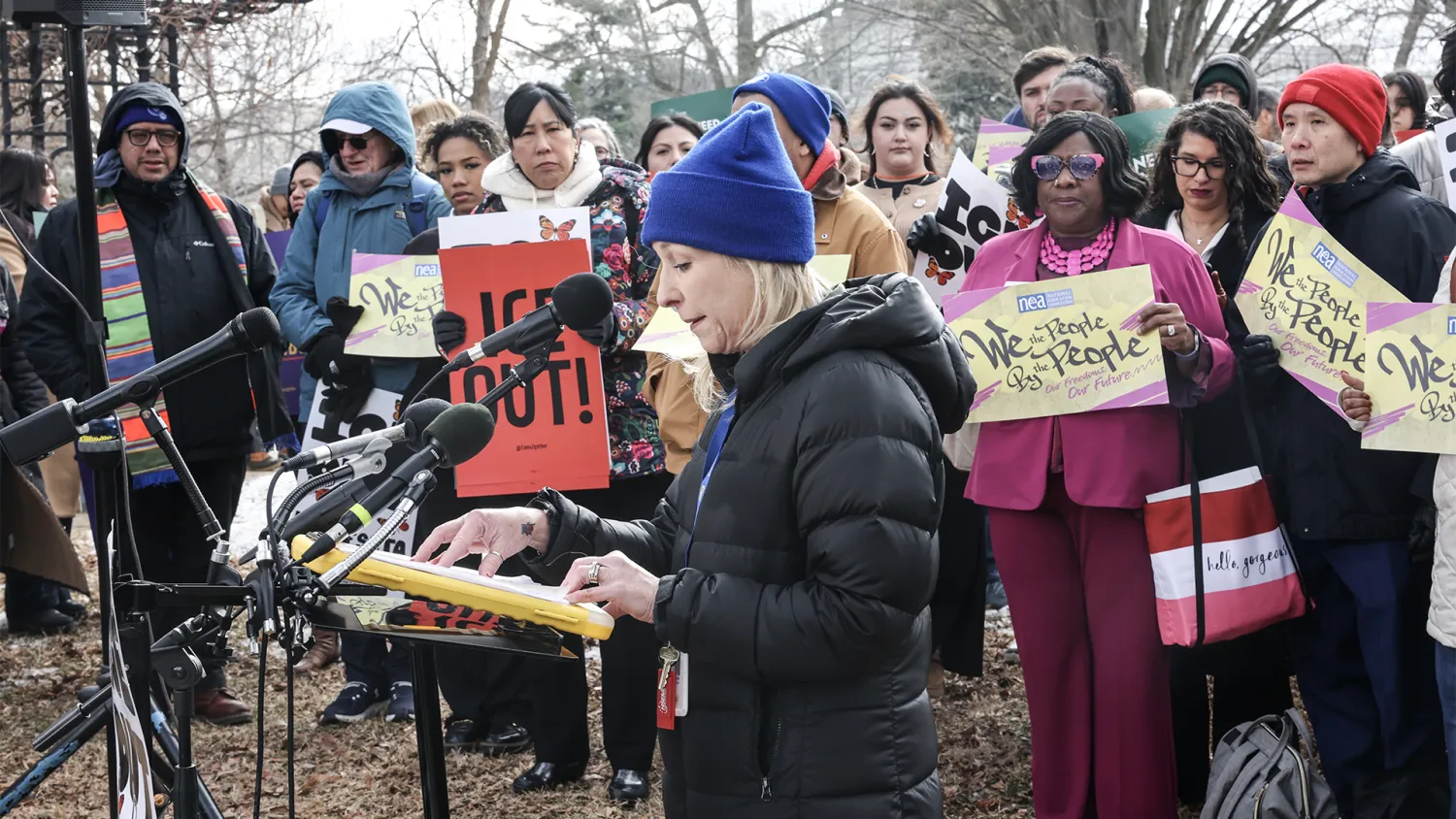
“As educators, for the sake of our children, we need ICE to stay away from our schools and out of Minnesota,” said Columbia Heights teacher Peg Nelson, at a press conference in Washington, D.C., on Thursday. “No child in America should go through what Columbia Heights and other schools in Minnesota have endured. ICE needs to stay away from schools everywhere.”
In Minneapolis, armed Border Patrol officers came onto the campus of Roosevelt High School and handcuffed two school staff members and released chemical weapons on students nearby. “They don’t care. They’re just animals,” said a school official. “I’ve never seen people behave like this.”
Teachers report that attendance rates have dropped in half, as students worry about immigration enforcement occurring at school. Waiting rooms in healthcare facilities are empty. In Los Angeles, a Catholic bishop took the unprecedented step of formally lifting the Catholic obligation to attend Mass, as parishioners risk deportation for practicing their faith.
In Hamilton Huezo’s Spanish-immersion classroom, when his first graders heard that he was speaking a recent “Labor Says ICE Out” rally in Portland, they advised him on what to say. Fifteen of the 16 knew immediately what ICE meant. “I had a kid say we should ask for bulletproof windows for our school,” Hamilton Huezo recalls.
“They said that ICE agents just need to stop. ‘They are making things bad and people are scared,’” he says, quoting his first graders.
Asking the Court to Stop the Chaos
Last year, NEA and AFT joined a lawsuit filed by Justice Action Center and other community organizations, against the Trump administration, asking the court to restore the longstanding federal protections around schools and other sensitive places. This week’s emergency motion is part of that lawsuit.
In the motion, NEA and AFT members describe how the withdrawal of those protections has affected them, their work, and their students and families. These formal declarations include:
- A high school teacher in Virginia who reports a significant decline in interest and participation by immigrant students. Because of their feelings of hopelessness, these students appear “checked out,” declining to study, turn in assignments or complete tests. Students have the attitude of, “why bother about school if they’re going to get picked up.” Students’ fear makes it difficult for this teacher to help students learn.
- A speech-pathologist in California who reports that parents’ anxiety around immigration enforcement occurring at school is so high that they’re questioning whether their children with disabilities should receive necessary legally protected services. Parents are scared that providing additional information to the school or receiving these services may increase their risk of immigration enforcement.
- A teacher in Pennsylvania, who teaches special education and history, saw one of her high school students stop coming to school last spring. The student, who received special-education services, including one-on-one academic help, told educators that he was too afraid to leave his house because of the increased threat of immigration enforcement, including at school. Educators tried to offer online alternatives, but they did not work. Consequently, this student failed all of his classes.
Additional stories by union members detail how the risk of immigration enforcement at school has led schools to offer virtual learning to students, which has significantly increased educator workloads. Educators describe students who are fearful, having difficulty regulating their emotions, and acting out in class and so educators are taking on additional responsibilities to reassure and support their students.
Other union members detailed their fears for their own safety, including U.S. citizen educators who have started carrying their passports to work in case of immigration enforcement occurring at school.
"It is an upside-down world when masked, armed agents swarm hospitals and schoolyards, fly drones over elementary schools during pick-up, step between nurses and their patients, or snatch kids and families seeking care at the emergency room,” said Stephen W. Manning, executive director of the Innovation Law Lab, which is one of the co-counsel to NEA in this lawsuit.
“We are asking the court to put an immediate stop to the chaos at places like hospitals and schools that are intended to be safe spaces for everyone."