NEA President-elect Princess Moss spent 21 years teaching in a rural Virginia school district, where thousands of neighbors show up for Friday night football and the Main Street coffee shop offers lemon chess pie.
It’s a place called Louisa County, tucked into the Blue Ridge foothills, about 50 miles west of Richmond. It’s a sweet, community-oriented place where “the classrooms are full of love,” notes Moss, and it shaped her vision for what public education can and should be for every student and educator.
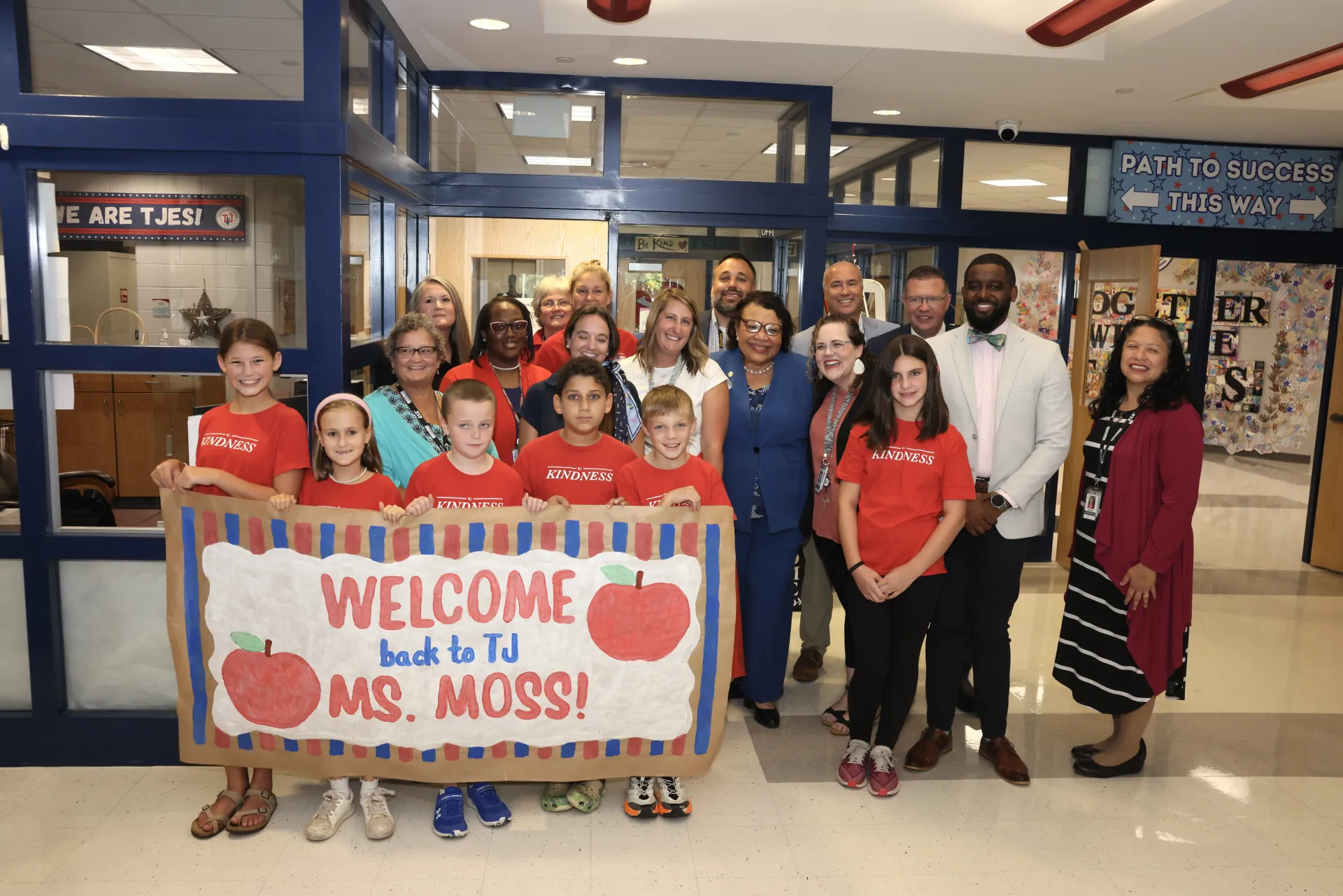
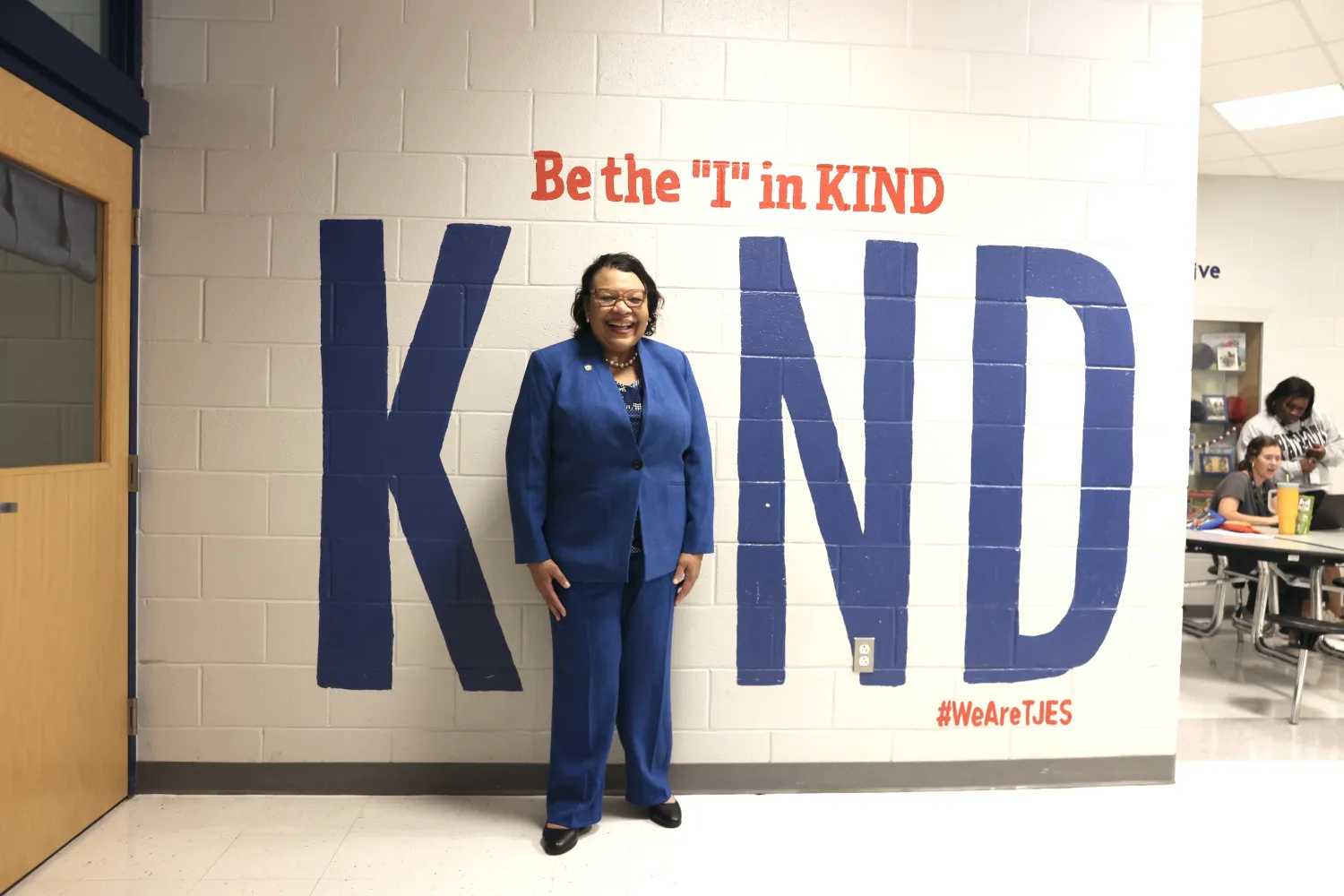
Last week, during a back-to-school tour of American classrooms, which kicked off in Little Rock, Ark., Moss returned to Louisa. “Oh, my goodness, the memories,” Moss said, as she walked through the doors of Thomas Jefferson Elementary.
The superintendent who greets her? Her former student. “I couldn’t sing a lick, but she made me act like I could,” laughs Superintendent Doug Straley. “She was exactly what you want: Firm and loving, firm and loving.”
“The doors of opportunity”
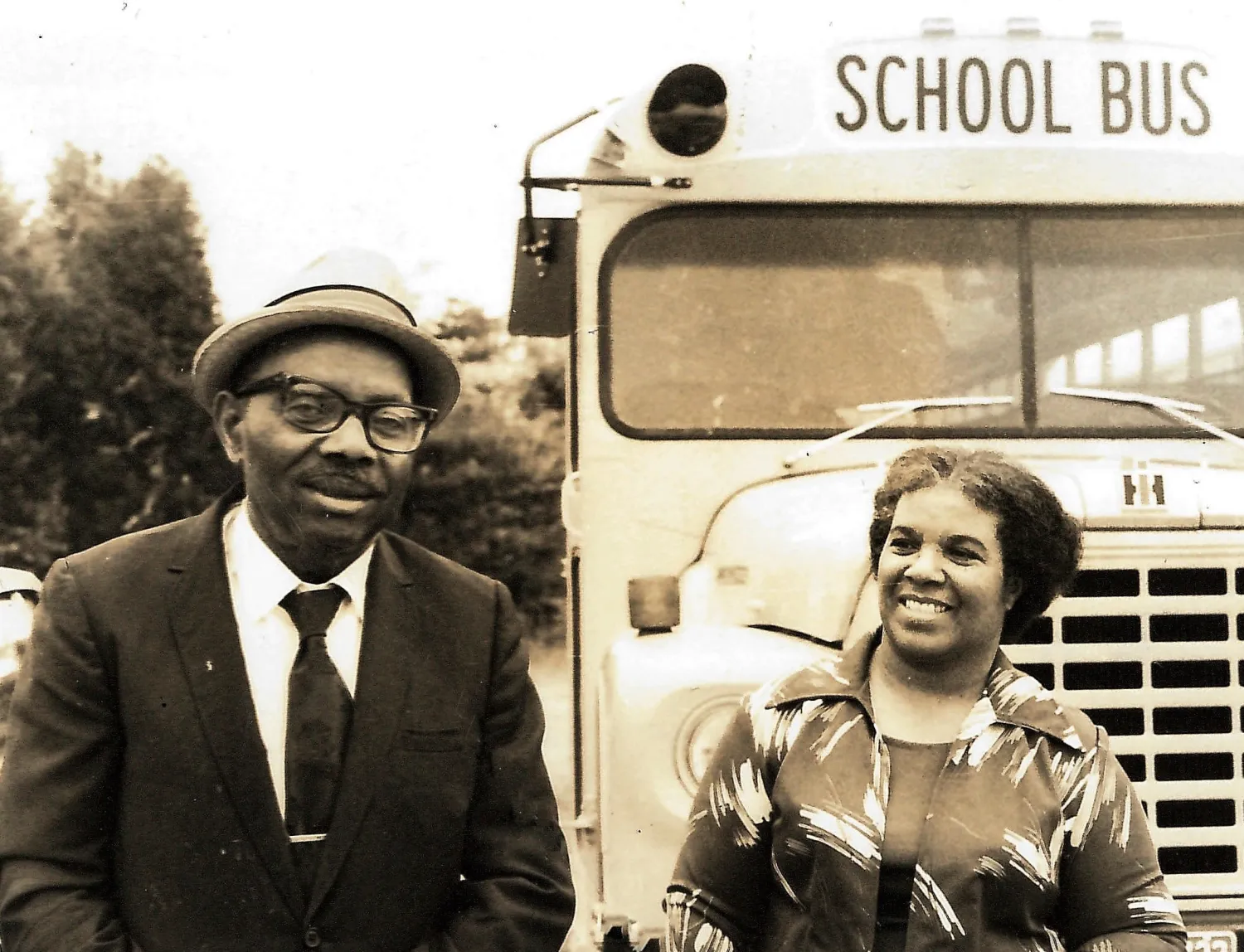
Moss grew up in tiny Bumpass, Va., a half-hour drive from the big grocery store, the daughter of two school bus drivers. Her father left school after eighth grade; her mother earned a high school diploma. They knew—and told Moss repeatedly—the value of a public education.
“All my growing up, I knew I had to get an education to get—as my parents would say—the ‘doors of opportunity’ to open for me,” Moss recalls.
In 1968, Moss was in second grade when Spotsylvania County schools achieved the full integration of Black and white students. Her teacher was Miss Lucy T. Lewis, and she would set Moss on a career that has always focused on lifting up others. “For the first time, I was in a classroom with people who didn’t look like me—and Miss Lewis made everyone feel so welcome.”
That same year, Moss wanted badly to win the school spelling bee, but she lost on the tricky syllables of refrigerator. “Miss Lewis made me feel like the smartest person in the world,” Moss recalls. “She said to me, ‘You didn’t spell it right, but you did spell it phonetically. You are so smart, Princess!’”
Years later, after earning a bachelor’s degree in music education from Virginia’s Mary Washington University, Moss would get a call from Louisa’s then-superintendent of schools. He was looking for a music teacher, he said.
“It was my dream job,” she recalls.
“The beauty of collective action”
Today’s Thomas Jefferson Elementary School (TJES) is not the same as the school where Moss arrived, as a first-year teacher, in 1983. In 2011, a magnitude 5.8 earthquake hit Virginia’s Piedmont region; its epicenter was tiny Louisa. The new, replacement school is bright, with an innovative outdoor learning center.
Rural schools like TJES serve almost 10 million students in the U.S., and nearly half are from low-income families. Their communities are often cash strapped, which means schools are more dependent on state funds to pay for teachers, counselors, librarians, arts and sports programs—and more in danger when states embrace voucher programs that siphon money out of public schools.
As NEA’s president-elect, Moss is determined to speak up for all schools, and all students, including the ones in out-of-the way places that people often overlook. Every student should have the kind of great public education that Moss experienced in rural Virginia, she says, and every educator should have the resources they need to deliver it—and without paying for school supplies themselves!
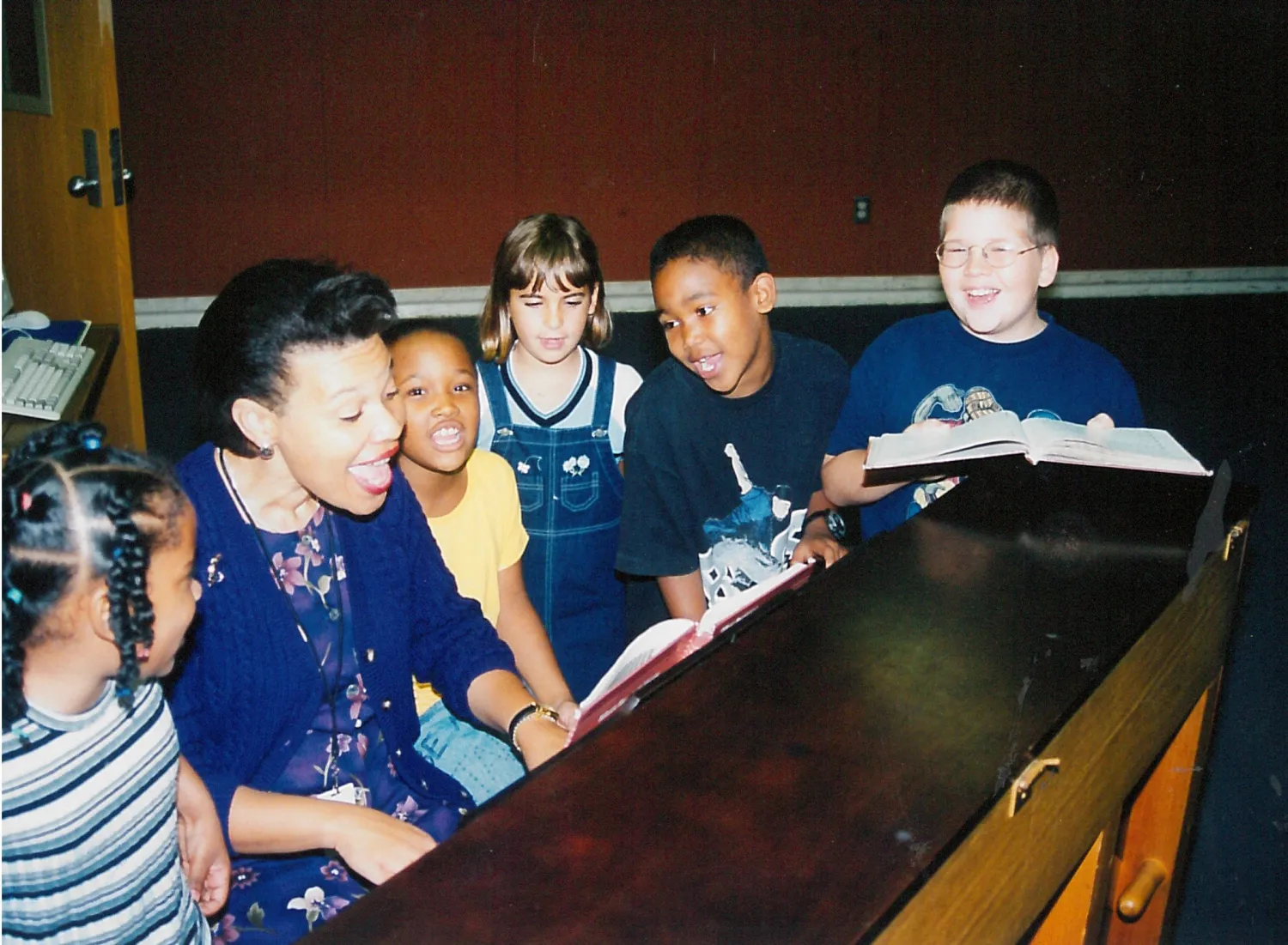
Decades after Moss started and saved Louisa County’s elementary band program, long after she started TJES’s choir and taught students to line dance to Farmer in the Dell, Moss has never forgotten the lessons she learned from her own parents and her Louisa County colleagues and students, she says.
Here are just a few:
- Take care of each other. When Moss started working at TJES, she met Daries L. Morris, Jr., an experienced and celebrated P.E. teacher. (Today, the TJES track is named in his honor.) “He was like a big brother to me, always checking on me, always making sure I was building community,” Moss recalls. Morris modeled inclusivity—and Moss took his spirit to heart. As the new president-elect of NEA, she wants to hear from educators all over the nation, she says. She is building the same kind of caring community that Morris built for her—just bigger.
- Stand up for each other. As a young teacher, Moss liked to spend time listening to her colleagues in the TJES teachers’ lounge, but she soon realized that a lot of the chatter had to do with people’s second jobs. “I went to my local [union leaders] to find out what we could do about it and was ‘voluntold’ to put together a new salary proposal. So, I did, along with a colleague, and we explained it in a way that compared our position to neighboring districts—and we were granted a raise!” Moss recalls. “It was so empowering to learn the beauty and power of collective action.”
Today, too many educators still work second or third jobs, Moss notes. They deserve to be paid for their professional expertise. She also wants them to experience the strength of solidarity, of getting organized, through their unions.
In time, after serving in various local union roles, Moss went on to become the president of the Virginia Education Association and, in August, was elected by NEA members to the presidency of the nearly 3-million member NEA. She takes office on September 1.
“She is loved”
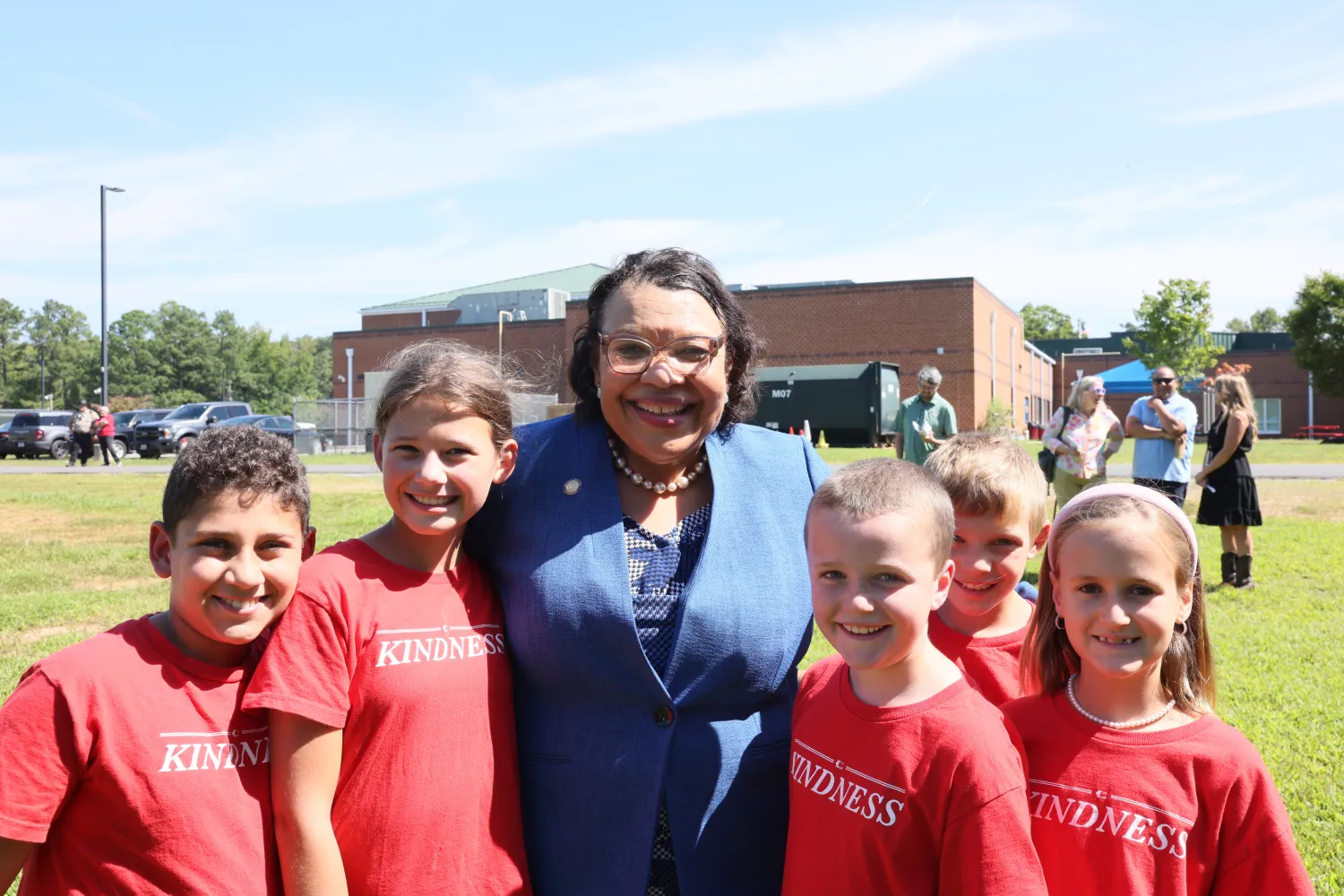
The morning of Moss’ return to Louisa County, on August 26, assistant principal Katie Jones picks up the mic for morning announcements and tells TJES students: “My old music teacher is visiting today!”
“I loved Miss Moss. Everyone loved Miss Moss,” says Jones, who was a student in Moss’ TJES music classroom in the 1990s. “I was just reminiscing about how, when you were good in her classroom, she’d give you an apple sticker. And everybody wanted those apple stickers!”
When Moss arrives, TJES’ Kindness Club greets her with a banner—with a big apple on it.
Moss peeks into the new music room, delighting in the neat bins of instruments. In a third-grade classroom, the teacher sees Moss and says, “Miss Moss! My mother-in-law wants you to call her.” That night, at a reception in Louisa’s United Methodist church hall, hosted by Moss’ friend of 40 years, retired teacher Barbara Wilson, dozens of former students and coworkers celebrate Moss’s election.
“She is loved,” says Wilson.
A surprise guest is John Baldino, now 85. In the 1980s, he was Moss’ NEA UniServ director, or field representative.
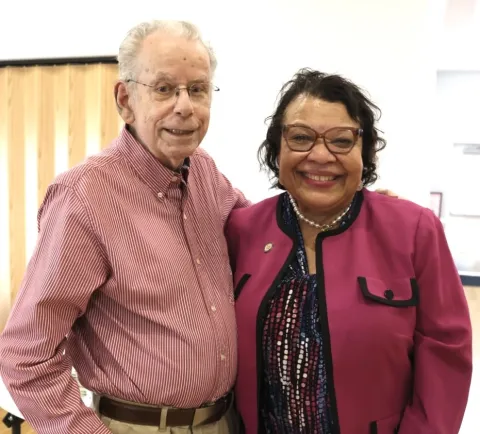
Baldino recalls an evening when Moss was a young teacher. “I don’t even think she had three years in the classroom,” says Baldino. “We were all up at the courthouse, at a board of supervisors meeting. She got up, in a very pleasant way, and told the board members what they were doing wrong and how exactly they could help teachers out. I think that was when she really got our attention!”
Today, the fact that Moss will be the president of the nation’s largest labor union doesn’t surprise Baldino one bit. “No. Not at all,” he says.