
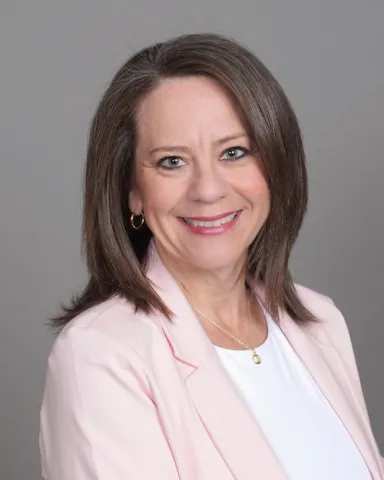
“Drowning!” That’s how special education teacher Meghann Hughes describes her workload and that of her colleagues.
“The first thing that suffers is the students,” she says.
While the number of students who qualify for special education support continues to grow, fewer teachers and support staff are available to help them. “Positions have not been able to be filled,” explains Hughes, who works in San Diego Unified School District (SDUSD). “There are still vacancies for special education teachers and even more vacancies for paraeducators.”
This isn’t a new issue, and it isn’t unique to San Diego. According to the National Center for Education Statistics, the number of students qualified for special education services nationwide nearly doubled from 3.7 million during the 1976 – 1977 school year to 7.3 million in 2023 – 2024.
Compounding the problem, paraeducators— who often provide individual or small group support to students with disabilities—are consistently understaffed and underpaid, making an average of $36,360 a year.
As of 2025, only 20 states had caseload limits. In Hughes’ district, current caseload limits are 20 for education specialists who handle mild or moderate cases and 12 for moderate to severe cases.
Hughes notes, “Some … cases require several meetings, which takes me away from the classroom and working with the students.”
Caseloads in her district have become so overwhelming that, in January, 90 percent of San Diego Education Association (SDEA) members voted to strike.
SDEA had successfully bargained on the issue several years ago, but the language in the contract had a loophole. The district had agreed to reduce the maximum caseload assigned to each educator. However, Hughes recalls, the district continued to ignore those agreed upon contractual limits. Instead of respecting the caseload limits they agreed to, the district settled annual unionwide grievances by compensating overloaded educators with end-of-year stipends ranging from $500 to $5000, depending on the number of students assigned beyond the caseload limit.
“I don’t think money is the solution to this problem. I want a more manageable workload so that I can, one, enjoy my job, and, two, provide the necessary services that these kids deserve,” notes Hughes, who says she essentially has two jobs. “I’m not only a teacher, but I’m also a case manager.”
That includes managing paperwork, doing assessments and writing up the reports, scheduling IEP meetings, and consulting with the relevant service providers and parents.
SDEA and SDUSD came to an agreement that avoided a strike and held the district accountable for tracking and enforcing caseload caps. (Read about SDEA’s wins below and get tips for your union’s next negotiation.)
Hughes’ opinion on the agreement? “It’s a promising beginning.”
_____________________________________________________________________________________________
Bargain This!
Your Union Can Help Reduce the Special Ed Workload

The San Diego Education Association’s (SDEA) hard-won contract language offers a model for other districts to help protect special educators and the students they serve.
If you live in a state that allows collective bargaining, your union can negotiate for this language to cut down on workload and ensure fair treatment for special educators.
If you don’t live in a collective bargaining state, you can still negotiate with the district through your union and advocate for smaller caseloads at school board meetings and by talking with your state representatives.

STEP 1: Negotiate caseload caps, when possible, and pursue formal agreements or policies that require caseload limits. This gives the union a concrete, enforceable standard to hold the district accountable. In an earlier bargain, SDEA secured caseload limits lower than California’s statewide standard.The new contract strengthens enforcement of the limits.
STEP 2: File unionwide class-action grievances for every single violation. Rather than individual teachers quietly absorbing overloads, SDEA made grievance-filing a collective, annual practice. This created a paper trail and built mounting pressure on the district.

STEP 3: Make the district pay for class-size overages. Previously, the district was fine with overloading teachers and paying a small, lump-sum stipend at the end of the year. In the new contract, SDEA requires overage stipends—monthly penalty payments charged when educators are assigned students beyond the contractual limits—to be paid within the next payroll period. This incentivizes the district to take action before it gets too costly.