Key Takeaways
- Meet Crystal Huckabee. She drives 600 miles a week to teach anthropology at up to six community colleges in the Los Angeles area. Why is this necessary?
- Like the vast majority of part-time faculty members in the U.S., Huckabee is severely underpaid. Part-time faculty members can make as little as half as much as full-time faculty members to teach the very same classes.
- Recently, Huckabee and her colleagues in Long Beach, Calif., won a class-action lawsuit against their community college district, which will translate into better pay for all of the state's part-time faculty. At the same time, faculty unions in the Pacific Northwest are flexing their power at the bargaining table with incremental progress toward pay parity.
A Day in the Life
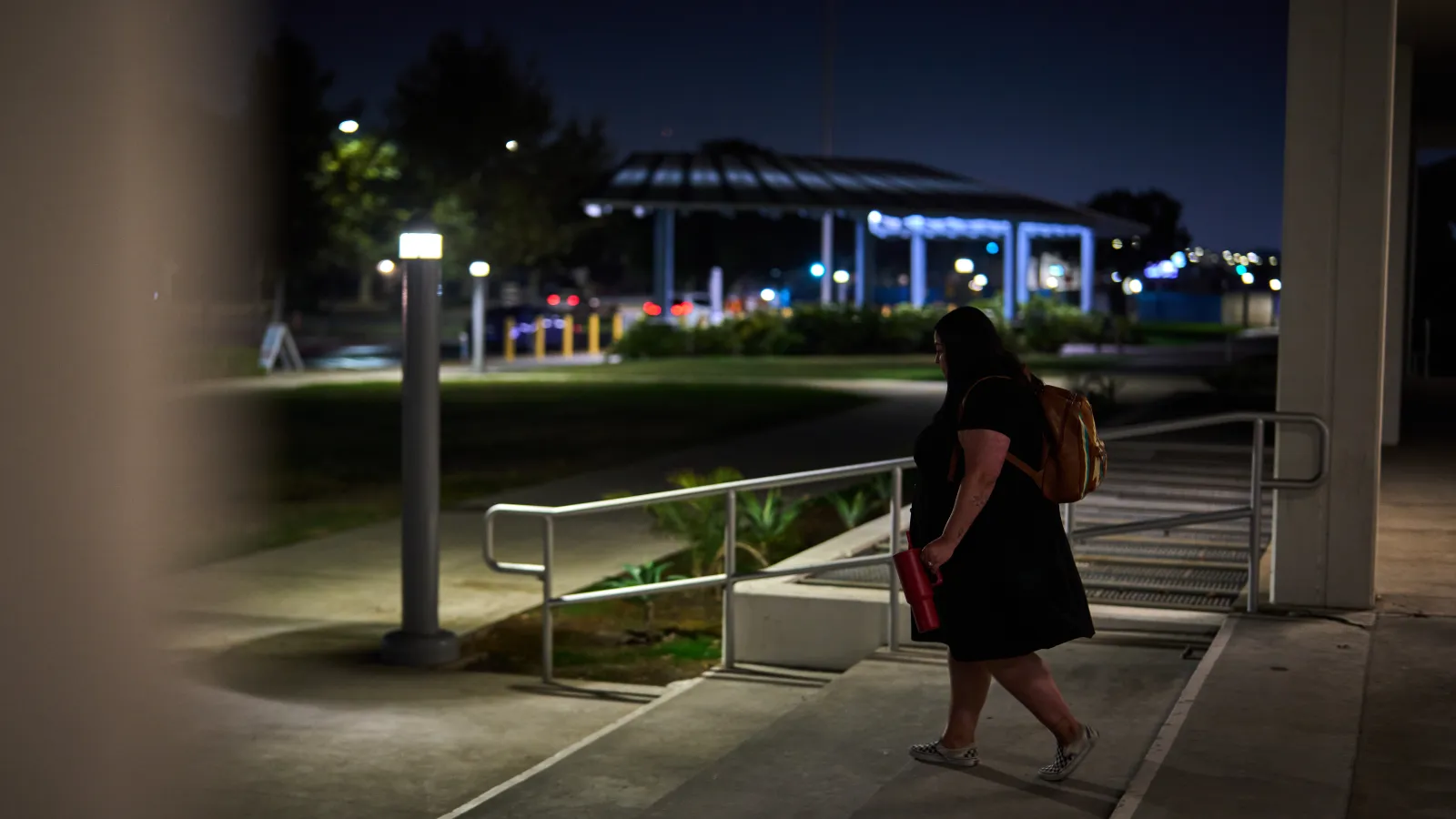
Anthropology lab starts at 6:40 p.m., but Crystal Huckabee arrives on campus more than an hour earlier to prep, meet with students, and toss back a 12-ounce Celsius with 200 milligrams of caffeine. For part-time faculty members like Huckabee, energy drinks are survival gear.
Most semesters, Huckabee teaches anthropology at six different community colleges around Los Angeles. Each week she drives about 600 miles and spends at least 12 hours behind the steering wheel, listening to audiobooks and stealing naps in campus parking lots. Her commute is like a spider’s web, spinning across Southern California’s freeways—and Huckabee is far from the only one caught in it.
Nearly 50 percent of all U.S. faculty—and up to 80 percent at community colleges—are contingent, sometimes called “adjunct,” faculty members, according to the University of Southern California’s Pullias Center for Higher Education. They teach the same classes, in the same classrooms, on the same campuses as full-time faculty, but can be paid up to 70 percent less.
“We are expected to do the same work and provide the same level to our students—and we want to provide the same level to our students—but that comes at a cost. And it’s our cost,” says Huckabee, who is president of the part-time faculty union at Long Beach City College.
Today, part-time faculty like Huckabee are pushing all the levers they can for pay equity. They’re winning in district courts, fighting in statehouses, and working through their unions to strengthen their voices.
“The only way to make change is through your union,” Huckabee says. “There is strength in numbers.”
Is This Really Part-Time Work?
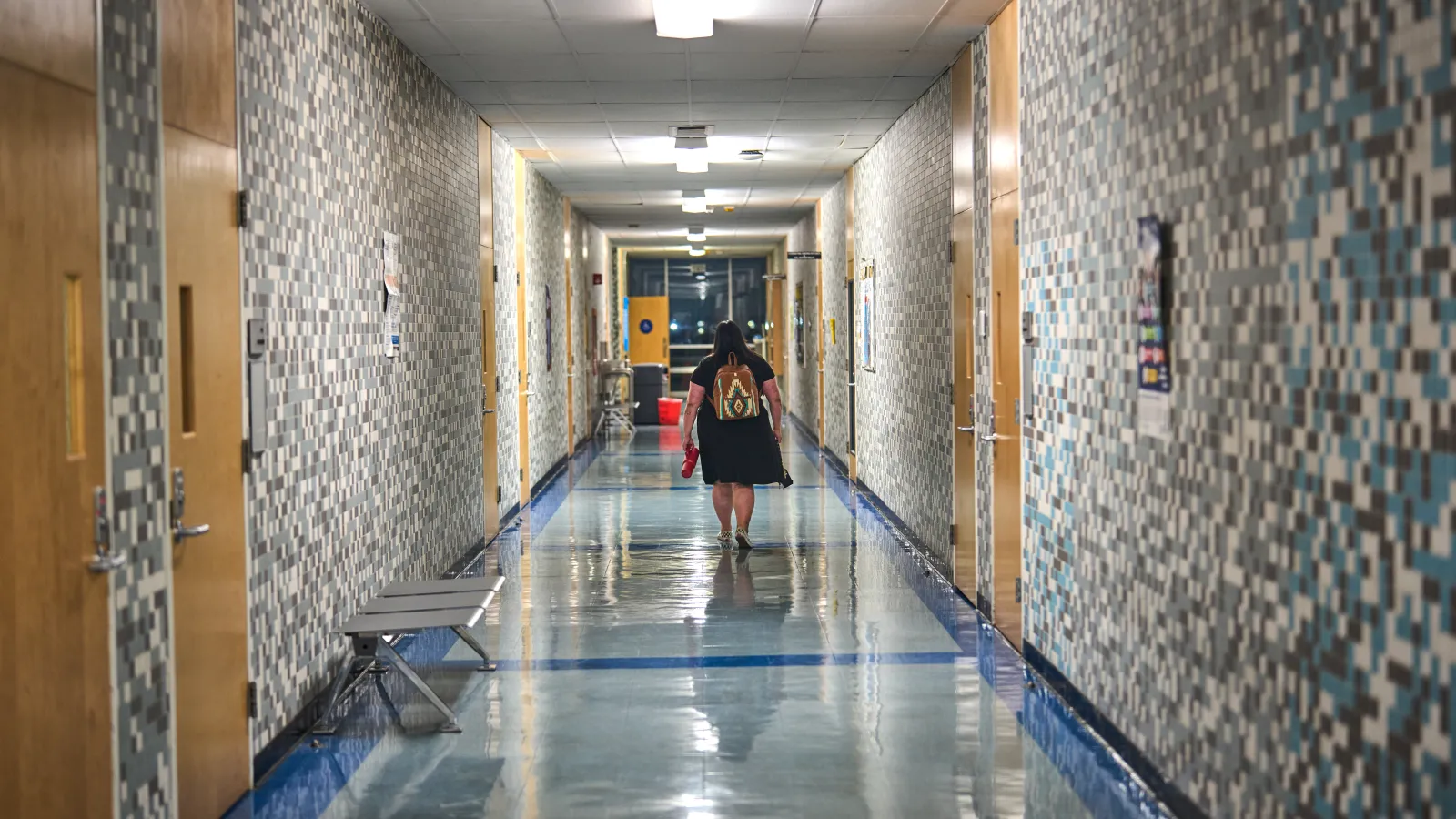
It’s Monday, which means a 15.5-hour, 120-mile workday for Huckabee. Her breakfast? An iced coffee, spiked with a vanilla protein shake. “Nothing glamorous but it’ll keep me full all day,” she says. Her dinner? A chocolate protein bar, unwrapped at about 7:30 p.m., during a break in this evening’s lab.
She’ll get home just before Kimmel airs. And then, tomorrow morning, it will take her 2 hours and 15 minutes to drive to her 9:55 a.m. class, thanks to LA’s infamous freeway traffic.
This is what it takes for Huckabee to pay her mortgage in booming Riverside County and keep up with her pair of sweet, snorting French bulldogs. This is what it takes because pay for part-time faculty in the U.S. is fundamentally unfair.
“People think we should be happy. We’re doing what we love, we’re doing something we’re passionate about,” Huckabee explains. “But it’s wrong.”
Almost every college pays contingent faculty for the hours they spend in their classrooms. But for every hour inside a classroom, Huckabee works at least two hours outside of it—and that time goes unpaid.
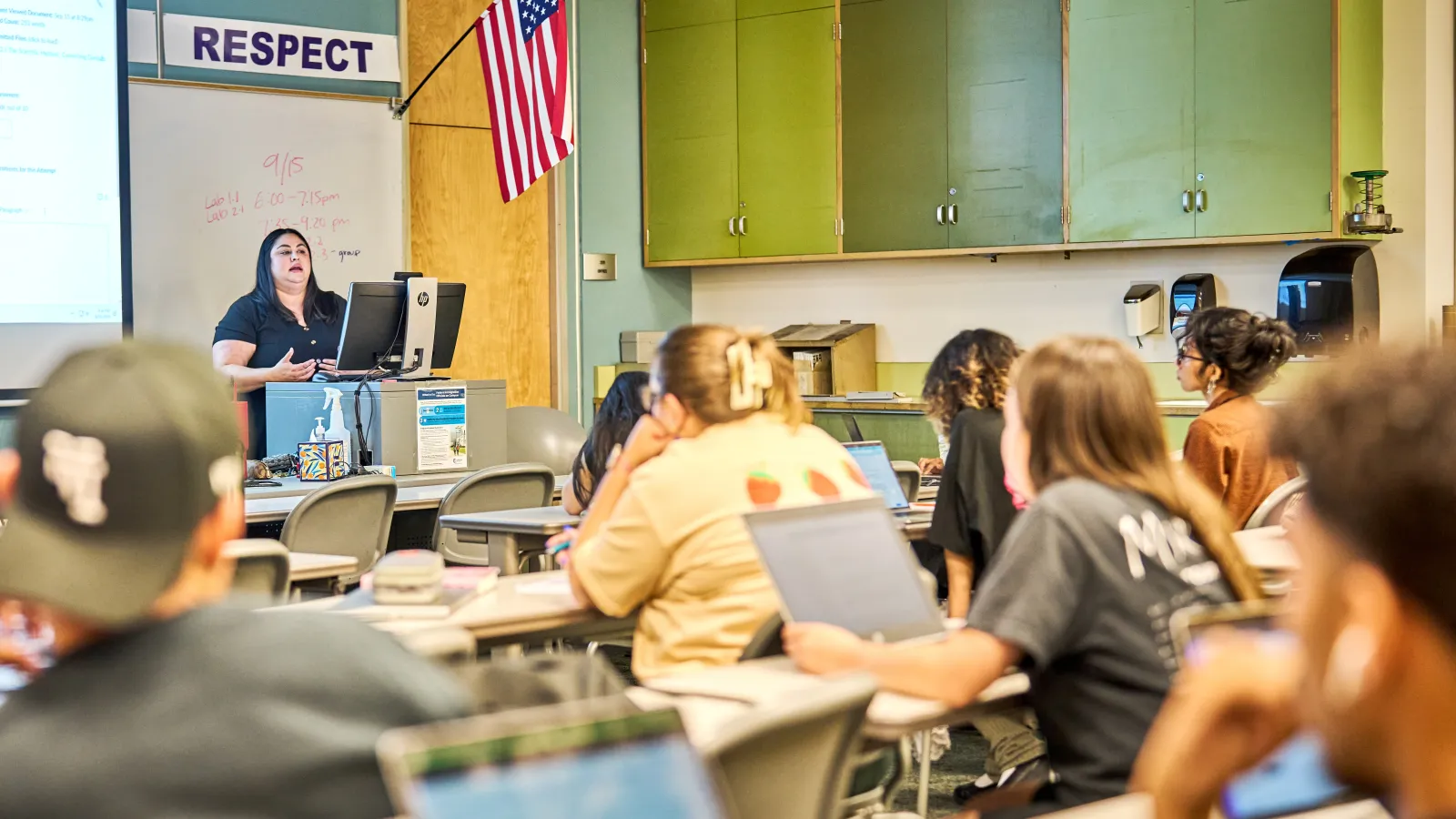
In her home office, under the gaze of her prized Jane Goodall doll, Huckabee preps and plans for class. She meets with students during online office hours; responds to their emails about class assignments and career opportunities; grades papers and exams; and keeps up with archeological discoveries that inform her curriculum.
“Working part-time doesn’t mean I’m giving part-time work to the students,” she says.
California Court Says Pay Them!
In 2022, two of Huckabee’s part-time colleagues, art history professors Karen Roberts and Seija Rohkea, got tired of hearing administrators say things like, “You can do your syllabus during class.” They filed a class-action lawsuit against the Long Beach City College District, alleging it had been violating the state’s wage laws.
In February 2025, Roberts and Rohkea won, opening the door for California’s 40,000 part-time faculty to demand more. Their employer—the community college district—is not exempt from minimum wage laws, the court found. Hence, it must pay faculty for all of the hours they work, including the work done outside the classroom to fulfill their teaching assignments.
“The judge affirmed we are being exploited,” Rohkea told California Educator, the magazine of the California Teachers Association.
The verdict has served as a warning beacon to colleges across the state: Get serious about pay, or else. In Long Beach, pay for part-timers increased this year from 42 percent to 51 percent of full-time faculty. It’s still too low, Huckabee notes.
Meanwhile, the Long Beach board also voted this winter to approve an $18 million settlement to the class-action suit. If approved by the judge, as anticipated, it would mean more than $11,000 for each of the college’s 1,450 part-time faculty members.
It’s a huge victory, but the case has always been about more than the money. Yes, part-time faculty deserve fair pay. They also deserve
acknowledgment that their work matters, Huckabee says.
“I think we’re often thought of as ‘less than,’” she says. “I’ve been lucky enough to see the changing of that, finally."
NEA Today Video: We Deserve To Be Paid
Bargain This! Pay Equity on the Table
When Jodi Ritter first started teaching at Highline College, south of Seattle, she didn’t join the union. Ritter had taken a roughly $30,000 pay cut to leave her K–12 classroom and was making around $40,000 annually—and that’s only when she could get a full load and summer work.
Money was scarce.
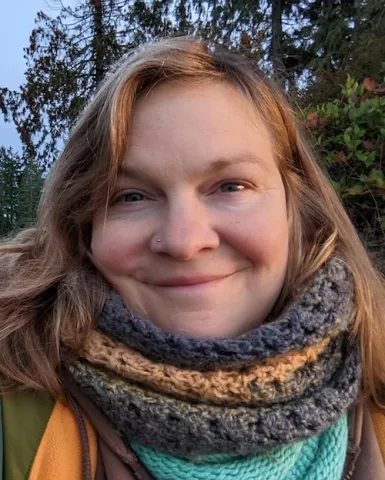
That was 14 years ago, and contingent faculty voices in their union were in short supply. Today, things have changed. Ritter and her contingent colleagues still don’t get paid what they deserve, but their union is making substantive progress at the bargaining table.
“I feel very seen!” she says.
The magic number is 85
Faculty unions in the Pacific Northwest have taken a specific approach to pay equity over the past two decades, bargaining contracts that explicitly tie part-timers’ pay to full-timers’ pay. Typically, the way it works is part-timers’ pay is set to a specific percentage of the lowest-paid full-time faculty member’s wage. The goal? To reach 85 percent, a figure that part-time faculty think is a fair representation of the work they do in and outside of classrooms, compared to full-time faculty.
It’s not a perfect system. Years of experience often are overlooked. However, these linkages do have a practical, positive effect. When one goes up, the other goes up, and everybody gets paid more. They also send the message that part-time faculty deserve equal pay for equal work.
Through these efforts, Highline’s contingent faculty will reach 72 percent in their current contract, up from 64 percent in 2022, reports Kristyn Joy, the part-time faculty rep on the union’s executive board. “It’s still not parity,” she notes, “but I’ve heard from some colleagues that it is transforming their family budgets.”
Highline also bargained to end previously required office hours for contingents. “Until [the college] pays them 75 percent, it’s just a meet-as-needed basis,” says union president James Peyton. “We’re trying to make clear to the college, you have to pay people to make it possible for them to do the work you want.”
Steady Progress
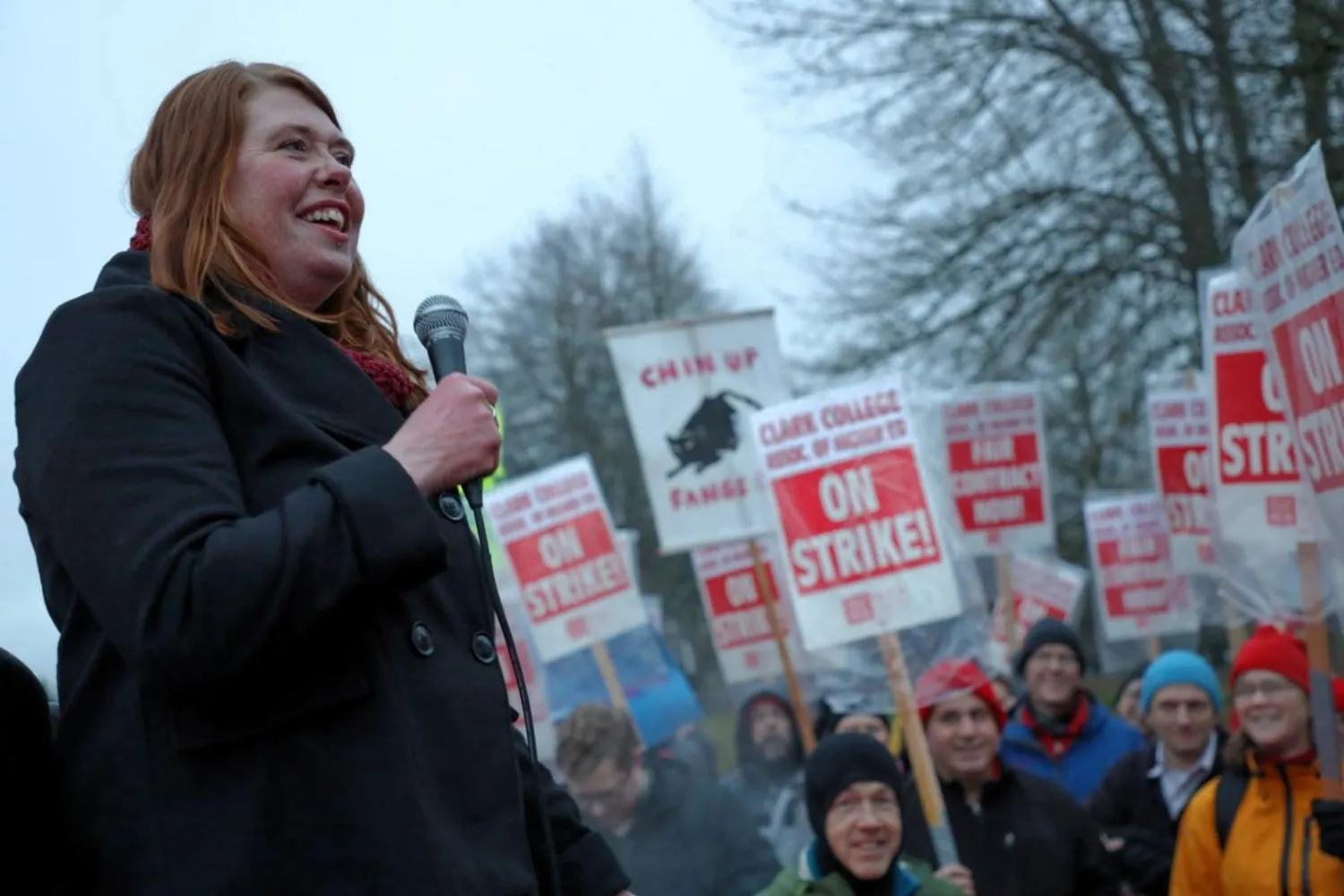
In 2020, it took 15 months at the bargaining table—plus a 2-day strike involving 500 faculty members and countless supportive students—for Washington State’s Clark College faculty union to win a contract tying part-time pay to full-time pay.
“Of course, [the administration] could have just given it to us,” recalls local union president Suzanne Southerland. “But maybe I’m glad they didn’t. … That was some strong solidarity!”
Today, Clark’s part-time faculty are getting 72 percent of full-timers’ pay. Two hours north, at Olympic College, contingents will soon reach 74 percent.
Meanwhile, at Chemeteka Community College, in Salem, Ore., where part-timers were paid 67 cents on the dollar compared with full-timers a few years ago, the bargaining team reached 73.5 percent.
Last year, Michelle Kennedy, a part-time faculty member who is vice president of Chemeteka’s union, testified to Oregon lawmakers about the consequences of paying part-timers so little. State lawmakers know it’s unfair, she says, and so do students. “Some of them got involved in bargaining last period because they were horrified that their part-time instructors were getting paid so much less than their full-time instructors,” Kennedy says. With their support, plus growing awareness state, progress is being made, she add.
Get more from