Key Takeaways
- The surge in data center construction over the past few years has sparked a backlash in communities across the nation, alarmed about environmental impact, the strain on the power grid, and the rising cost of utilities.
- Almost 1,900 public schools are located within a mile of a data center or one that is currently under construction. New research shows adverse effects on learning among students in schools that are closer to a data center.
- The tax breaks and subsidies that attract these projects are draining much-needed funding from public schools. In many states where data centers are clustered, schools are losing up to $250 million each year.
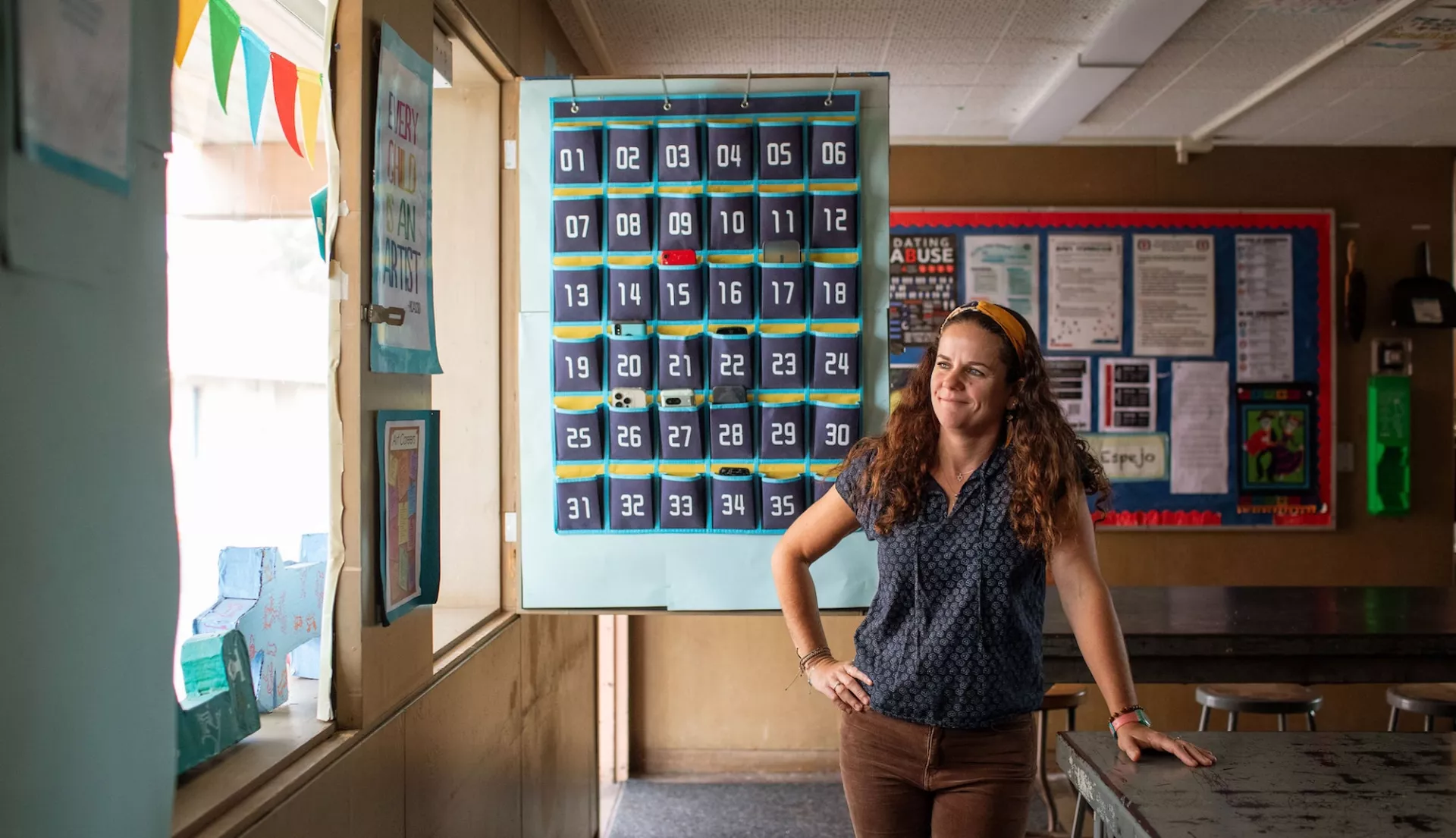
When Saddle View Elementary School in Palm Beach County, Florida, opened its doors in 2025, the staff was excited and energized about being part of a brand-new school, the 183rd in the district. The school was a state-of-the-art campus featuring an innovative e-sports program, solar panels, and even a hydroponic school garden.
Midway through the school year, however, Saddle View educators and their neighbors were stunned to learn about plans for another brand-new, ultra-modern facility in their community.
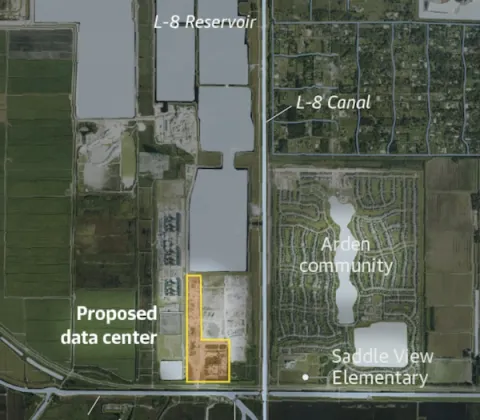
The Palm Beach County Board of County Commissioners was on the verge of greenlighting “Project Tango,” a massive 202-acre “hyperscale” data center. The development consisted of 4 million square feet of buildings—some seven stories tall—containing over 600 industrial cooling fans.
The proposed site was only 1,200 feet away, on the other side of a narrow canal, from Saddle View and the Arden community and neighborhood. If approved, Project Tango would add the elementary school to a rapidly growing list of public schools that sit within a mile of data centers or one currently under construction.
“We were shocked,” recalls teacher Julie Cink. “I’m not necessarily opposed to the idea of data centers. They have to go somewhere I suppose, but why was this one being placed so close to our school, so close to our homes?”
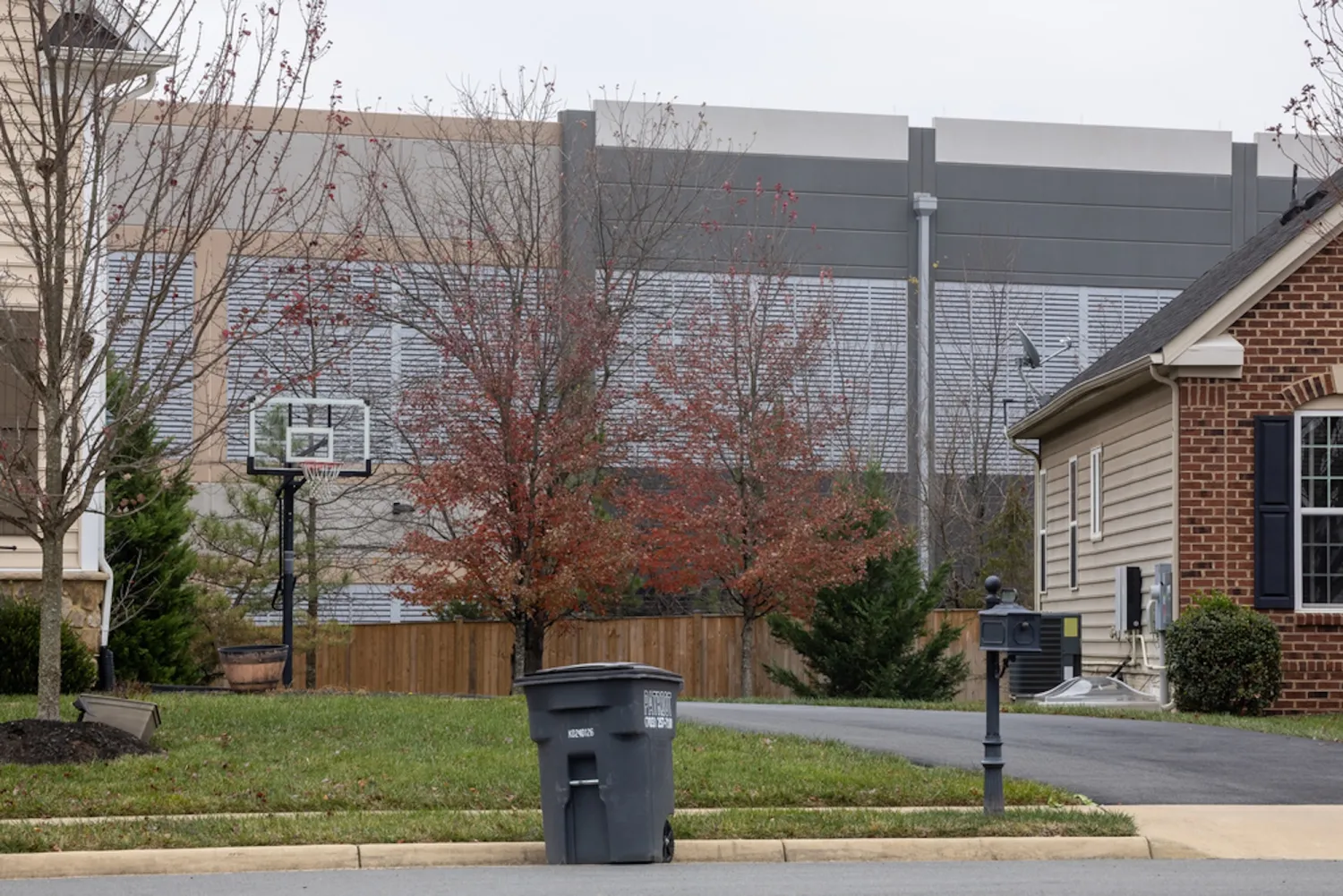
The growth of data centers—large, stand-alone facilities that support artificial intelligence (AI) workload—has been explosive. The United States currently has more than 4,000 of varying sizes. According to the Pew Research Center, 38 percent of Americans live within 5 miles of at least one operational data center.
Cink and her neighbors wondered what the impact of Project Tango would be on the local environment. And how was it going to affect students' health and productivity? “There were just too many unknowns,” she says.
Furthermore, the measures many states and localities have taken to attract these projects to their communities—generous tax subsidies and exemptions and non-disclosure agreements shielding plans from public view, for example—are profoundly shortchanging our public schools, says Anthony Elmo, public education funding defender at Good Jobs First, a national watchdog group that promotes accountability in economic development.
“We’re giving runaway tax breaks and subsidies to an industry that doesn’t need them, and students and educators are paying the price.”
Data Centers and Student Learning
The growing backlash against data centers in residential neighborhoods was already national news when the plans for Project Tango came to light. The constant noise—the low-frequency hum from around-the-clock cooling systems, or the higher frequency whine from servers or backup generators—has been infuriating enough to nearby residents. But opposition has focused mainly on the obvious risks to the environment, the heavy demand on electric systems, water supplies, roads, and the resulting higher cost of utilities.
In July 2026, the NEA Representative Assembly voted to amend NEA's AI policy statement to include a clause opposing “the construction of data centers that harm the environment and, by extension, negatively impact the health of educators and students, as well as student learning.’’
The strains on the power grid have been felt across Virginia, where almost 700 data centers operate. Fairfax County Public Schools, one of the largest districts in the state, averaged more than 100 power outages a month over the past year, causing major disruptions to programs and triggering expensive repair efforts. Officials pointed specifically to the pressure on the electrical grid exacerbated by data centers in the area. In Henrico County, school staff were asked to take extra measures at school to conserve power to help offset an anticipated 25 percent increase in the county’s utilities bill—attributed largely to the enormous amount of power devoured by the county's 37 data centers.
And new research suggests proximity to data centers has an adverse impact on academic performance.
Section with embed
In a forthcoming paper, Brown University researchers found that as of the summer of 2026, 1,878 schools are now within a mile of an existing data center, or one that is currently under construction. California has 602 such schools, or roughly 30 percent of the national total. Florida has 49, and Virginia has 101. The Brown study also reveals that math scores for third-grade students in schools within a mile of data centers declined more than for students in schools between one and two miles away.
Could other factors about those communities have contributed to this drop?
No, says Samantha Kane, a postdoctoral research associate at Brown.
“You can rule out all other factors,” Kane told The 74. “It’s actually the proximity to the data center and the potential pollution coming from the data center that is having the impact on achievement and not other things about the region.”
Plans Hidden From Public View
Hyperscale data centers typically house 5,000 or more servers and often exceed 1 million square feet (or roughly the size of 8-10 Walmart Superstores). These massive facilities are popping up everywhere but are concentrated (for now) in a handful of states. Virginia hosts 35 percent of hyperscale data centers worldwide.
The proliferation is alarming, says Meg Gruber, a retired educator and former president of the Virginia Education Association (VEA), and the public has only begun to catch up to how they have impacted people’s lives.
“VEA has been tracking this growth for a few years, but now everyone is paying attention, and they don’t like it,” Gruber says.
Public opposition to data centers is widespread and cuts across party lines. A recent Gallup poll found that 71 percent of Americans “somewhat” or “strongly” oppose local data center construction in their area. A July Fox News poll found similar numbers, with 70 percent of voters expressing opposition to data centers in their area. In a Data for Progress survey, 63 percent of voters said they supported a one-year moratorium on data center construction.
The roughly 30 percent who oppose a moratorium echo the concerns of many tech industry figures, pro-AI groups, and lawmakers who believe a slowdown will only put the United States at a global disadvantage. They also insist data centers bring communities major economic benefits and that the risks to the environment are overstated.
At the same time, however, many communities believe there is a lack of transparency around the approval process, and that they are being steamrolled by developers and state and local officials. Gruber points to the disturbing number of non-disclosure agreements (NDAs) signed by government officials in Virginia that have shielded many of these projects from public view.
“It’s shocking,” says Gruber. “I don’t understand how local officials can sign NDAs when they are elected officials, and they’re supposed to represent us. They should be telling us what they’re doing.”
Money for Public Schools Taken Off the Table
The surge in data center construction has been accelerated by the promise of economic development and jobs. Accordingly, state and local lawmakers in 38 states have funneled an assortment of tax breaks and subsidies to the tech industry to lure them to communities.
There are two problems with this. One, the number of permanent jobs created by data centers tends to be marginal, and two, the eligibility rules for these tax breaks were written during the pre-hyperscale era, when most data centers were much smaller than today’s. These rules are still very much in place, and the cost to states has skyrocketed.
According to an analysis by Good Jobs First, the tax breaks offered to data centers in Virginia in 2024 reduced state sales tax collections by about $1.02 billion. About $267 million—or roughly $212 per student—of that lost state revenue would otherwise have supported K-12 schools.
“That’s a serious chunk of money,” says Elmo. “And is likely an undercount.” Elmo explains that tax breaks granted by localities are difficult to track and not included in this analysis. But the bottom line is the lost revenue for schools likely far exceeds $267 million.
The Good Jobs First report also looked at Oregon, another state with a high concentration of data centers and generous tax abatements. The loss to Oregon’s public school districts in 2024 amounted to nearly $275 million, compared with $125 million in 2019—a 119 percent increase in five years.
What’s happening, explains Elmo, is that states, cities, and counties—operating largely outside the public eye—are “effectively removing school funding from the table before educators, parents, or school boards ever get a voice in the decision.”
‘I Called the Union’
Almost as quickly as large-scale data centers populated the landscape, public mobilization against them has accelerated over the past year, uniting Democrat and Republican voters in a rare demonstration of bipartisan grassroots backlash. As of August 2026, at least 15 states have introduced legislation imposing moratoriums on data center construction.
And, according to Data Center Watch, at least 75 data center projects worth approximately $130 billion were blocked or delayed in the first quarter of 2026 alone.
Add Project Tango to that list. In July, the Palm Beach County Board of County Commissioners voted 5-1 to reject the 200-acre development—but only after hearing from community members about their concerns.
“I wanted to raise awareness,” Cink recalls. “I wanted our teachers to know what was going on—that this huge data center was going up without any sort of public hearing. I called the union to see what they could do.”
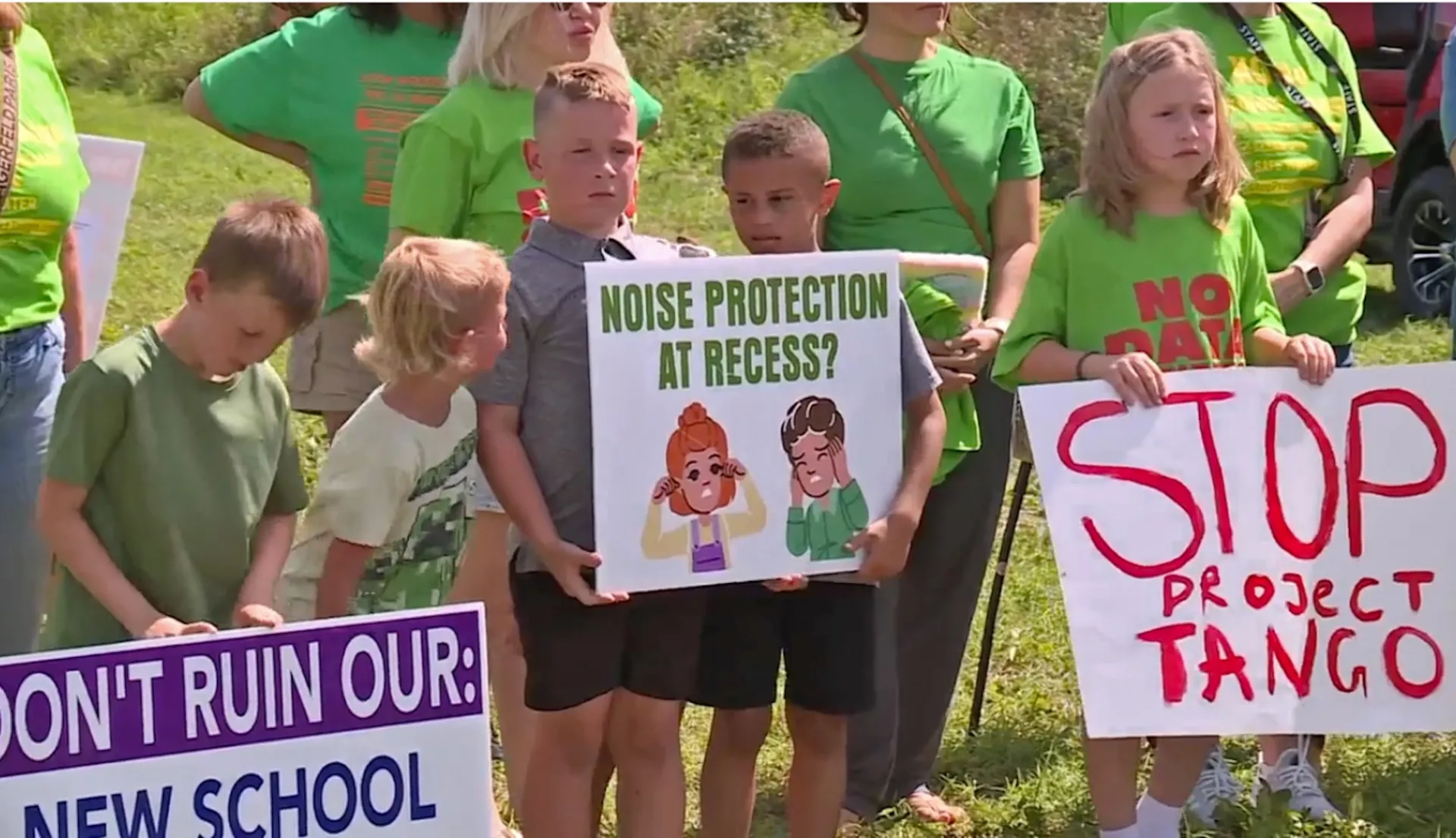
In April, the Palm Beach County Teachers Association (PBCTA) responded by organizing a rally of educators, students, parents and community members near the site of the proposed data center to oppose its construction so close to Saddle View Elementary. PBCTA President Gordan Longhofer said he wasn't necessarily opposed to the data center, just the location, and urged officials to establish “buffer distances between industrial-scale data centers and schools, parks, and residential areas.”
Project Tango’s future is still uncertain. “There will be appeals, so we have to stay on top of it,” says Cink.
Some labor unions are opposed to statewide moratoriums, but instead are pushing for stronger labor standards, environmental safeguards, and requirements that data centers be responsible for their own energy supplies, including paying for any extra utility use that would come as a result of its operation.
What Educators Can Do
Elapsed time: 0:00
Total time: 0:00And states have begun to at least chip away at the tax exemptions and subsidies that have deprived schools of critical funding. According to the Center for Budget and Policy Priorities, 25 states introduced bills in 2026 to repeal or restrict data center tax subsidies. But only eight states passed legislation.
“I think there’s cause for optimism and NEA affiliates have been heavily involved in these debates,” said Elmo. “The more educators engage broadly on this issue the better.”
The Virginia Education Association has been a leading advocate for stripping the sales and tax exemptions provided to data centers. Legislative efforts to do so fell short in 2026, although lawmakers did agree to create a new tax on electricity used by data centers.
The fight over data center tax fairness is not over, said Meg Gruber. “We’re going to revisit this issue next year. I’m hopeful, because the pressure to do something is growing.”