Key Takeaways
- Educators in Montgomery County, Maryland turned individual concerns about mold into a collective effort that pushed the school district to investigate and act.
- By organizing through their union, educators amplified their voices and secured attention to a long-standing health and safety issue.
- The campaign showed that union advocacy extends beyond wages and benefits to protecting the well-being of students and staff.
The signs were impossible to ignore.
In room 120, ceiling tiles stained by leaks, black mold spread across bulletin boards, and moisture had become a familiar sight. In room 121, water seeped through the floor, damaging materials and creating conditions where mold repeatedly returned.
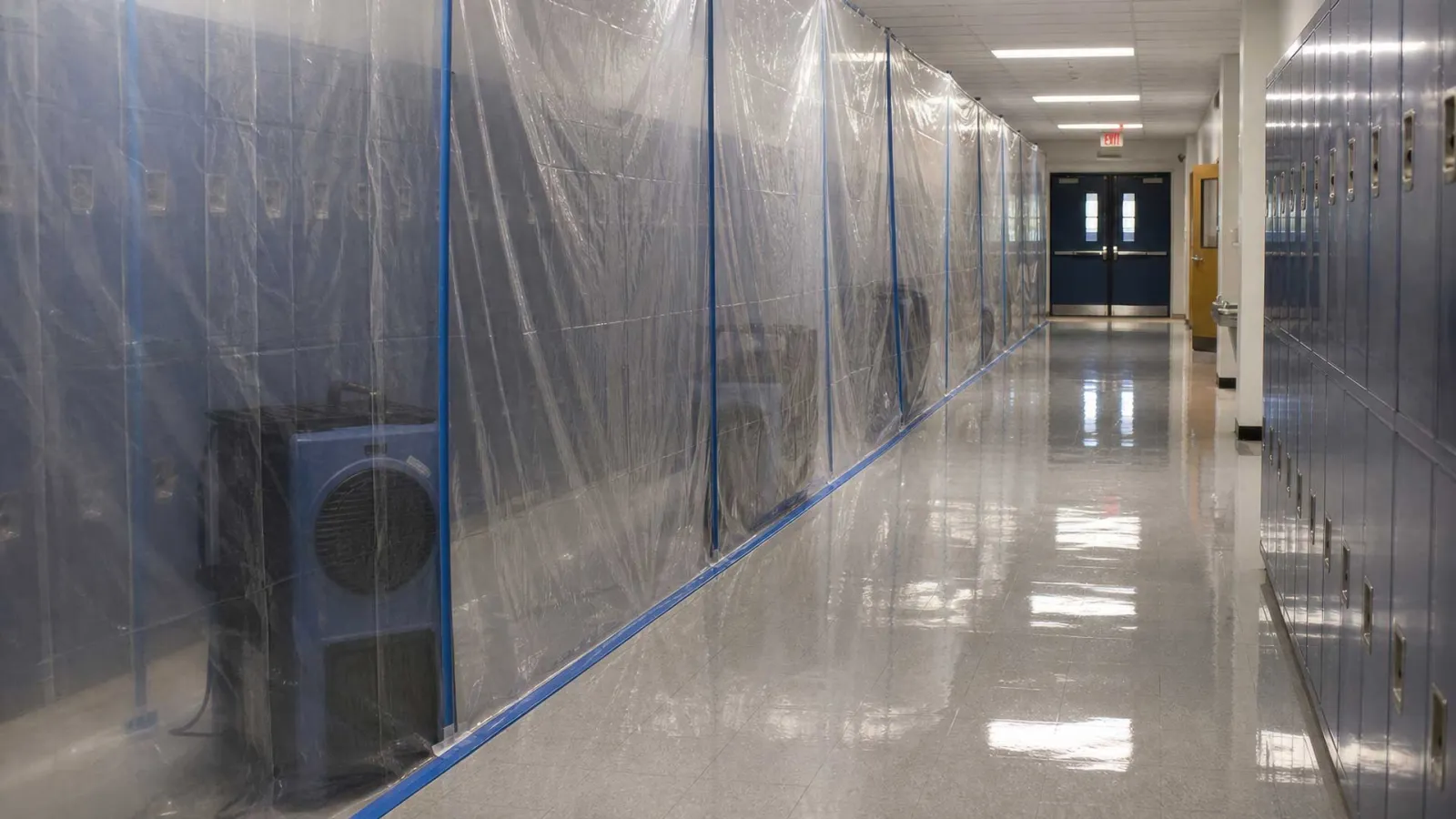
Teachers described warped books, mold-covered rugs, bowed ceiling panels, and dehumidifiers running constantly in an attempt to combat persistent humidity.
The basement level of New Hampshire Estates Elementary, in Montgomery County, Maryland, had become the center of a growing concern among educators who believed the building’s conditions were affecting both staff and students.
Then came an incident in early March that pushed those concerns into the spotlight: Twenty-two people—13 students and nine staff members—became ill after spending time in one classroom. Headaches, nausea, dizziness, and other symptoms forced the room to be evacuated while air quality specialist investigated.
For many educators it was confirmation that the issues they had been raising for years could no longer be dismissed.
A problem years in the making
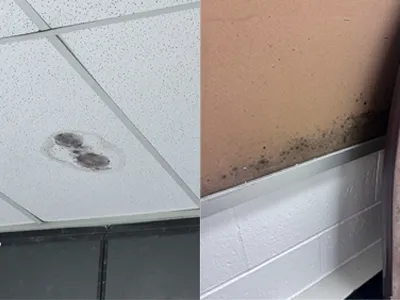
Concerns about the building has stretched back more than a decade.
Gabrielle Reese, a second-grade teacher who has worked at the school for 14 years, remembers seeing mold during her very first days in the building. As she prepared her classroom with the help from her father and grandfather, they noticed mold growing on ceiling tiles and bulletin boards.
“A week into my first year, … I had a ceiling tile fall on a student. It was moldy and wet … and when you looked up, a pipe was leaking,” recalls Reese.
Over the years, teachers watched the same patterns repeat themselves: Leaks, humidity, damaged materials, and recurring mold growth.
The problem appeared to worsen after schools sat largely unoccupied during summer breaks. When buildings reopened, teachers found furniture damaged by humidity, classroom materials warped by moisture, and mold appearing in places where it had never been seen before.
Signs of something more

Sakina McGruder, a math interventionist teacher who has worked at the school since 2014, says she initially viewed isolated water problems as typical building maintenance issues.
“Boy was I wrong,” she says.
After moving into a basement classroom in 2022-2023, she realized the problem was much larger.
While helping her move, her husband noticed what appeared to be black mold on a bulletin board. “He said, ‘I think that's mold,’” McGruder says, adding that “the more we looked around the room, the more we realized it did have a mold issue.”
That evening, McGruder experienced significant breathing difficulties and became concerned about continuing to work in the space.
“I knew this was a concern bigger than me,” she says. “If I was experiencing this, how many other people might be experiencing this, too?”
The answer: One too many.
When a building is sick
NJ, who asked to remain anonymous, is a veteran educator with 30 years of experience. She began to notice students complain of headaches. Some would rest in her classroom because trips to the nurse often resulted in students being sent right back.
“A year or two ago, the principal asked us to track how often kids complained of headaches,” NJ says, “and to be honest, it happened 2 or 3 times a week.”
NJ herself had long experienced migraines and recuring respiratory issues, but had never connected them to her workplace.
When a core group of educators at the school started to mention mold and the types of mold found onsite, NJ decided to get tested. She learned she was allergic to two types of mold—the same types identified in the school.
“My doctor asked me to leave the school and described the building as a possible ‘sick school,’” she explains.
Instead, she stayed.
“I want to retire there. It’s a great place to work,” she says—sans mold, of course.
A clear pattern
McGruder found herself making similar connections. After years of working in the building, she began wondering whether some of her own health challenges might be connected to the conditions inside the school.
“I suffer from migraines,” she says. I would have never thought the migraines might be directly because I’m in a building where I’m breathing in mold spores all day.”
She worries about students, too.
“I have access to … specialists and doctors,” she says. “What about them? What about the kid who has recurring asthma or recurring migraines? The kids have headaches. I can’t even tell you how many kids say, “Can I get water? I have a headache.’”
For Reese, this became personal for her, too. “I have developed asthma working at the school,” she shares. “I did not have asthma prior to working there.”
Keeping Students with Asthma Safe and Healthy
Poor school air quality negatively impacts students and educators and is especially harmful to those with lung diseases, like asthma. NEA's "Healthy Classroom Air, Healthy Students" toolkit provides information and resources to improve school air quality and keep students with asthma healthy.
Strength in numbers
For years, some educators felt powerless. Many assumed building conditions were simply something they had to endure. Others questioned whether speaking up would make a difference.
That began to change when educators started organizing.
“I’ve seen more movement [now] that I’ve seen in the last 10 years at our building,” says McGruder.
Reese says her involvement with the union transformed the way she viewed advocacy. Early in her career, she felt reluctant to challenge conditions she believed were wrong.
“I was like, this is just my job. I reported it to my admin at the time and… left it at that.”
But after becoming more active in union work, she realized educators had more power than they often recognize.
“I went to an educator's retreat with the union and that sparked a thought: Oh, I have a voice. I can create change.”
The power of the union
The local and state unions—Montgomery County Education Association and Maryland State Education Association—helped connect the core group of educators who were vocal on this issue with resources and help to identify next steps and build a broader coalition of support.
Under the leadership of the local president David Stein, educators worked with Parent Teachers Association leaders, parents, and community members to elevate concerns about the building. Meetings were held with district leaders. Educators testified before county officials. Parents began contacting elected representatives and demanding action.
McGruder, for example, testified publicly about her health concerns. NJ spoke about migraines, allergies, and the impact she witnessed on students to school district officials who wanted proof of the building condition. Parents joined them, and together, they created the momentum to push for change.
According to Stein, the union’s role is to help members recognize the power of their own voices.
“What we can do as a union is to make members understand how their voice is powerful, how they are listened to,” Stein says. “Educators have the respect of the community.”
Advocacy produces results
The advocacy effort of these educators and others is already producing tangible changes.
The district has committed more than $2 million in building improvements, including major HVAC upgrades designed to address ventilation and humidity issues that educators believe contributed to mold growth. Mold-prone bulletin boards are being replaced. Additional repairs and improvements are scheduled for later this summer. Educators have also secured seats at planning meetings to ensure their voices remain part of the process.
While some educators believe more work remains ahead, they also recognize that progress would not have happened without collective advocacy.
For McGruder, one of the biggest changes has been seeing people stop suffering in silence. After she began sharing her story publicly, colleagues approached her with experiences that mirrored her own. What once felt like isolated concerns became a community-wide conversation.
For NJ, support from the union and PTA gave her confidence to speak publicly. And for Reese, the visible improvements underway are proof that advocacy works.
“We’re not going to stop,” Reese says. “We’re going to continue to remind people that this is still an issue.”
On a national level
The NEA Health and Safety program also worked with MCEA staff and member leaders to create a hazard map to aid in a building walkthrough in January 2026.
The school floor plan served as the basis for the hazard map, and members highlighted areas affected by water damage, mold, and other pertinent issues.
The goals of the walkthrough were to assess indoor air quality issues previously identified by members and to identify other issues and possible control strategies; and, second, to have members gain experience in conducting walkthroughs to add to their existing capacity to address health and safety issues.
Beyond bread and butter issues
Many people often think of unions primarily in terms of salaries, benefits, and contract negotiations. Those issues remain essential. But educators in Montgomery County say their experience demonstrates that unions can also be powerful vehicles for improving health, safety, and learning conditions.
McGruder says working to heal a sick building has taught her how unions can help educators navigate problems, connect with resources, organize colleagues, and advocate for solutions that benefit entire school communities.
Stein hopes other educators across the country take the same lesson from their experience. Too often, he says, educators accept poor building conditions as inevitable. But they don’t have to.
“Our working conditions are students’ learning conditions,” Stein says. “Finding that voice organizing with colleagues, and advocation is really crucial.”