On October 1, 2026, the U.S. Department of the Treasury/Internal Revenue Service released both temporary and proposed regulations on how the federal agency intends to implement the new tax credit voucher program under Section 25F of the Internal Revenue Code.
The regulations confirm what NEA has been saying since the program was enacted: this is a federal voucher scheme containing the same DNA as other state voucher programs that harm students, public schools, and communities. It will impose near-universal vouchers on states that opt in—including those whose voters have resoundingly rejected these schemes—while supercharging vouchers in states with existing programs. NEA urges all states to reject this program and join our efforts to repeal this law through the Keep Public Funds in Public Schools Act (S.4297/H.R.9289) introduced in Congress. Below are several ways in which the rules lock in the most harmful aspects of the program.
States may NOT build in substantive guardrails or oversight on Scholarship Granting Organizations (SGOs) beyond the minimal requirements in law.
Those states waiting to see if they can craft the program to fit their priorities now have their answer: they can’t. Under these regulations, states that opt in will be required to certify SGOs that pay private school tuition; fund schools that discriminate; serve primarily wealthy families; and skim 10 percent in administrative fees. States that opt in will surrender any authority to shape education policy in their own jurisdiction. Given this reality, states should publicly and firmly reject the federal voucher program.
Multi-state SGOs are not just permitted but are structurally advantaged.
The regulations define “located in the state” based on two main criteria: legal authority to operate in the state, and compliance with standard state laws for charities. States that choose to participate must permit national SGOs to operate within their state and may not impose additional requirements like minimum physical presence. Multi-state SGOs will be structurally advantaged under this regime due to economies of scale, and the regulations further provide that multi-state SGOs disqualified in one state may continue to operate in other states. States will have no control over the granting activities of these out-of-state interests, which will have their own agenda and may engage in activities that run counter to state education policy priorities and needs.
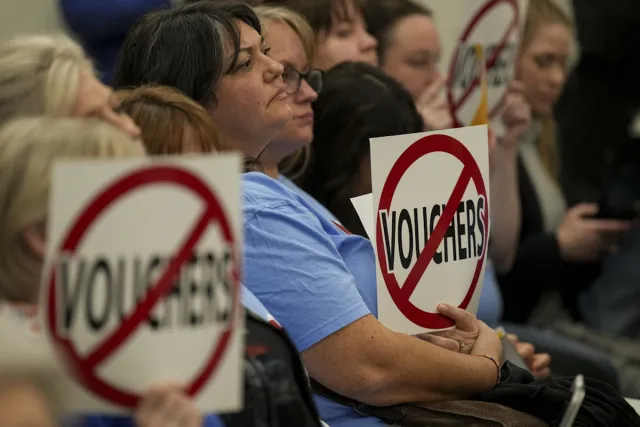
This program will not serve public schools and their students in any meaningful way.
The law and regulations are structured primarily to fund private school expenses for services that public schools must provide for free under state law. Even if SGOs are created with the intent of serving public school students, they will face layers of structural disadvantages including limits on expenses they may fund and more limited donor pools. At the same time, the program will undermine funds like Title I and IDEA as well as public school foundations which benefit all students. Treasury's ban on state guardrails is the final nail in the coffin, ensuring that states will be unable to ensure meaningful benefits for public schools without agreeing to a massive private school voucher program as part of the bargain.
States that opt in are subject to federal regulations but bear all of the burden and cost of preventing fraud, waste, and abuse.
States have no discretion to limit SGO certifications yet still bear all of the burden of holding those SGOs accountable to law. The regulations do not require SGOs to report audit results to the federal government. Rather, SGOs will be required to submit annual financial and programmatic audits to each state where they operate. Rampant fraud and abuse have been the calling card of similar voucher programs operating in states currently. Brookings’ education scholar Jon Valant has concluded that “Trump’s voucher program will be the greatest source of waste, fraud, and abuse that we have seen in our lifetimes in K-12 education.”
The Program delivers a financial blow to American taxpayers—and further enriches wealthy families.
The regulations take every chance to ensure this Program will divert billions of dollars in taxpayer money to vouchers. In addition to forcing states to approve all SGOs and allowing them to operate across state lines, Treasury has interpreted the law to allow married couples to claim the $1,700 tax credit twice. The rules also ensure that donors can maximize state and federal credits for contributions to SGOs, and that only cash income will be considered in determining family eligibility for a voucher. By Treasury’s own conservative estimates in the rule, this will enable 96% of families to be eligible at a cost of at least $26 billion per year. Wealthy households making up to 300% of the area gross median income across the country will qualify. Examples include residents of high-income counties: Hudson Suburbs, Ohio ($494,000), Santa Clara County, California ($616,500), and Seabrook, New Hampshire ($496,200). The estimated annual cost is nearly triple the total of all state voucher programs combined. Recipients will also be able to stack both federal and state vouchers in states with their own programs, compounding the fiscal burdens on states and public schools.
The Program could fund homeschooling in some states.
The definition of "schools" in the statute includes public, private, and religious institutions providing K–12 education as determined under each state’s law. Treasury has not yet clarified whether this includes homeschooling, deferring the issue until it releases further rules around the Coverdell Education Savings Account Program.
Conclusion
At every turn, the regulations uphold the program’s fundamental design to function as a private school funding mechanism, feed existing private school SGOs as they scale across the country, while forcing vouchers into more states. While ambiguities in the statute might have been interpreted to allow states the flexibility to curb the program’s most damaging features, Treasury chose not to give states such flexibility and authority. The rules further validate existing concerns that the program will be poorly regulated; the cost of any regulations will fall on states, negating the promise that the program offers “free money;” and there will be limited to nonexistent benefits for public schools and their students.
Governors who say they are champions of public education are left with only one choice: say “no” to federal vouchers.
Related Content
Are you an affiliate?