Learn NEA's position on pending legislation related to public education, and take action to protect our schools
We're speaking up for our students and public schools. Visit our Action Center to find out what you can do.
Learn More
Published: March 3, 2025
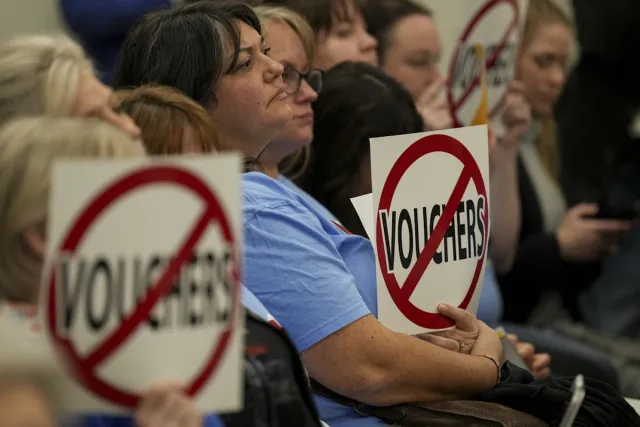
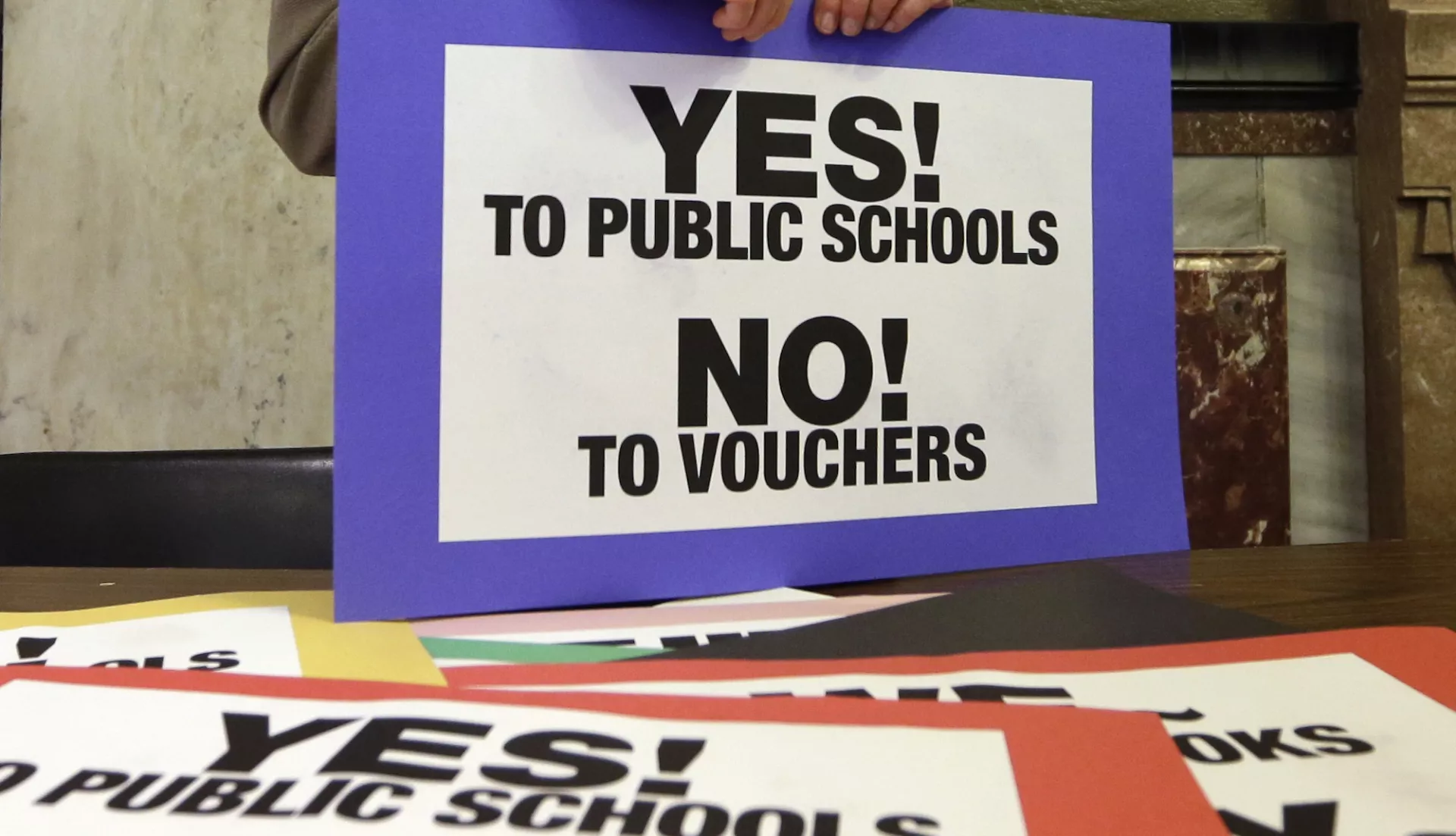
On all counts, vouchers harm public education and students. Vouchers steal scarce funding from public schools—which serve 90 percent of students—and give it to private schools that are unaccountable to taxpayers.
There is ZERO reliable evidence that voucher programs improve overall student success, and some programs have even shown to have a NEGATIVE effect for students receiving a voucher.
Vouchers continue to discriminate against students with disabilities, strip away students’ human and civil rights, and exacerbate racial segregation.
The Federal Voucher Program
The Education Freedom Tax Credit is a private school voucher program, championed by Project 2025, Besty DeVos, Senator Ted Cruz and others, designed to funnel public funds into unaccountable K-12 private and religious schools.
States that participate will start or expand a near-universal K-12 private school voucher program.
These states cannot put conditions on the program that would change this fact. States cannot transform this into a program that solely supports public school students.
Enrollment losses driven by the program will have negative fiscal impacts, such as school closures and pressure on the federal budget, as deficits rise, which will result in cuts to federal education funding, such as Title I and IDEA funding.
Estimates of the program’s total annual cost range as high as $50 billion per year—five times the cost of all state-level voucher programs combined.
The Facts: Why Vouchers Don't Work
Fact #1
There's no link between vouchers and gains in student achievement
There's no conclusive evidence that vouchers improve the achievement of students who use them to attend private school. Nor is there any validity to claims that, by creating a "competitive marketplace" for students, vouchers force public schools to improve. In fact, the most dramatic improvements in student achievement have occurred in places where vouchers do not exist — such as Texas and Connecticut. Instead, those states and communities focused on teacher quality and extra help for students who need it. Where there is conclusive evidence is that investing more money in public education improves student achievement.
Fact #2
Vouchers undermine accountability for public funds
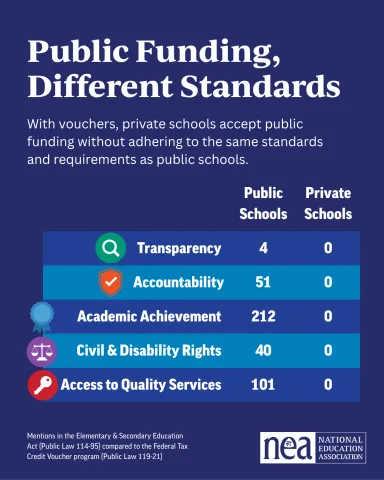
Private schools have almost complete autonomy with regard to how they operate: who they teach, what they teach, how they teach, how (if at all) they measure student achievement, how they manage their finances, and what they are required to disclose to parents and the public. Moreover, the absence of public accountability for voucher funds has contributed to rampant fraud, waste, and abuse in current voucher programs.
Voucher schemes drain taxpayer dollars from public schools, devastating state budgets. Arizona’s universal education savings account program called “Empowerment Scholarship Accounts” has decimated public education funding and fueled a one-billion-dollar state budget shortfall closed only with cuts to many essential public services.
Cheaper, more limited voucher schemes are sometimes peddled as an answer to this problem, but these plans inevitably balloon in spending over time, producing the same crises. Indiana launched vouchers with a $15 million budget and narrow purpose, but now projects spending over $600 million in 2024 largely to benefit well-off families already enrolled in private schools—an alarming and growing trend in voucher programs across the country.
If we’re serious about doing what’s right for every child’s future, let's do what works: support public schools so that every student has inviting classrooms, modern technology and textbooks, and class sizes that are small enough for one-on-one attention.
Fact #3
Vouchers do not reduce public education costs
Actually, they increase costs, by requiring taxpayers to fund two school systems, one public and one private. The result is that public schools, which educate 90 percent of students, wind up with less funding. This leads to larger class sizes and fewer resources, such as textbooks, school nurses and counselors, lab equipment, and music and athletic programs.
Fact #4
Vouchers do not give parents real educational choice
Participating private schools may limit enrollment, and in many cases may maintain exclusive admissions policies and charge tuition and fees far above the amount provided by the voucher. Unlike public schools, private and religious schools can — and do — discriminate in admissions on the basis of gender, religion, sexual orientation, ability, behavioral history, prior academic achievement, standardized test scores, interviews with applicants and parents, and income.
Fact #5
Vouchers are rooted in segregation and perpetuate racism
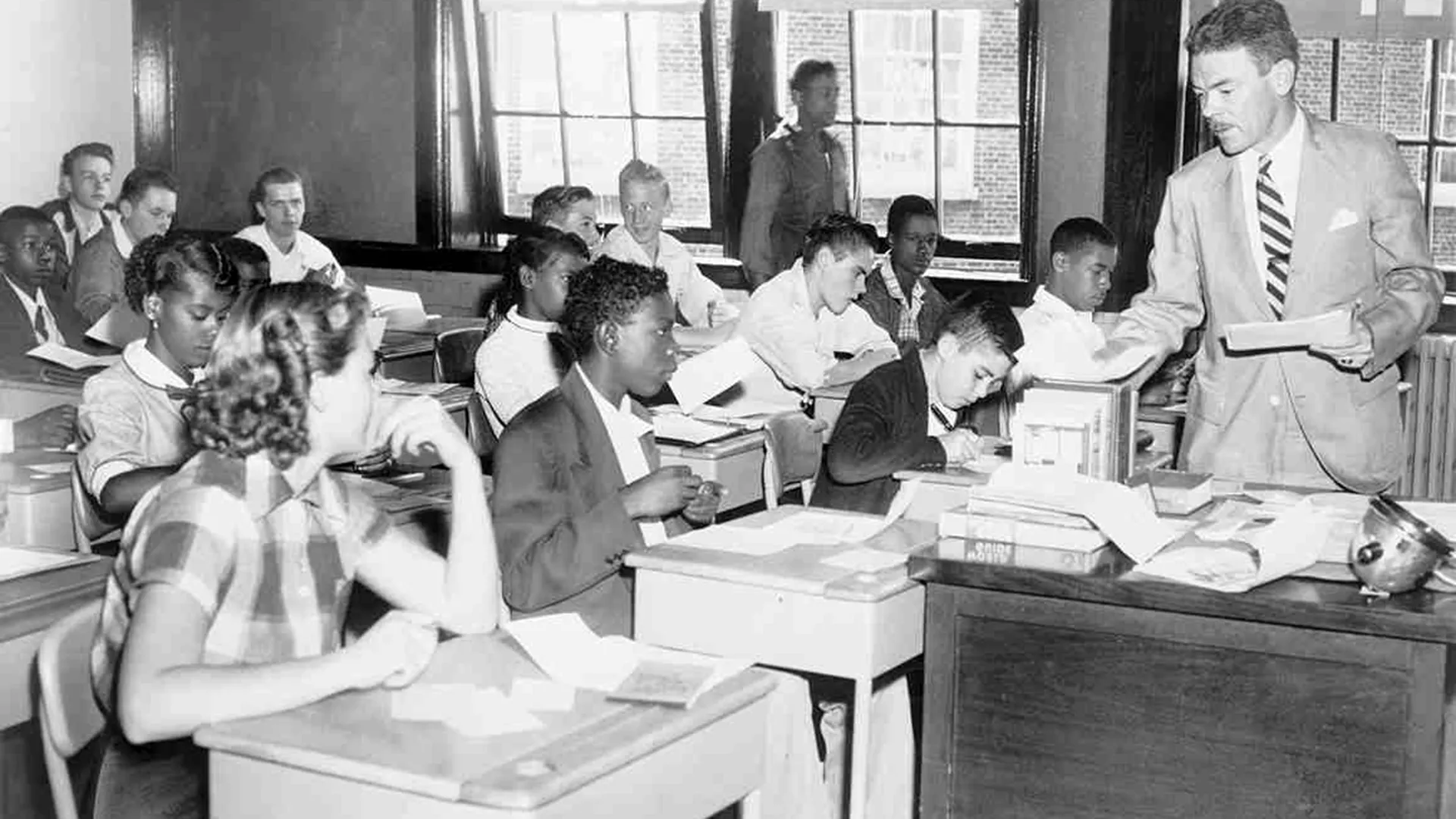
Vouchers were first created after the Supreme Court banned school segregation with its ruling in Brown v Board of Education. School districts used vouchers to enable white students to attend private schools, which could (and still can) limit admission based on race. As a result, the schools that served those white students were closed, and schools that served black students remained chronically underfunded.
By design, voucher programs operate with impunity and are not subject to any meaningful oversight, allowing the pattern of discrimination to continue today.
Unlike public schools, private schools can (and some do) limit their admission based on race, gender, sexual orientation, ability, and any other number of factors.
Even for students who do make it through the gauntlet of a discriminatory admissions practice, racist rules such as banning afros can target students for discipline or expulsion with little recourse.
Furthermore, vouchers rarely cover the full tuition, so families who were promised a better education are left footing the bill.
Fact #6
Voucher programs give choice to private schools, rather than students and their families
Vouchers enable taxpayer-funded discrimination and strips vulnerable students of various protections and rights, as private schools are not bound by many key provisions of civil rights such as those under Title VI, Title IX, most of the Individuals with Disabilities Education Act (IDEA), Title II of the Americans with Disabilities Act, and the Every Student Succeeds Act.
Students and their families are often not informed about protections they must give up when accepting a voucher.
Private schools have no regulated discipline policies and students can be disciplined, counseled out, or excluded for a variety of reasons, leaving SWD especially vulnerable as a disability can be perceived as challenging behavior.
A significant number of existing private school families jump at the opportunity for voucher eligibility, by obtaining superficial documentation to claim disability status. Consequently, students with real needs may be further crowded out by a voucher system.
Even voucher programs that exclusively serve SWD fail to serve all SWD. Studies show that these programs tend to exclude students with more severe disabilities.
How Did Vouchers Start? A History Rooted in Racism and Segregation
Vouchers were first created after the Supreme Court banned school segregation with its ruling in Brown v Board of Education. School districts used vouchers to enable white students to attend private schools, which could (and still can) limit admission based on race. As a result, the schools that served those white students were closed, and schools that served black students remained chronically underfunded.
The pattern of discrimination continues with vouchers today. Unlike public schools, private schools can (and some do) limit their admission based on race, gender, sexual orientation, ability, and any other number of factors. Furthermore, vouchers rarely cover the full tuition, so families who were promised a better education are left footing the bill.
Vouchers Today: Waste, Fraud, and Abuse
The lack of transparency, oversight, and accountability common in voucher programs often leads to waste, fraud, and abuse. This ranges from extravagant spending on trips to ski resorts to Arizona’s case of creating “ghost” students to defraud the state of voucher funding—even ensuring that these non-existent students had documented disabilities to prompt the highest level of payout. Further, both research and investigative reporting reveal that most new voucher users are students already enrolled in private schools. In other words, voucher expansions facilitate subsidies for well-off families at the taxpayers’ expense.
Bills in Congress
-
Oppose
S 5420 A bill to double the Federal Scholarship Tax Credit for married taxpayers filing a joint return www.congress.gov
Introduced on September 17, 2026
This bill would double the credit amount for married filers, further ballooning the cost of an already uncapped program. It exacerbates the inequity of funneling public funds to subsidize private school tuition for affluent families.
-
Oppose
S 5421 A bill to repeal the state opt-in requirement for the Federal Scholarship Tax Credit www.congress.gov
Introduced on September 17, 2026
This bill would repeal the state opt-in requirement for the Federal Scholarship Tax Credit, forcing the program onto states and communities that have chosen not to participate. It overrides the minimal control states currently have.
-
Oppose
HR 10412 A bill to repeal the state opt-in requirement for the Federal Scholarship Tax Credit www.congress.gov
Introduced on September 16, 2026
This bill would repeal the state opt-in requirement for the Federal Scholarship Tax Credit, forcing the program onto states and communities that have chosen not to participate. It overrides the minimal control states currently have.
Letters & Testimony
NEA speaks up for the rights of students. Browse recent messages to Congressional leadership, and add your voice.
-
John Quesenberry on Vouchers
Submitted on September 22, 2026
-
Senate Committee Marks Up Education Bills
Submitted on July 29, 2026
-
House Vote on FY27 NDAA
Submitted on June 30, 2026
We're speaking up for our students and public schools. Visit our Action Center to find out what you can do.
Suggested Further Reading
-
Evaluation of The DC Opportunity Scholarship Program
National Coalition of Public Education

-
Report: On negative effects of vouchers
Brookings
-
Vouchers and Public School Performance
Education Policy Institute
-
Nevada's failed universal voucher program
The Atlantic
-
The Promise and Peril of School Vouchers
National Public Radio
-
NC is spending millions on private school vouchers — but has no idea if they work
The News & Observer
-
20 national education, civil rights, labor, and faith-based organizations call on governors to reject federal vouchers
Public Funds Public Schools
Are you an affiliate?
Jump to updates, opportunities, and resources for NEA state and local affiliates.
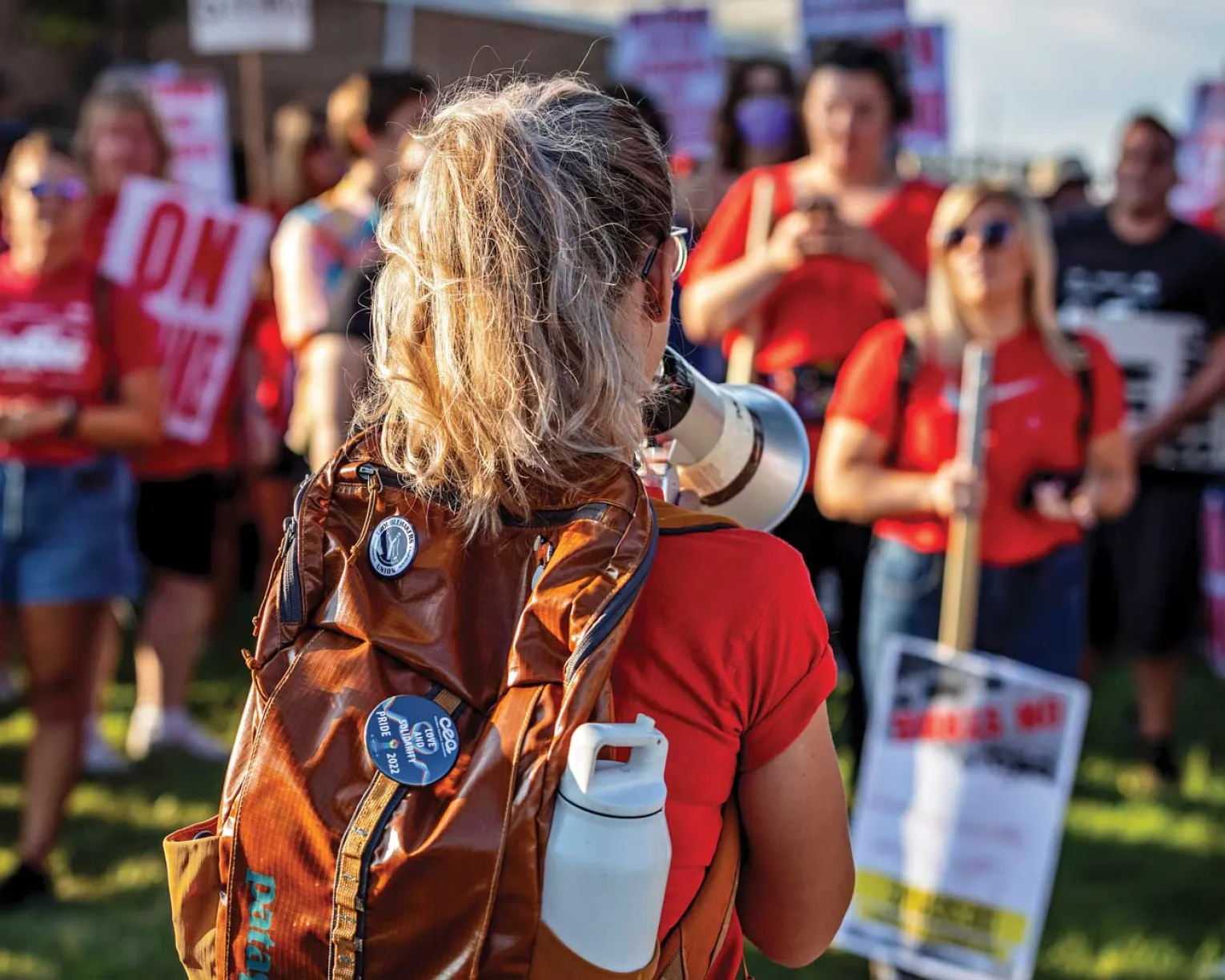
Speak Up For Students and Public Schools
When we act together and lift our voices together in unison, we can improve the lives of children.