On many college campuses, taking a day off for mental health is not as simple as calling out sick. Unlike standardized policies for physical illness, mental health accommodations often fall into a gray area—one that’s shaped largely by individual professors. Each syllabus can carry its own attendance rules, penalties, and expectations, leaving students to navigate a patchwork system during moments of personal crisis, which occurs when a person’s thoughts, emotions, or behavior become overwhelming, affecting their ability to function or posing a risk of harm. For some, that inconsistency can make it difficult, or even risky, to step away when they need it most.
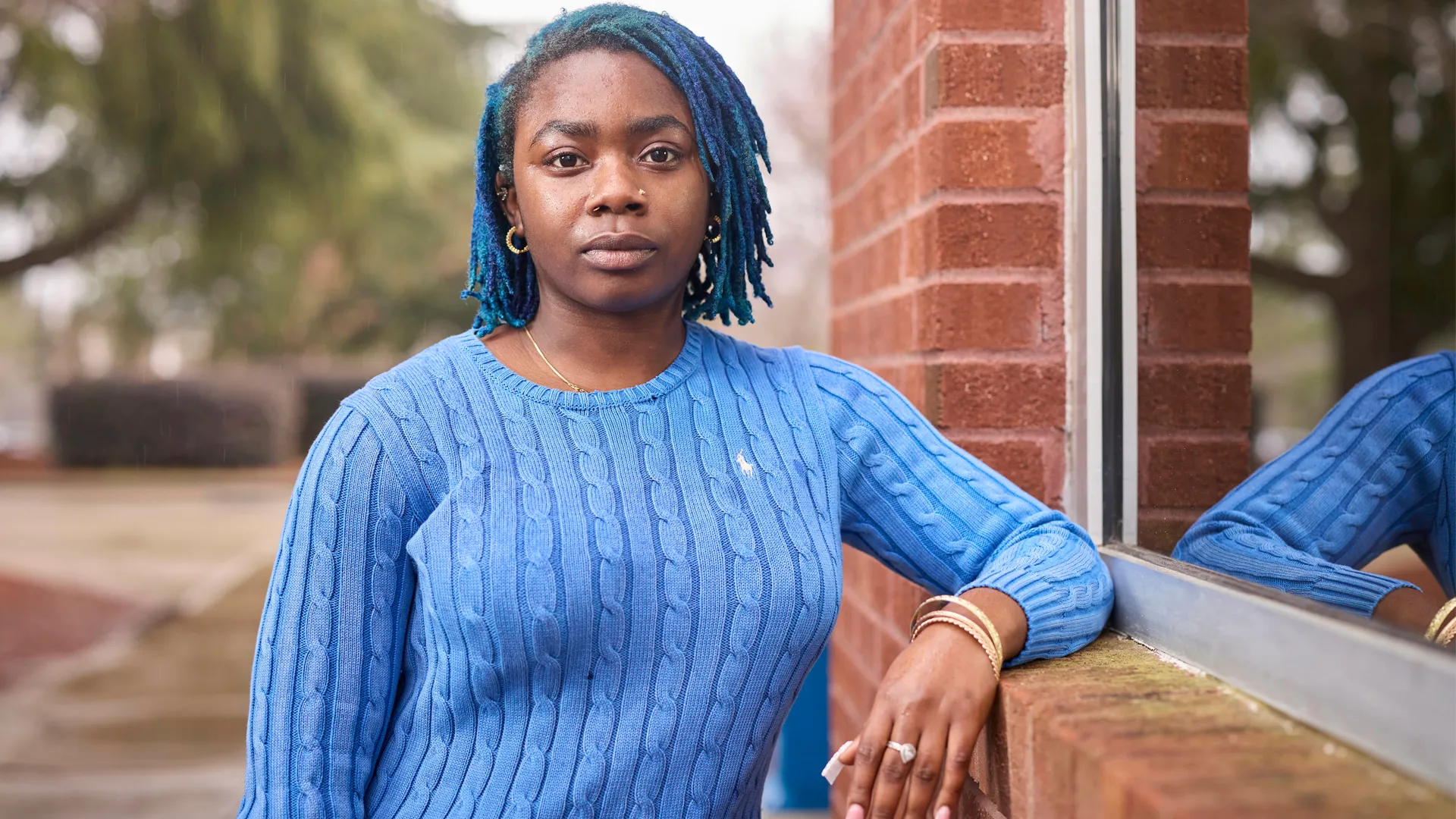
For Abigail Rodriguez, an NEA Aspiring Educator and political science major, that reality became the starting point for advocacy.
Mental health on campus
As Rodriguez walks across the campus of Montclair State University, in New Jersey, she understands that some of her peers around her are struggling with their own issues.
“There could be someone that’s going through a family crisis … [or] through homelessness,” says Rodriguez, who intends to use her degree to advocate for education, policy, and mental health issues. “We [at Montclair State] have a lot of students that don’t complete their degree here. Does that play into the mental health fact? Yes, absolutely!”
With many commuting from home, students struggle with finding community and comfort on campus. Other students may struggle mentally with the burden of financial debt from school.
While Montclair State does have on-campus resources, the lack of communication can lead to confusion on what to do in the case of a mental health crisis. Rather than accept that reality, Rodriguez chose to act.
Student-led approaches
This past school year, Rodriguez became a central figure in an ongoing effort to establish a formal “mental health day” policy at her university. The policy was designed to give students one excused absence per semester without academic penalty in the event of an unexpected crisis.
The idea itself wasn’t new. It had been introduced years earlier by another student leader (Christina Vivo) and later developed by additional advocates, including Tyla Morin, who recently graduated Montclair State with a psychology degree.
Morin’s past work and the current efforts of Rodriguez offer a blueprint for how student-led initiatives can take shape on college campuses. For students (like you!) interested in advocating for a mental health policy of their own, the following steps provide a practical starting point.