When elementary art teacher Kathryn Vaughn heads off to work each morning, her “miracle babies”—born after 10 years of fertility struggles—and her husband are still asleep. She’s not going to her job at Brighton Elementary, in rural Brighton, Tenn. Not yet. It’s 4:30 in the morning and she’s heading to her other full-time position as director of aquatics at the city pool and sports facility.
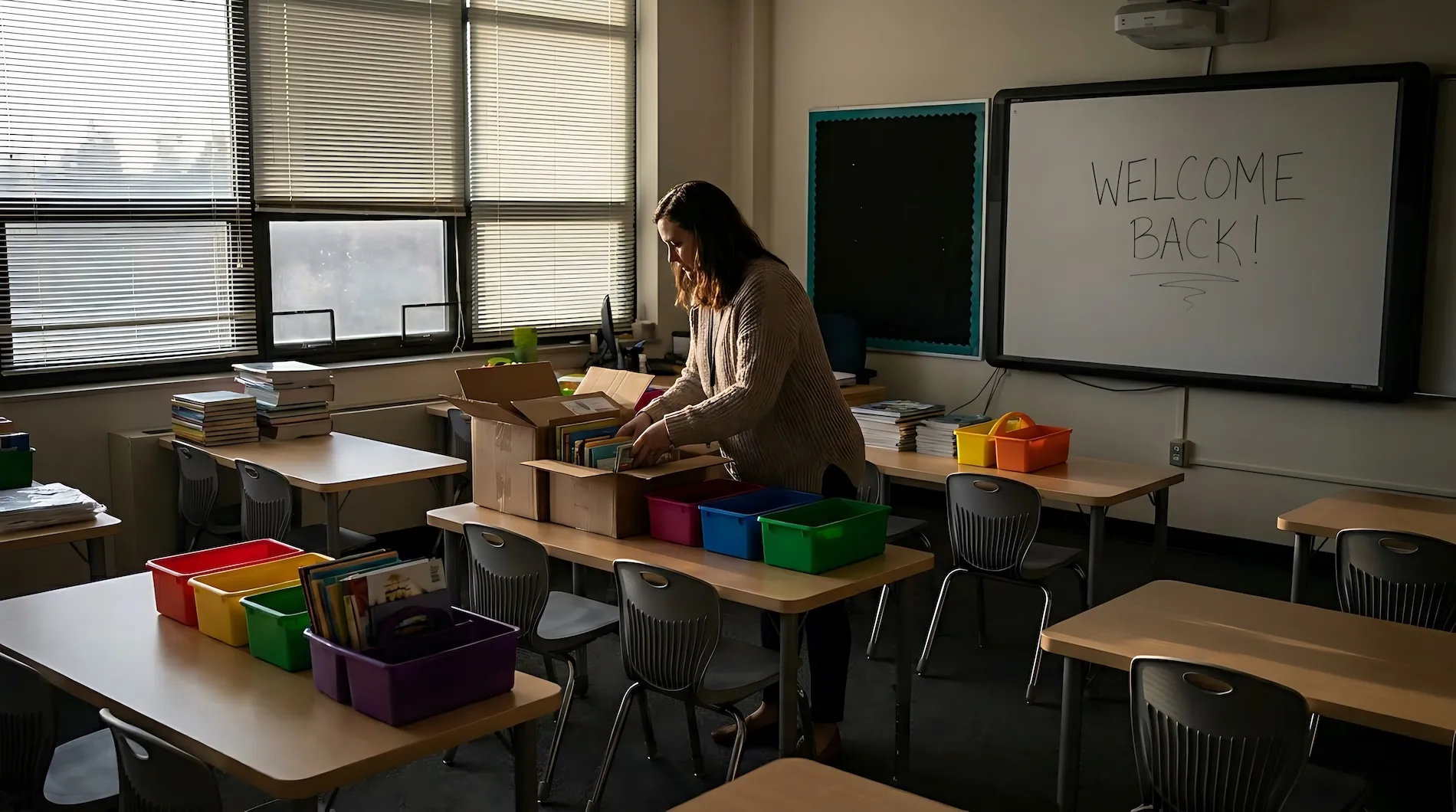
She’ll be in the classroom from 8 a.m. to 3 p.m. where she engages roughly 650 students over the course of each week using supplies that are mostly purchased with her own money, donated, or covered by various grants Vaughn secures whenever she can. Brighton is a Title I school, meaning it qualifies for federal funding because at least 40 percent of the students it serves are from low-income households.

“My yearly budget from the school is $200 and I’m provided two boxes of copy paper. I purchase clay, paint, construction paper, printer ink—I even bought the printer,” she says. Most years her classroom spending exceeds $1,000.
Like most educators nationwide, Vaughn contributes her own money to cover classroom necessities. Educators buy items ranging from basic supplies like paper, markers, pencils, and tape and glue to curricular materials, books for the classroom library, technology subscriptions, tissues and hand sanitizer. They also buy story time rugs, posters and other items to brighten the classroom, and even furniture.
While 94 percent of teachers pay for classroom necessities, the spending is greatest in higher needs schools, according to an annual survey by RAND.
Section with embed
Vaughn has been a teacher for 20 years, and there was no art program before she started it 17 years ago. Most of her students are from lower-income families, live in a rural county, and don’t have ready access to the arts, which intensifies her commitment to do all she can for them.
“I want them to have big experiences at school, because kids deserve them out here just like anywhere else,” Vaughn says.
Two afternoons per week she runs an after-school program before rushing back to the pool for another shift. Then she heads home at 8 p.m. to put her 2-year-old daughter and 5-year-old son to bed. Shortly after that, she and her husband—a stay-at-home dad and combat veteran with complex medical issues—drop into bed exhausted.
Rising costs drain educator pocketbooks
Back-to-school expenses this year are higher than ever, a fact well-known to parents and educators across the country.
The cost of school supplies has increased by an average of 7.7 percent over last year, largely in response to President Trump’s tariffs. According to research by The Century Foundation, the steepest increases are seen on lunch boxes (26.8 percent), notebooks (23 percent), index cards (22.2 percent), notebook paper (20 percent), and tissues (20 percent).
And this year’s hikes follow the 7.3 percent increase educators and families had to absorb last year.
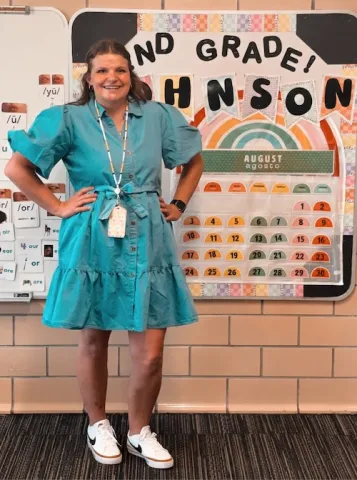
“I have definitely felt the rising costs of everything, especially because we didn’t receive a cost-of-living adjustment this year,” said Lyric Johnson, a second-grade teacher at Rose Stein International School in Lakewood, Colorado.
“Families contribute if they can, but this is a Title I school and not all families can afford to buy the whole list of school supplies,” Johnson says. “The school gives me 150 pencils at the beginning of the year, but we’ve already gone through 50 in the first few weeks. Second graders love to destroy pencils!”
In addition to pencils, Johnson typically purchases supplemental curricular materials for small group work, snacks, books, culturally relevant posters (most of her students are Latino), and other classroom decorations that transform the grey cinder block walls into a warm, inviting space. She estimates that between June and mid-September this year, she had already spent $1,500.
And now, Johnson must make a personal sacrifice to keep funding her classroom.
“Unfortunately, with no COLA and rising prices and needing to buy so many things for school, I have to look for a cheaper place to live.”
Johnson will have to move over fall break in mid-October. “It’s a time we’re supposed to take a break and reset but instead I’m going to have to box up my life and make sure my cat is okay and set up my new place in four days.”
Still, Johnson says she has no regrets about spending money on her classroom. She strongly believes that the classroom environment she creates relates directly to her students’ sense of well-being.
“This is really important to me, that my students feel safe here and know that I care about them,” says Johnson. “We’ve had ICE raids nearby, so unfortunately their own community might not feel that safe. It makes it even more important that they have what they need to feel secure and cared for here in my classroom.”
Family Budgets Reach a Breaking Point
Many families across the country are struggling to handle the most expensive back-to-school season ever.
The Century Foundation finds that this school year will cost families nearly $4,000 per child, which is a 10.7 percent increase over last year. Nearly 45 percent of parents said they had to go into debt just to afford their back-to-school shopping.
Higher costs aren’t limited to school supplies—everyday expenses have already walloped most family budgets. On average, gas prices have increased by 30 percent over last year; in that same time, health insurance premiums went up 26 percent and electricity went up 6 percent.
The cost of school lunch has increased by 11 percent, and it’s the one budget item Vaughn overlooked in the family budget. “My older son just started kindergarten, and I didn't figure in the cost of his lunch,” she says. “I had to find an extra $40 a month for that.”
In addition to having two children under five and two full-time jobs, Vaughn serves as president of her local and has spoken to state lawmakers about the need to increase school funding. Tennessee ranks 43rd in the nation on per student spending according to NEA’s Rankings & Estimates.
“I’ve had elected leaders tell me, ‘You knew you weren’t going to get rich by teaching.’ To that I say, ‘Yes, but teaching has changed, the cost of living has soared, and every year our budget is smaller,” Vaughn says.
“At this point education in America wouldn’t work if it wasn’t run on the backs of hardworking teachers who are willing to make some sacrifices for their students.”