Summer heat will soon be upon us. But many schools are still struggling with very hot spring temperatures. And when they return for the 2026-27 year, it’s a safe bet that many students and educators will still be sweating through summer heat well into September.
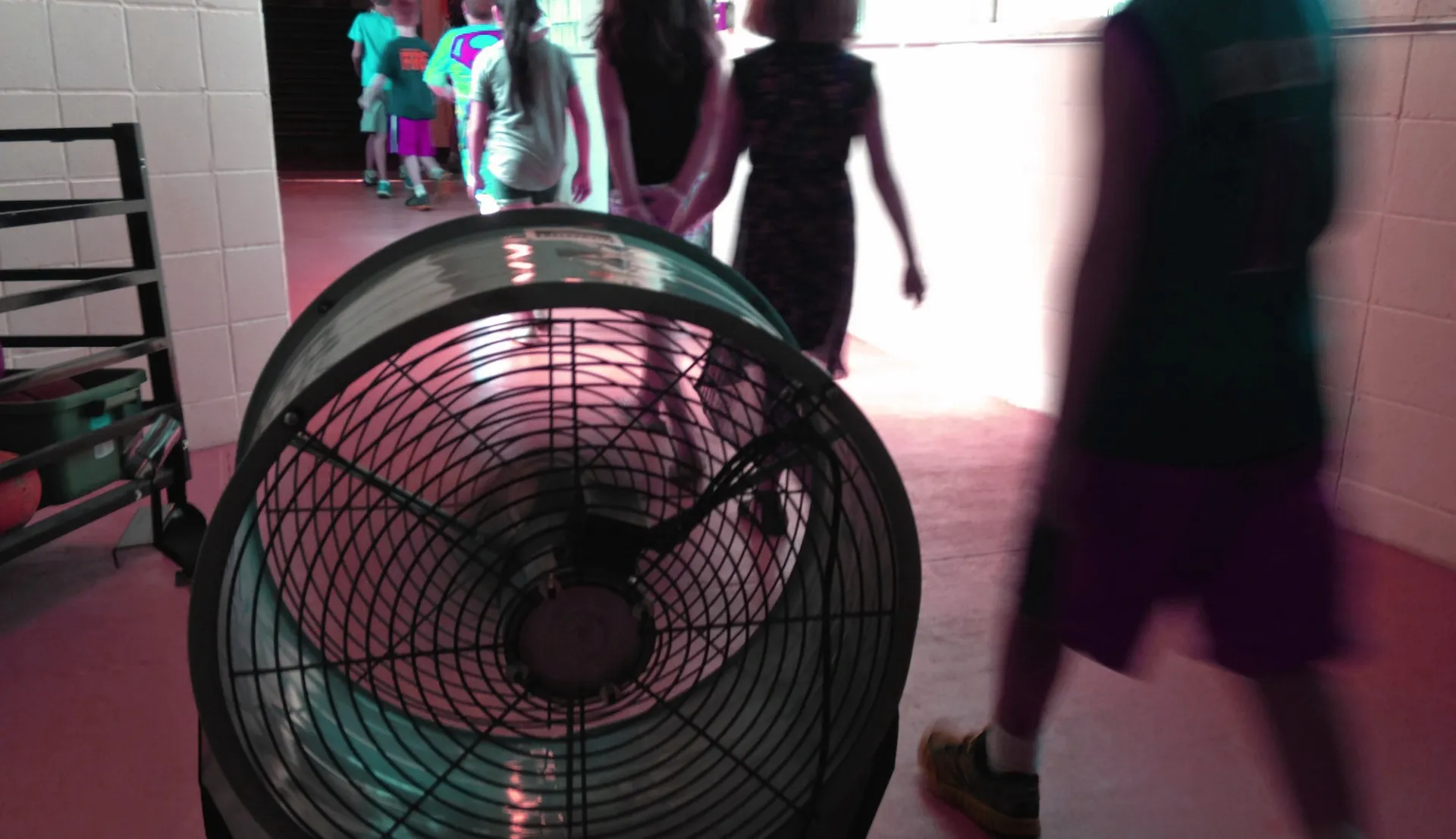
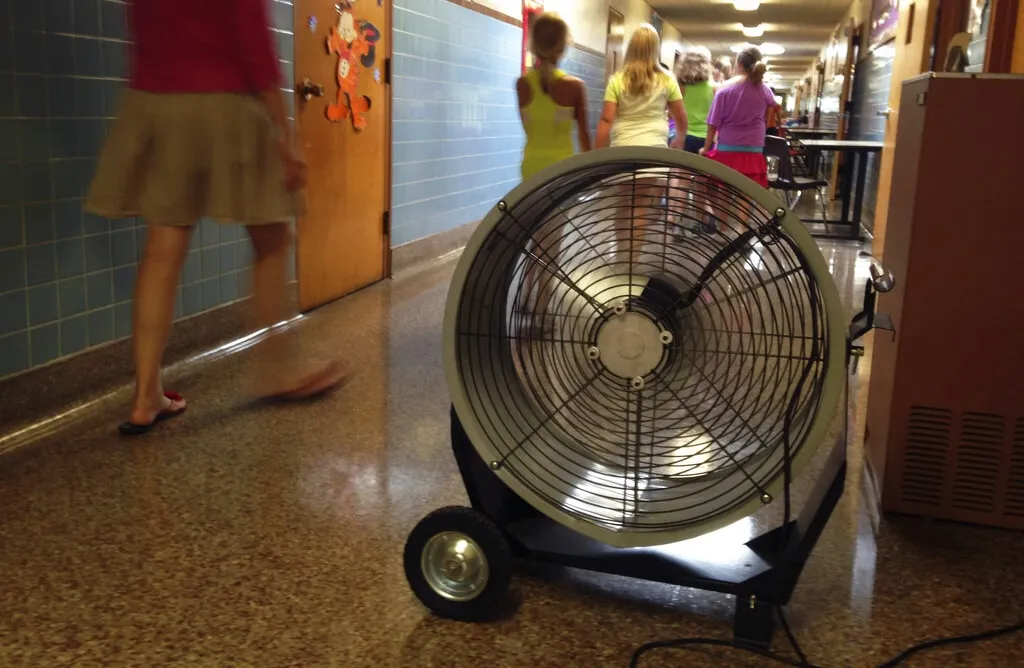
Old HVAC systems can barely work, if at all, and replacing them is very expensive. To battle the heat, educators have been resorting to large, noisy fans, oscillating fans, and industrial fans to combat the heat.
Hannah Ball’s elementary classroom in September 2024 occasionally topped 90 degrees, not an uncommon occurrence in the Poudre School District in Fort Collins, CO. Some classrooms in the district hit 100. “It was unbearable,” Ball says. “Students were passing out and behavior problems only got worse.”
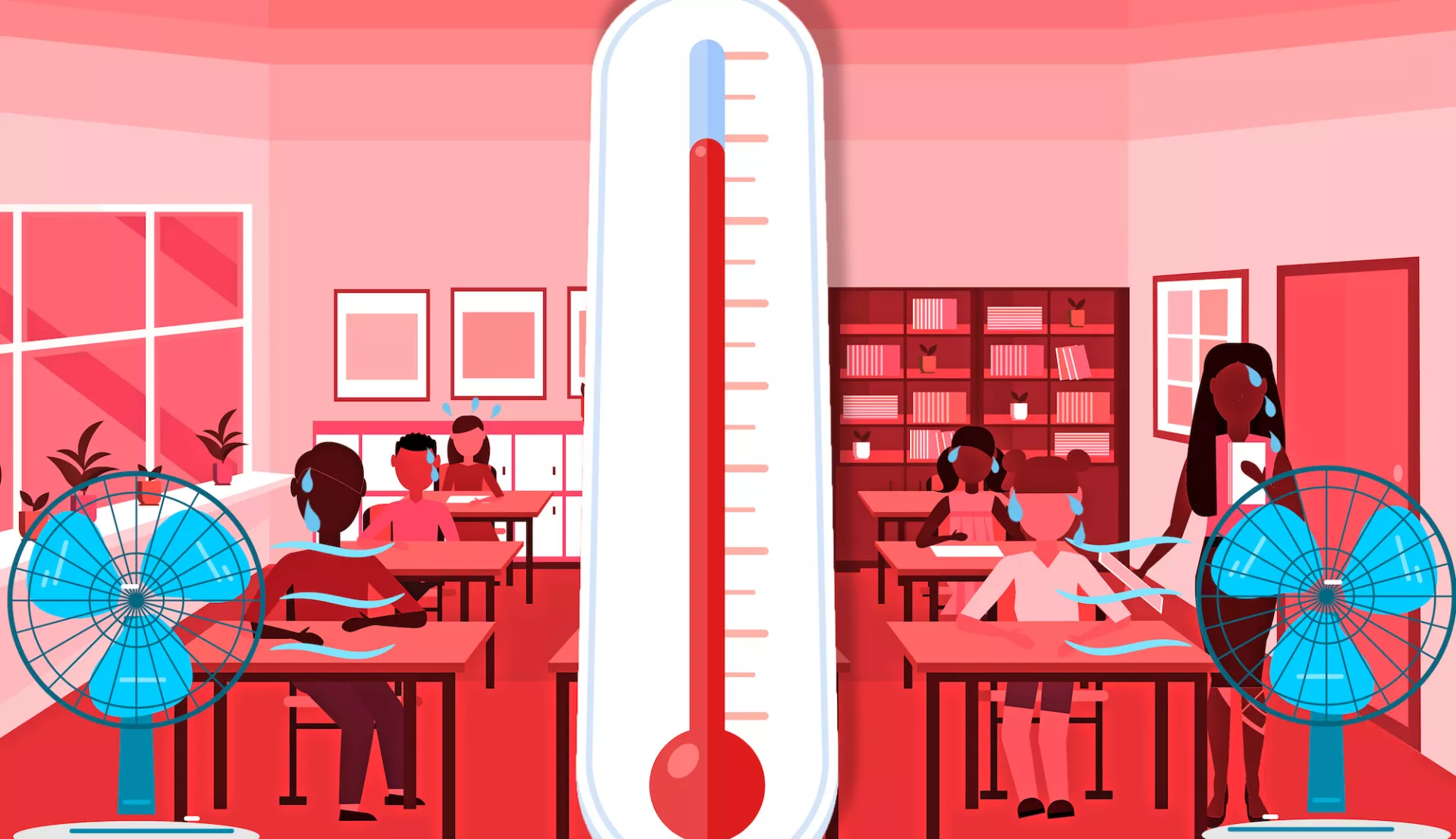
While school buildings are struggling to cool down, learning outcomes drop. Everyone in the school, including educators, feels the physical and mental strain of extreme heat.
“Working in heat takes a pretty tremendous toll on your body, especially over an 8-hour workday,” says Cris Fierro, a science teacher in Fort Collins. “It’s very difficult teaching students who are also not able to fully engage because they're also struggling with how hot it is.”
In Wake County, North Carolina, Jeffrey Fuss was facing similar struggles.
“One day I came into my classroom, and it was 80 F at 7:15 a.m.,” said Fuss, a social studies teacher in Wake County. By the time his students left the room, the temperature rose to 86 F.
For educators across the country, doing nothing about extreme heat and its effect on students and staff isn’t an option.
“Extreme heat in schools undermines learning and creates health hazards for students and educators alike,” said Eunice Salcedo, NEA Senior Health and Safety Specialist. “And climate change exacerbates the problem. School communities need protections now.”
Learning and Health Suffers
Hot classrooms can lead to students becoming unable to focus on tasks at hand or teaching lessons in class, leading to a decline in learning outcomes. According to a study published in the American Economic Association's American Economic Journal: Economic Policy in 2020, student test scores declined on hotter days, especially in schools with no air conditioning. PSAT scores dropped as hot days accumulated throughout the school year.
“Extreme heat and poor weather conditions can impact people’s performance on any particular day in both educational and non-educational settings,” explains Jonathan Smith, Associate Professor of Economics at Georgia State University. "Air conditioning counteracts almost entirely the detrimental impacts of the heat.”
Students from lower-income families often have less access to air-conditioning at school and at home, making them more vulnerable to the harmful effects of heat.
A global study published by PLOS Climate—which examined data from 14 million elementary, middle and high school students across 61 countries— found that student performance increased when temperatures dropped from 86 degrees to 68 degrees. Even on days when temperatures were between 80 and 90 degrees Fahrenheit, the data show that students can experience heat stress, followed by a drop in cognitive performance.
Heat in classrooms also leads to creating or exacerbating health problems. Asthmatic students can suffer in these environments more than others. In extreme weather environments, the asthma emergency visits to hospital admissions increase, according in a study by the National Library of Medicine.
“We had mold issues in the east building because it's much older,” Fuss recalls. According to the Centers for Disease Control, otherwise healthy children can become sick if exposed to mold indoors.
The Impact on Student Behavior
Students struggle to regulate when a classroom is too hot or when the weather gets warmer outside. Students can find learning less engaging and enjoyable for students in these conditions. The heat can make students feel lethargic, leading to sleeping in class or more acting out in class. Behavior like bullying, altercations, talking back to teachers, are just a few of the behavioral challenges in hot classroom environments.
“The minute they [the students] would walk in, they would get really upset and irate,” Fuss said.
Ball also noticed an uptick in student misbehavior as the temperature in her Fort Collins classroom began to rise. “It's not their fault, but classroom management becomes more difficult.”
Some teachers, like Fuss, move out of the classroom to get out of the hot environment.
Some of the areas of the building do not provide much relief. “The hallways are also 85 F,” Fuss said. “We would spend a lot of time either outside or a common area where a bunch of other classes would be occupying that space.”
Filling the Leadership Gap
While HVAC systems and air conditioning units can be quite costly, educators and their unions, frustrated with district inaction, are organizing for change.
Regardless of the temperature outside or in the classroom, Poudre schools would always stay in session, forcing school staff and students to literally sweat it out. In 2024, Fierro and Ball joined other educators to form the Poudre Education Association Heat Committee. The committee documented classroom temperatures across the district, spotlighting the severity of the issue in meeting with district leaders.
The group persuaded the district to approve protocols for early release days when temperatures reached a certain level. Portable cooling systems were also installed in classrooms, which, while clunky and noisy, have been fairly effective.

In Wake County, Fuss worked with other members of the Wake County North Carolina Education Association to push for updates to schools' HVAC system and better temperature-regulated classrooms. Progress has been made at Enloe High School, where Fuss teaches, but more needs to be done.
“We do have older parts of the building built in the 1960s. Every once in a while, random classrooms will spike in temperature,” Fuss said. While Wake NCAE have made significant progress in highlighting the issue, there's much more to do in persuading the county do raise the necessary funds—including bond referendums—to upgrade the HVAC systems.
In 2025, advocacy by the Connecticut Education Association was instrumental in passage of a bill that increased schools’ accessibility to HVAC funding. The new program makes a COVID-era HVAC grant program a permanent part of the state’s school construction funding system,
After a long advocacy campaign, New York State United Teachers (NYSUT) in 2024 persuaded lawmakers to pass historic legislation establishing the first-ever maximum temperature regulations for schools. Schools must now take action when temperatures hit 82°F and move students and staff when rooms reach 88°F.
In addition to bringing similar protocols to their schools, Poudre educators are continuing their work. Cris Fierro is serving on a district-wide committee that is looking at shifting the school calendar to avoid those days and weeks that are likely to bring extreme temperatures.
Ultimately, the goal of the committee’s work will be to bring air conditioning into each classroom, says Ball. "What we have accomplished is necessary, but they are short-term fixes. The world is getting hotter and we need to do more. Because teaching and learning in these temperatures is unsafe.”