
Key Takeaways
- Educators say students engage more deeply when they see their identities reflected in lessons, helping build confidence and a stronger sense of belonging.
- A push to include AANHPI history and contributions has gained traction, with more states adopting curriculum requirements.

At Hansen Elementary School, in Massachusetts, this year’s Lunar New Year was celebrated across five fifth-grade classrooms, with each teacher taking a different approach. One class focused on lantern-making. Another introduced students to Tai Chi. Others explored the zodiac.
In Yan Kohl’s classrooms, she explained linguistic and cultural differences. “We talked about how in most of China they speak Mandarin, but where my mom grew up, in Hong Kong, we speak Cantonese, and that it’s a dying dialect,” shares Kohl, adding that the goal of the lesson was to give students context, not just recognition.
Scenes like this are becoming more common in classrooms across the country, as more and more educators begin to incorporate Asian American, Native Hawaiian, and Pacific Islander (AANHPI) history and culture into everyday instruction. But for many teachers, the effort is still new, and in some cases, overdue.
Moving passed the celebration
For Joyce Farr, an English as a second language teacher at Williamstown Middle School, in New Jersey, the gap wasn’t immediately obvious.
“I didn’t realize that [AANHPI] wasn’t part of the curriculum,” says Farr, who immigrated from Malaysia and has been teaching for nearly two decades. She says she spent years focused on helping students adapt to life in the U.S. It wasn’t until later in her career that she began to recognize what was missing from the classroom—and from her own experience.
Quote byJoyce Farr, English as a second language teacher, in New Jersey

That realization sharpened as she looked around her professional and personal circles. “I literally live isolated,” she says, questioning why she tends to be one of a handful or the only Chinese American in her circles. “Imagine if I felt that as an adult, what must students feel?”
That experience also led Farr to act within her national union, NEA, helping to introduce a New Business Item (NBI) during its annual conference last year. The NBI aims to expand AANHPI curriculum and educator support, an effort she says grew out of her own journey of learning and professional development.
Throughout the years, Farr has connected with AAPI New Jersey, a grassroots organization that fights for the rights, representation, and well-being of New Jersey’s AAPI community. The group has supported implementation of the state’s AANHPI curriculum mandate and has provided virtual trainings and webinars through an initiative called Teach Asian American Stories.
AAPI New Jersey has received grant funding from The Asian American Foundation (TAAF), a national nonprofit dedicated to advancing the safety, visibility, and prosperity of AANHPI communities, including by supporting educators with access to culturally relevant curriculum and resources. Educators can also turn to TAAF's AAPI History Hub, an online resource that curates lesson plans, primary sources, and teaching tools to help bring AANHPI history and experiences into the classroom.
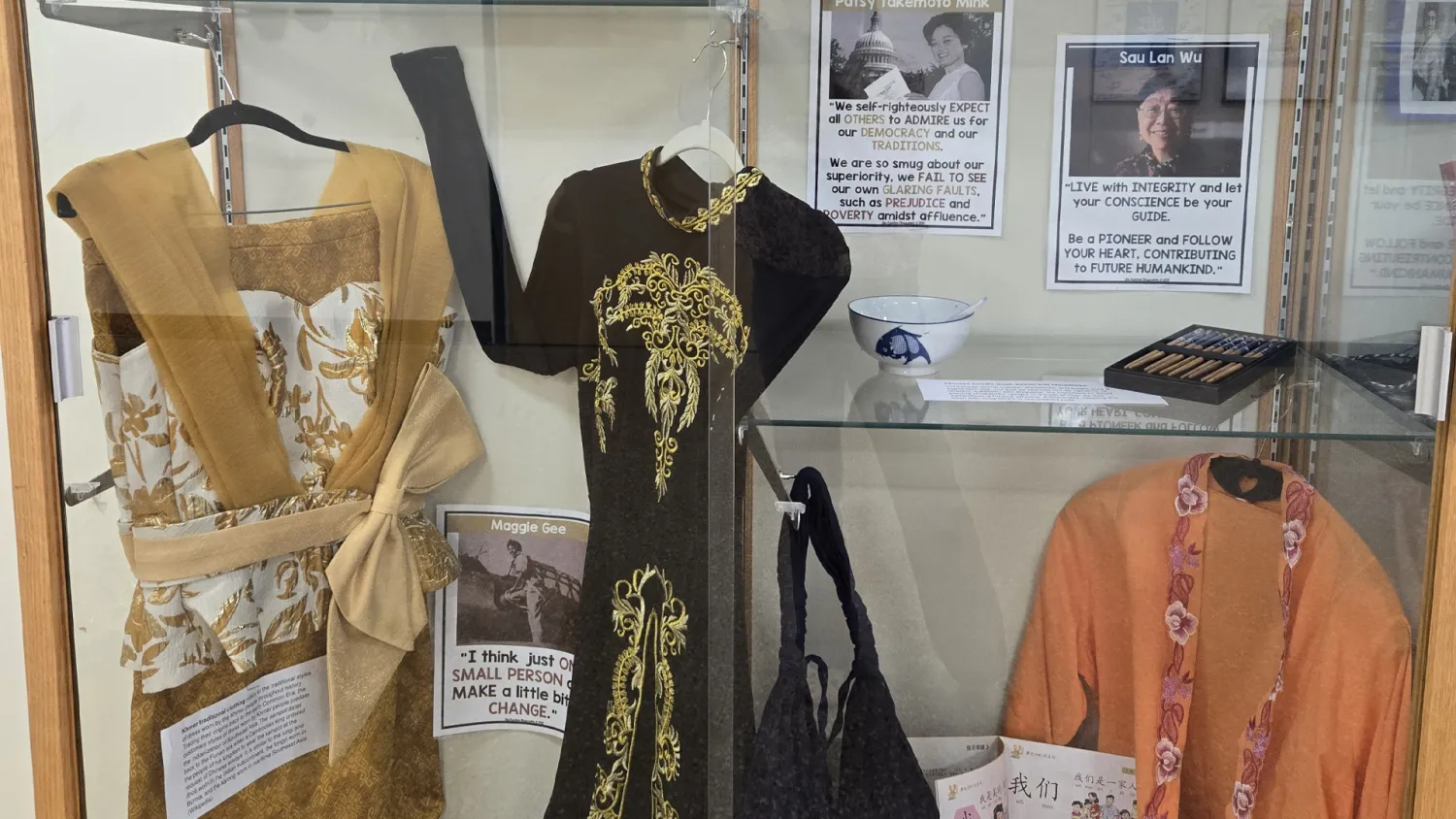
Since 2021, roughly a dozen states have passed laws requiring AANHPI studies in K-12 education.
Farr sees the benefit for all students.
“Bringing AAPI history [into classrooms] is not just for representation but for helping students understand different cultures, challenging stereotypes, and building a more inclusive community,” she says.
Realizing what was missing
Many educators and advocates say that sense of invisibility has long been reinforced by what is and isn’t taught in schools.
For decades, AANHPI history has been largely absent from textbooks. When it appears, it’s often limited to brief references without broader context or continuity, explains Kohl.
“A lot of times as an AAPI growing up, I really didn’t see myself reflected…not even in the history books,” says Kohl. “We got a paragraph about Chinese Americans building a railroad.”
Educators say that kind of limited representation shapes how students understand both history and identify. However, when a fuller history and range of contributions are included, students gain a more complete understanding of the American story.
“It helps me to show my students that we’re not invisible,” she says.
The impact can be immediate. Kohl recalls how some years ago students arrived at school in traditional dress for Lunar New Year, eager to share their culture with classmates.
“They were just so proud to share a little bit of who they were," Kohl says. "The controlling images in media work hard to erase that pride—Asian identity is constantly pushed aside, reduced to the perpetual foreigner. When students are told they don't fully belong here, reclaiming and celebrating who they are is essential. That's why creating space for those stories in the classroom matters."
Responding to rising anti-Asian hate
The push to include AANHPI history in school curricula has gained traction in recent years, particularly after a rise in anti-Asian hate during the COVID-19 pandemic.
The goal? To teach about AANHPI contributions and foster a better understanding.
For example, people of Asian descent have been part of what is now the United States for centuries. Historians note that Filipinos arrived in North America as early as 1587. They’ve also documented their presence in colonial America, including during the Revolutionary War.
Key States with AANHPI Legislation (Passed or Implemented)
Illinois
New Jersey
Connecticut
Delaware, Rhode Island, Florida, Wisconsin
New York
Navigating policy and practice gaps
Even when policies exist, implementation varies widely.
“Despite all these legislative advances…the implementation itself remains complex, uneven, and fraught with challenges,” explains Farr.
School districts must decide how to incorporate new material, train educators, and align lessons with existing standards. In some cases, educators say they lack the background or resources to teach AANHPI history with confidence.
“I don’t feel prepared sometimes to teach the history,” says Farr.
There are also structural hurdles, including varying levels of support from administrators and school boards. “Teachers can’t just implement curriculum without some form of direction from the content-area supervisor,” she explains.
Integrating AANHPI history and contributions year-round
In classrooms where AANHPI content is being introduced, many educators are integrating it into daily instruction instead of limiting it to standalone lessons or celebrations.
In Connecticut, for example, schools are integrating AANHPI history across grade levels rather than limiting it to a specific unit or month.
Kohl describes a similar approach, shifting from surface-level recognition to more sustained inclusion.
“It should be ingrained in our curriculum,” Kohl says. “We should start seeing history from multiple perspectives and not just the singular white perspective,” she says.
Farr says, “Ongoing advocacy, collaboration, and professional development are essential to making these mandates truly meaningful and ensuring that every student—not matter their background—can see themselves reflected in the story of America.”