Key Takeaways
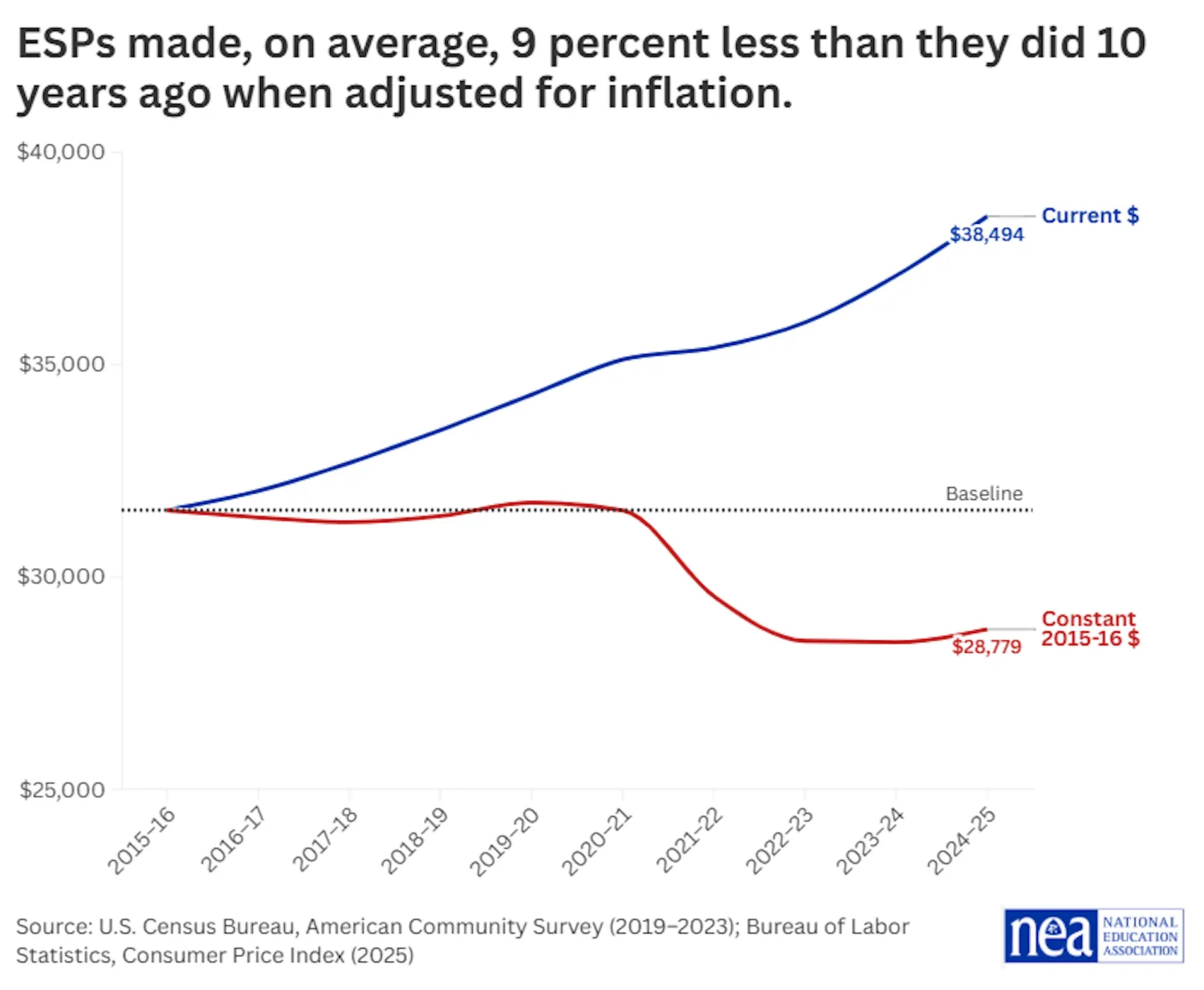
- The 2026 NEA ESP Earnings Report finds that average earnings for ESPs working full‐time in K-12 and higher education in 2024‐25 were $38,494, about $1,400 more than the prior year.
- But adjusting for inflation, earnings have actually declined 8.9 percent over the past decade.
- Support staff who work in collective bargaining states earn more—$5200 more for K-12 ESPs and $3900 more for higher education ESPs.
32%
$4,600
Even as wages for school support staff have increased marginally over the past few years, what real benefits do they bring if, in the face of rising costs, these gains quickly evaporate?
For example, education support professionals (ESP) in Calvert County, MD. negotiated a pay increase in 2025, but health insurance premiums rose by 20 percent.
“Unfortunately, we’ll have some members who will be bringing home less money this year than they did in the previous year for that reason alone – rising health care costs,” says Stacy Tayman, president of the Calvert Association of Educational Support Staff.
Across the nation, the story is the same. According to the 2026 NEA Education Support Professionals Earnings Report, released this week, among ESPs working full‐time in K-12 and higher education, average earnings in 2024‐25 were $38,494, about $1,400 more than the prior year. Adjusting for inflation, earnings have actually fallen nearly 8.9 percent over the past decade. “ESPs have been falling behind and losing purchasing power,” the report states.
Too many politicians at the state and national level are standing by and doing nothing as these wages stagnate. This is a direct result of putting tax breaks for billionaires before public school funding, says NEA President Becky Pringle.
“Educator pay hasn’t kept pace with inflation because of policy choices made by elected officials,” Pringle explains. “Leaders have tolerated widening income inequality, allowing CEO compensation to climb dramatically while educators struggle to maintain their spending power.”
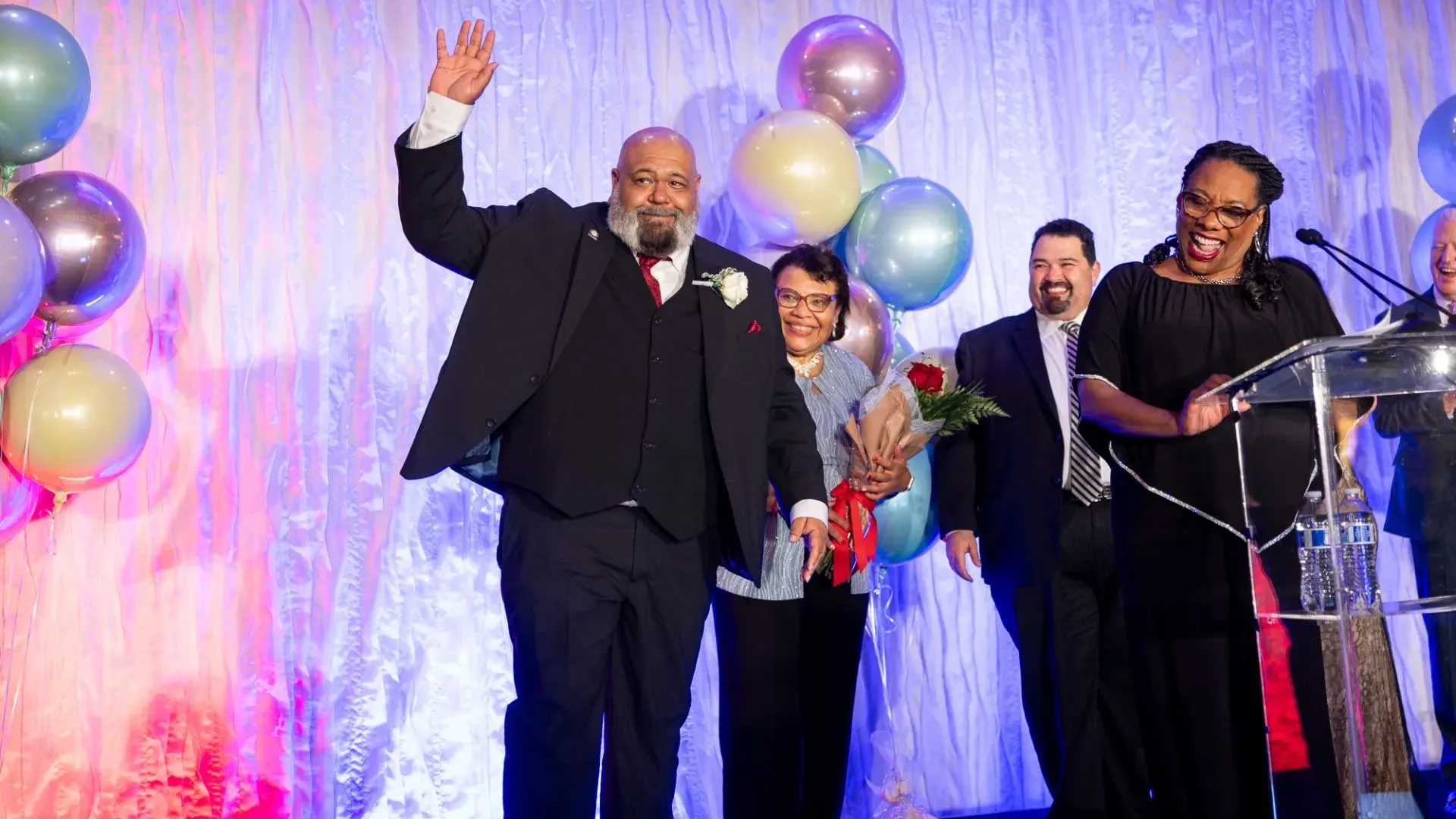
Meanwhile, dedicated support professionals like Ric Calhoun, a high school campus supervisor in Kenwood, Washington and the 2026 NEA ESP of the Year, have had to work multiple jobs to make ends meet.
“What our members talk a lot about is making a thriving wage,” Calhoun explains. “But we don't even make a living wage, which is why so many of us take on two or three jobs. That can be exhausting and takes time away from our families—unless we leave the profession. Doing what we love to do to support our students shouldn’t present us with that sort of choice.”
A Closer Look at Support Staff Earnings
There are more than 3 million education support professionals (ESPs) working in public education, with 75 percent in K–12 schools and 25 percent at higher education institutions.
In 2024-25, average earnings for ESPs in K–12 public schools were $36,360, lower than those in higher education institutions, whose average earnings were $47,029. But over the past decade, both groups have been falling behind.
Accounting for inflation, average earnings For ESPs in K–12 public schools decreased by $2,344 between 2015-2016 and 2024–2025. In that same period, the average salary for higher education ESPs fell by $6,413.
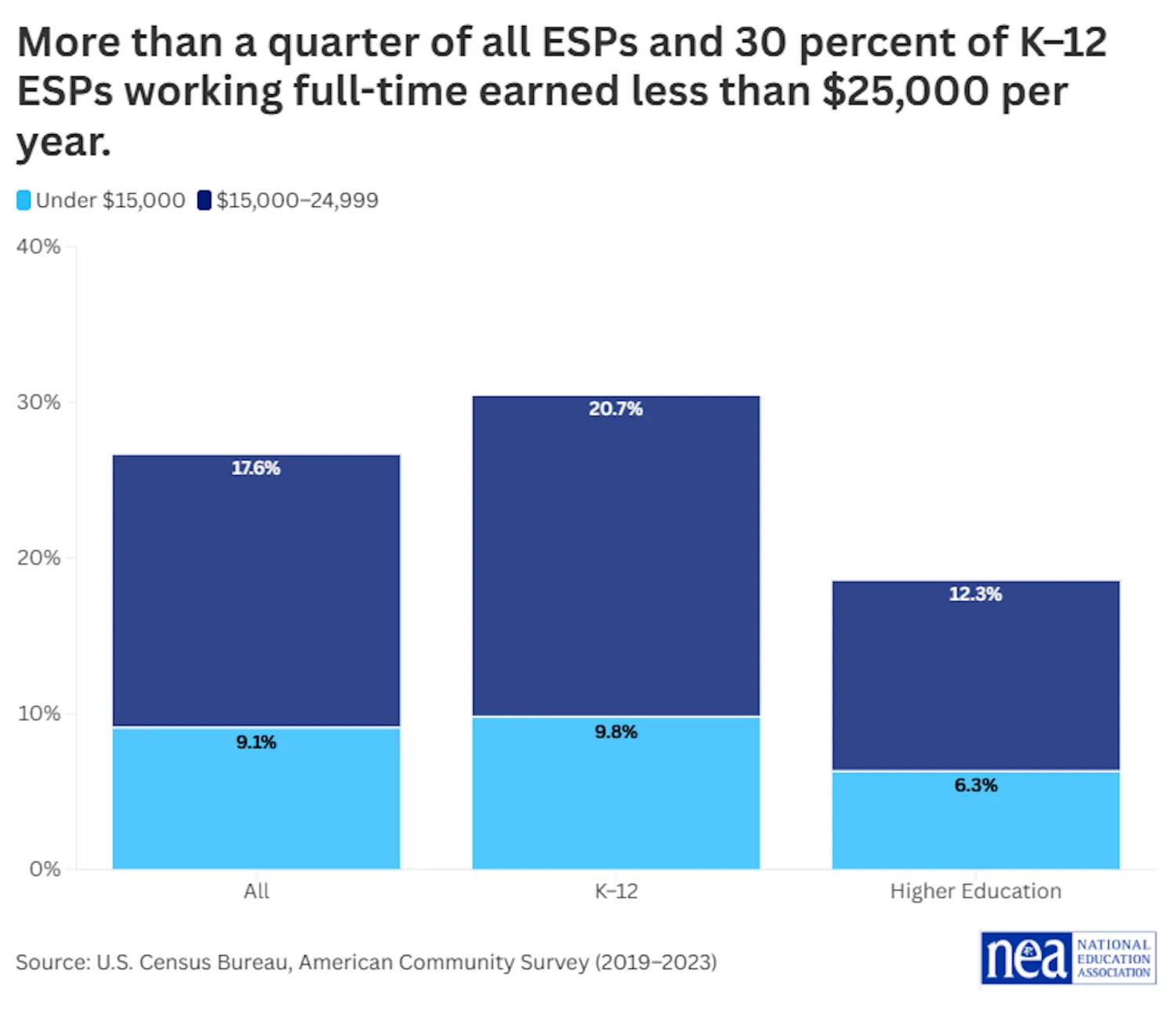
Nearly 32 percent of full-time K–12 ESPs earn less than $25,000 annually, down from 38 percent in 2023-24. Across K–12 and higher education combined, just over a quarter of all full-time ESPs fell below that threshold—a decrease from 32.7 percent the previous year. In 2024-25, nearly 1-in-10 ESPs earned less than $15,000.
“With the cost of living so high, and pay so low, it’s so hard for support professionals to afford so many basic things,” says Robin Moore, a library and operations specialist at Lansing Community College in Michigan. “Barely getting by causes stress and that causes people to leave the profession.”
The Difference Unions and Collective Bargaining Makes
Here's the good news: through their unions, educators have demanded respect and a seat at the table and have used the power of their collective voice to win more pay.
“Unions help ensure educators are paid fairly and have the working conditions they need to support their students,” Pringle said. “When educators have a collective voice, they can secure better pay, safer classrooms, and the resources that benefit both their profession and the success of every student.”
The 2026 ESP Earnings report finds that, in states where there were bargaining laws covering ESPs, average ESP pay was $40,494. In states that did not have bargaining laws, average pay was $35,846.
Section with embed
At $42,372, Nevada is ranked ninth in the nation in ESP earnings, according to the NEA report. In 2023, the state legislature considered Senate Bill 231, which provided $250 million in matching funds to provide significant raises for Nevada educators.Support professionals, however, were left out of the bill. But thanks to the lobbying efforts of the Nevada State Education Association, the bill was amended and has resulted in significant wage increases for support professionals. A few months later, the Washoe Education Support Professionals signed a collective bargaining agreement with the district that resulted in a 24 percent pay increase over four years.
In 2025, the Somerville Educators Union in Massachusetts won a starting salary of $50,000 for paraprofessionals, which doubles the wages they made six years ago—one of many bargaining wins for the state’s educators last year.
‘We've Opened a Lot of Eyes’
A thriving wage is just one of what Robin Moore, calls the “essential elements that people need to live a dignified life” —along with full benefits, workplace safety, retirement security, job advancement, and job security.
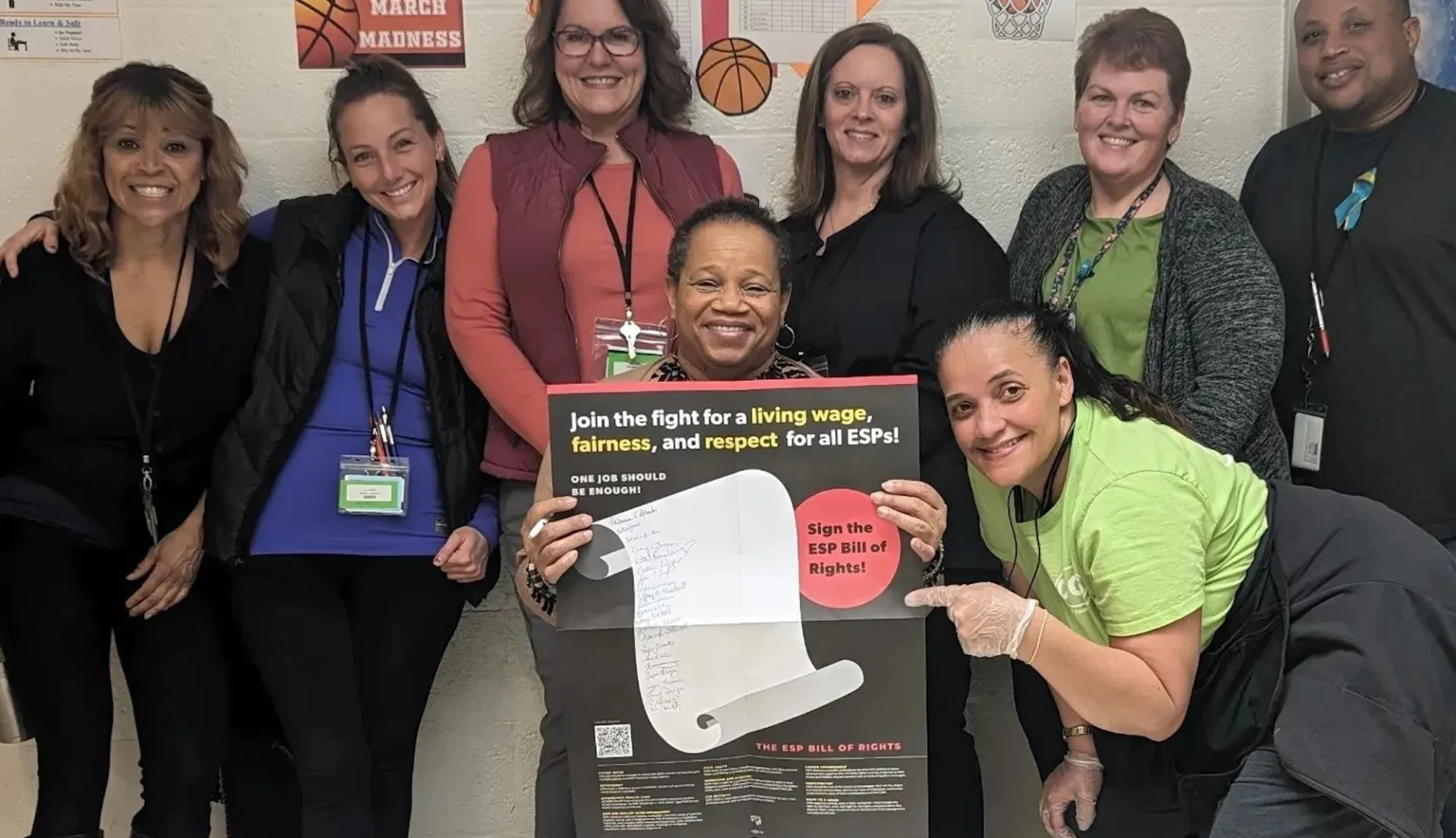
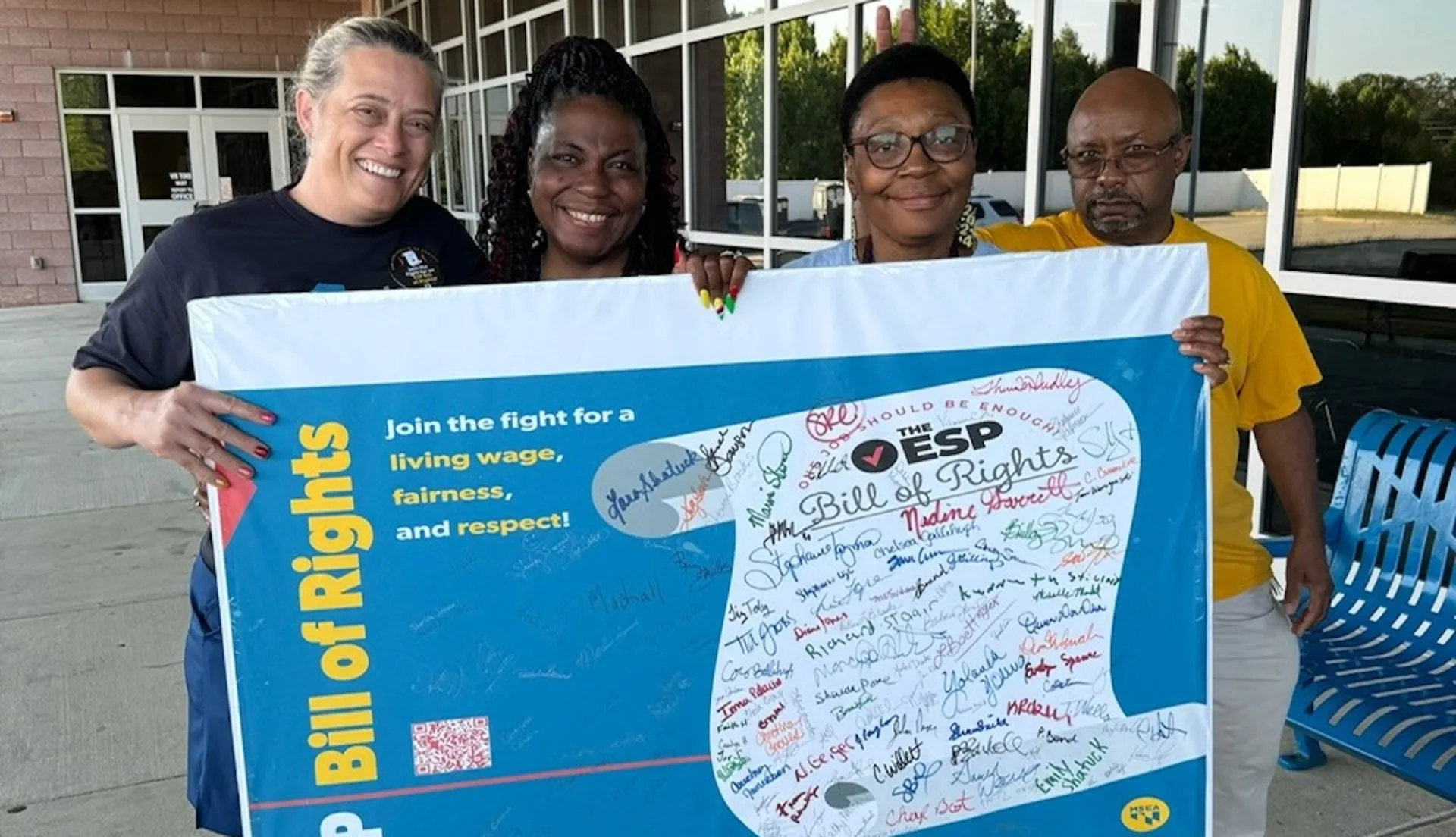
These elements form the framework of Michigan Education Association’s (MEA) ESP Bill of Rights campaign, on which Moore serves as a captain. “The campaign is very exciting. We’re bringing these issues, the inequities facing all of us, to everyone’s attention.”
MEA launched the campaign in 2025, one of 18 states have joined the movement to give ESPs the platform to demand the pay and benefits and the recognition they deserve.
The Massachusetts Teachers Association set things in motion in 2018 when it launched a living wage campaign for ESPs, which laid the groundwork for the first Bill of Rights campaign calling for a comprehensive slate of critical reforms. Maryland and Illinois soon followed, and momentum hasn’t slowed down since.
The first few phases of the campaigns are focused on surveying members, identifying priorities, building leadership teams, and raising awareness. Key to the process, says Ric Calhoun, who led the development of the campaign in Washington, was avoiding being told by others what school support staff needed and deserved.
“The first year, we spent a lot of time listening to our members to get as many voices as possible across the state of Washington. I live close to Seattle, but we also have members in very large rural communities. We heard from everyone,” Calhoun says.
The campaigns in Massachusetts and Maryland have already yielded results, scoring victories over living wages and workplace safety.
And national lawmakers have taken notice. In April 2025, U.S. Senator Ed Markey (Mass) and Congresswoman Jahana Hayes (CT) reintroduced the Paraprofessionals and Education Support Staff Bill of Rights, a resolution calling for “dignified wages, benefits, and working conditions for paraeducators, classroom assistants, bus drivers, custodial workers, and other essential school staff.”
Stacy Tayman in Maryland says the Bill of Rights campaign has been a “huge springboard to bring ESP issues into focus. It’s created such an awareness about the inequities around pay and our working conditions. We’ve had a lot of frank conversations with lawmakers. We’ve opened a lot of eyes.”