Key Takeaways
- Twenty-seven states now have laws mandating or encouraging cursive instruction in public schools—up from only 14 a decade ago.
- Proponents believe cursive is an important life skill that has significant cognitive benefits. While supporting handwriting instruction (including print), many experts say the benefits of cursive are overstated.
- For many educators, these new mandates add even more responsibilities to their plates—and another test for their students to pass.
David Polochanin, a middle school English teacher in Glastonbury, Conn., doesn’t know if any of his students can sign their name—or, for that matter, write anything in cursive. By the time they arrive in his class, there’s little sign that connected strokes and looped letters have been part of their instruction.
Polochanin began his career teaching third grade and recalls spending 20 minutes each day on handwriting.
“We would trace letters, write letters, things like that. It wasn’t the most mind-blowing instruction, but it was repeated practice,” he says. “Now I don’t think about it, because it’s not in the curriculum.”
It was around 2012-13 that cursive began to fade from classrooms completely, as digital tools began to take over classrooms and students‘ lives. The Common Core State Standards, adopted in 2010, removed the requirement for cursive but added one for keyboarding. “Cursive was going the way of the penny,” says Polochanin.
Jump ahead to 2026. Seemingly out of the blue, 27 states have now passed laws mandating cursive instruction in elementary and, in some cases, middle grades. New Jersey and Pennsylvania took this step earlier this year, and more states are likely to jump on the bandwagon.
Connecticut isn’t one of those states (yet). Polochanin is ambivalent about a state mandate but does wonder if something hasn't been lost in education that more attention to cursive and handwriting could recoup. “It does have value but how we would make space in the curriculum is a balancing act.”
For Lee Bryant, a teacher in Pinellas County, Fla., the state standards—cursive was brought back in 2014—is space enough. But Florida lawmakers are considering a bill to require all students in grades 2 through 5 to learn cursive and prove their proficiency.
“The last thing teachers need is another mandate and another test,” says Bryant, who is president of the Pinellas County Classroom Teachers Association. “We already teach cursive. But a lot of politicians can’t help but make us jump through more hoops—and give our students another test.”
Why the Resurgence?
As of March 2026, more than half of U.S. states now require or strongly encourage schools to teach students to read and write in cursive — compared to just 14 states just a decade ago.
Shawn Datchuk, a professor of special education at the University of Iowa and the former director of the Iowa Reading Research Center, sees a confluence of factors at work. States are concerned about stagnant reading and writing scores, and research does point to handwriting's positive impact on student learning.
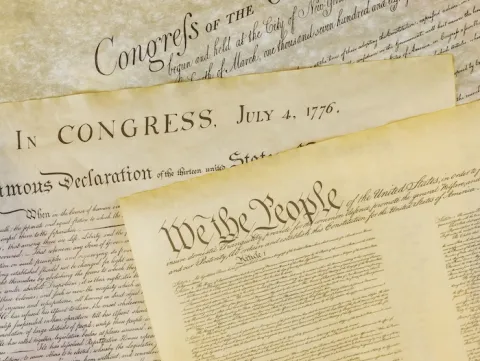
A generational frustration over the abandonment of cursive is also driving the resurgence. “Many people who are older are concerned that they can’t communicate with their kids or grandkids with cursive," Datchuk says. "They also believe that students today should be able to—but can't—read our nation's historical documents.”
Bringing back cursive is also serving as an outlet to the anxiety most people have about the prevalence of digital media in children's lives, Datchuk adds.
Polochanin agrees. “In one way, just getting kids off screens is a reason to look into whether any additional time should be spent on cursive. But I do think that it also reflects a desire to help our students slow down, take their time, and take pride in their work.”
What Does the Research Really Say?
In advocating for new cursive mandates, state lawmakers insist students know how to sign and read important and historical documents. But it’s the impact on motor skills, spelling, and reading comprehension that has been the most effective selling point.
“Research has shown that cursive handwriting enhances a child’s brain development, including memorization, and improves fine motor skills,” said California lawmaker Sharon Quirk-Silva, lead sponsor of the state’s cursive law that passed in 2023. These findings have been repeated by lawmakers in every state that has passed cursive mandates.
While Bryant doesn’t doubt that many students may benefit from learning cursive, he is very skeptical that its value demands state-level action. “There are a lot of skills that we don’t necessarily need. I think cursive is one of those skills.”
And most of the research is addressing handwriting in general (including manuscript, or print), not cursive, says Morgan Polikoff, a professor of education at the University of Southern California’s Rossier School of Education.
“There is research that suggests that writing things by hand is good for retaining knowledge and is more efficient,” he explains. “But there really isn’t anything compelling that says writing in cursive specifically is better than print handwriting.”
A 2023 study by two Canadian researchers concluded that it is “unlikely that cursive offers more cognitive benefits than printing, or vice versa.” But they did find that in elementary grades especially, handwriting of any kind was far superior to keyboarding on a variety of measures.
But writing efficiently and legibly is the point, whether it’s cursive or manuscript.
“Student handwriting is indeed a highly beneficial activity,” they wrote. “However, the literature offers no evidence that cursive writing is somehow special in terms of fostering critical thinking or helping children express themselves more authentically.”
Cursive and Keyboarding
In 2022, NEA Today conducted an informal survey of educators via Facebook asking which skill—cursive or keyboarding—was more valuable in today’s classrooms. The responses were mixed. Some said cursive. Some preferred keyboarding. Others asked, why not both?
“Kids can barely print,” said one respondent. “I love cursive, but we need to get the basic concepts of writing down first, such as capitals, punctuation, writing in a straight line.”
Cursive, said another, “should be an enrichment not a requirement. It will never be needed in life, except for a signature, and those will all be electronic before long.”
Quote byDavid Polochanin, Middle School Teacher, Glastonbury, Conn.

One educator replied that she has been teaching cursive for four years and her students loved it—especially when they wrote letters to health care workers during the pandemic and received handwritten responses back.
Many teachers in states with mandates were already teaching cursive in their classrooms or at least knew how to do so. And many enjoy including it in their curriculum, says Datchuk. “Students like it as well. Cursive is a cool new way to communicate.”
At the same time, he adds, “we have to be mindful that more teacher preparation is needed. Many newer teachers are learning the skills themselves.”
Another Demand on Educators
Reintegrating cursive back into the curriculum will require new professional development, as well as time and space during an already busy school day.
Putting aside the debate over cursive’s value, and considering the demands already placed on schools, whether this is the right time to impose a new requirement is a valid question, says Polikoff.
“Every time we pass new mandates on things teachers need to teach, we never take anything off their plate.”
Morgan Polikoff: We Always Add, Never Take Away
Elapsed time: 0:00
Total time: 0:00Lee Bryant isn’t optimistic that Florida lawmakers will take note. In February, the house of representatives passed the bill requiring cursive instruction and a new proficiency test. The bill is now with the state senate for consideration.
“It’s just a distraction from the bigger issues we face in public education,” Bryant says. “I like cursive. I think the flowing script in the U.S. Constitution is beautiful, but isn’t the content of the document more important? Our students would gain a lot more from understanding what the Constitution says, and less about the process of drawing it out.”