Everything Educators Need to Know about the Supreme Court
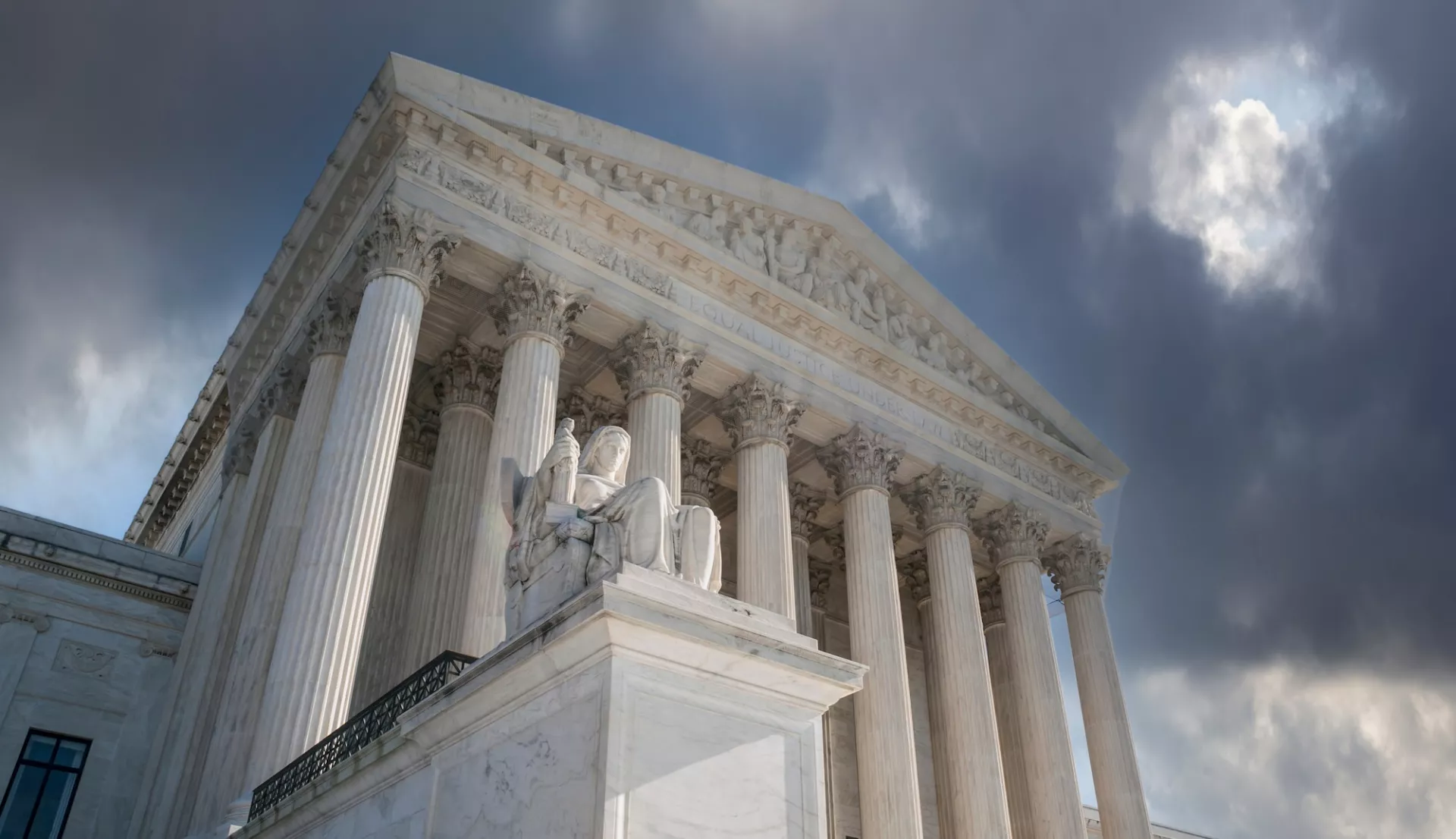
From landmark rulings that expanded civil rights and educational access to more recent decisions that curtailed voting rights and expanded money in politics, the U.S. Supreme Court’s influence is far-reaching.
This overview is designed to help NEA members better understand how the Supreme Court functions, why its decisions matter, and how its work intersects with the day-to-day realities of education and advocating for public education.
1. What is the U.S. Supreme Court?
The Supreme Court is the highest court in the United States. Established by Article III of the U.S. Constitution, it is the final judicial authority on questions of federal law and constitutional interpretation. Today, the Supreme Court consists of nine Justices (one Chief Justice and eight Associate Justices) who are nominated by the President and confirmed by the Senate. The Justices have lifetime appointments except under extremely limited circumstances. The current Supreme Court Justices are:
- Chief Justice John G. Roberts, Jr. (2005-Present, nominated by President George W. Bush)
- Justice Clarence Thomas (1991-Present, nominated by President George H.W. Bush)
- Justice Samuel Alito (2006-Present, nominated by President George W. Bush)
- Justice Sonia Sotomayor (2009-Present, nominated by President Barack Obama)
- Justice Elena Kagan (2010-Present, nominated by President Barack Obama)
- Justice Neil M. Gorsuch (2017-Present, nominated by President Donald J. Trump)
- Justice Brett Kavanaugh (2018-Present, nominated by President Donald J. Trump)
- Justice Amy Coney Barrett (2020-Present, nominated by President Donald J. Trump)
- Justice Ketanji Brown Jackson (2022-Present, nominated by President Joseph Biden)
One of the Supreme Court's most important responsibilities is judicial review, or the power to determine whether federal and state government actions, like adopting and enforcing laws and policies, comply with the Constitution. Through its decisions the Court can uphold government actions, strike them down, or clarify how laws and policies should be applied. Because its rulings addressing questions of federal law and the Constitution are binding nationwide, the Court has a profound impact on the rights and daily lives of students, educators, workers, and communities across the country.
2. What does the Constitution say about the Supreme Court?
Article III, Section 1 of the Constitution says:
The judicial Power of the United States, shall be vested in one supreme Court, and in such inferior Courts as the Congress may from time to time ordain and establish. The Judges, both of the supreme and inferior Courts, shall hold their Offices during good Behaviour, and shall, at stated Times, receive for their Services, a Compensation, which shall not be diminished during their Continuance in Office.
The first sentence of this Section is what constitutional scholars call a vesting clause, which gives to “one Supreme Court” and any other “inferior Courts” Congress chooses to create the “judicial power of the United States.” The second sentence specifies that federal judges on the Supreme Court and the “inferior Courts” made by Congress “hold their Offices during good Behaviour.” This means they serve for life unless they retire, resign, or are removed from office through impeachment by the House of Representatives and conviction by the Senate.
In addition, Article II, Section 2 of the Constitution states that the President “shall nominate, and by and with the Advice and Consent of the Senate, shall appoint . . . Judges of the supreme Court.” As explained more below, this gives the President the power to nominate new Supreme Court Justices and the Senate the power to confirm or reject the President’s nominee.
Congressional Authority
Congress can pass laws that change the number of Justices on the Supreme Court and has done so six times since the Court’s creation in 1789. The most recent change, in 1869, set the current number of nine Justices.
Congress determines how much discretion the Supreme Court has over the cases it hears each year. Originally, the Court had very little say over its docket and was required to hear any case that met certain legal criteria. When this system created a backlog of cases awaiting decision, Congress passed laws that gave the Court much broader authority to decide which cases to hear. Today, most cases come to the Court only after the Justices vote to grant a petition for review through the process explained below. Congress could limit the Court’s jurisdiction as well.
Congress decides the basic structure of the federal court system, including the number and location of “inferior Courts” and the federal Judges who preside over them. Congress has established two types of lower federal courts: district courts, which are the main trial courts of the federal court system, and courts of appeals, which review decisions by the district courts and federal administrative agencies. Right now, there are 94 federal district courts, with at least one in each U.S. state and territory, and 13 federal courts of appeals, organized into 12 geographic “circuits,” or regions, and one nationwide court that hears certain types of technical cases. Congress also determines the kinds of cases federal district courts and courts of appeals can hear, which, in turn, influences the cases the Supreme Court may choose to review.
3. How are Supreme Court Justices selected?
The Constitution outlines a two-step process for selection of a Supreme Court Justice: (1) the President nominates someone for an open seat on the Court; and (2) the Senate votes to approve or reject the President’s nominee. Neither the Constitution nor any other law requires that a nominee to the Supreme Court be a lawyer (although all nominees have been lawyers) or have any other particular qualifications.
Over time, a set of norms and standard procedures for Supreme Court nominations beyond the constitutional baseline have developed. The typical process looks like:
- The President nominates a candidate to an open Supreme Court seat and submits the nomination to the Senate.
- The full Senate refers the nomination to the Senate Judiciary Committee for preliminary consideration. The Constitution does not require this step, but for over 150 years, evaluation by the Committee has been the first step in the Senate process, before full Senate deliberation.
- The Senate Judiciary Committee investigates the nominee, including by collecting records from the FBI and other sources.
- The Senate Judiciary Committee holds a hearing on the nominee, during which witnesses may testify on their views about the nominee and Senators question the nominee on their background, qualifications, legal positions and beliefs, and their past judicial decisions, if the nominee previously served as a judge on another federal or state court.
- The Senate Judiciary Committee votes on the nomination and sends to the full Senate a recommendation that the nominee be either confirmed or rejected.
- The full Senate holds debate on the nomination.
- The full Senate votes on the nomination. A simple majority of 51 Senators present and voting is needed for confirmation. In the event of a tie, the Vice President casts the deciding vote.
In recent years, the nomination process has become intensely partisan, resulting in gridlock and even preventing Presidents from filling Supreme Court vacancies. For example, in March 2016, former President Barack Obama named then-U.S. Court of Appeals Judge Merrick Garland to fill an open seat on the Court. However, the conservative majority on the Senate Judiciary Committee refused to even meet with the nominee or advance his nomination to the full Senate while President Obama was in office. Instead, the majority blocked Garland’s nomination and effectively reduced the number of sitting Justices to eight until President Trump was elected and able to nominate now-Justice Neil Gorsuch to the vacant Supreme Court seat.
While Senate Republicans claimed their actions as to Garland were justified by the fact that 2016 was an election year, when Justice Ruth Bader Ginsburg passed away just weeks before the November 2020 election, Senate Republicans rushed to confirm President Trump’s nominee to the Supreme Court, now–Justice Amy Coney Barrett, in October 2020, within weeks of the election. The extreme partisan maneuvering by the Senate Republicans in 2016 and again in 2020 created the hyperconservative Supreme Court that we have today, with a 6-3 conservative supermajority.
4. Why are Supreme Court nominations important?
Every Supreme Court nomination is critically important because of the enormous power the Court exercises. Supreme Court decisions have nationwide consequences. As a result, the individual views and identities of Justices are enormously important.
In his first term, President Trump was able to nominate three conservative Justices to open Supreme Court seats: Justices Neil Gorsuch, Brett Kavanaugh, and Amy Coney Barrett. Justice Gorsuch replaced a centrist Justice who sometimes voted with the Court’s conservatives and sided with the liberal Justices in other cases, while Justice Barrett took the seat previously held by liberal Justice Ruth Bader Ginsburg. As a result, Trump’s conservative nominees transformed a 5-4 Court, with at least one Justice considered a potential swing vote in major cases, into a 6-3 conservative supermajority that generally votes on ideological, partisan lines. In just six years, the Court’s conservative supermajority has:
- Stripped away reproductive rights by overturning Roe v. Wade. Dobbs v. Jackson Women’s Health Organization (2022).
- For more information, see NEA’s guide to Bargaining and Advocacy in a Post Roe Environment.
- Hamstrung efforts to make schools and communities safe by subjecting commonsense gun regulations to sweeping, unprecedented scrutiny. New York State Rifle & Pistol Association, Inc. v. Bruen (2022).
- Blocked $400 billion in student debt relief for 43 million Americans. Biden v. Nebraska (2022).
- For more information, see NEA’s amicus curiae (“friend of the court”) brief supporting student debt relief.
- Barred the Occupational Safety and Health Administration from providing workplace health and safety protections during the COVID-19 pandemic. NFIB v. OSHA (2022).
- Recognized absolute presidential immunity from criminal prosecution for all core constitutional acts taken while in office, creating an unprecedented and dangerously broad definition of presidential power. Trump v. United States (2024).
- As detailed below, undermined public education including through decisions that eroded the separation of church and state, in Kennedy v. Bremerton School District (2022), and opened the door to religious coercion in public schools in Mahmoud v. Taylor (2025).
- Just this Term, gutted Section 2 of the Voting Rights Act by ruling that race-conscious electoral redistricting is unconstitutional. Louisiana v. Callais (2026).
By July 2026, the Court will decide Trump v. Slaughter and Trump v. Cook, cases about whether Congress can limit the President’s power to fire members of independent agencies without cause. In line with the Court’s extremely broad view of Presidential authority, the Court is expected to hold that the Constitution gives the President power to fire these officials at will, further expanding presidential authority and undercutting the independence of these expert agencies.
Beyond ideological preferences, Supreme Court Justices also bring their backgrounds with them to the bench. Supreme Court Justices with diverse backgrounds are important because they enrich legal deliberations, improve institutional legitimacy, and ensure that the judiciary understands the real-world implications of its decisions across all communities. Research has consistently shown that a bench that reflects a variety of life experiences and personal and professional identities promotes public trust in the courts and improves the quality of judicial decisionmaking.
Historically, the Court has been very homogenous: of the 116 justices who have served on the Supreme Court since 1789, all but 8 have been white men. Today, three of the nine Justices are people of color and four are women. Most recently, in 2022, Justice Ketanji Brown Jackson became the first Black woman to serve on the Court, bringing a much-needed perspective and exceptional qualifications to the bench.
Despite this progress, diversity of experience is still lacking on the Court. Two Justices—Brett Kavanaugh and Neil Gorsuch—attended the same private high school in Washington, D.C. All but one of the current Justices attended either Harvard or Yale Law School, and seven of the nine received their undergraduate degrees from an Ivy League university. Only one Justice—Ketanji Brown Jackson—has worked as a public defender, and none have experience as union-side labor lawyers or civil rights attorneys.
A President’s nominations can either exacerbate the Court’s homogeneity or counter them, ensuring that the experiences of all Americans are represented on the Court.
5. How do cases make their way to the Supreme Court?
Cases make their way to the Supreme Court on either the merits docket or the shadow docket (discussed in more detail below).
The merits docket consists of the cases that the Supreme Court decides after announcing that it will hear oral argument. Except for two very narrow categories of cases, the Court has nearly complete discretion over which cases it chooses to hear.
A party that loses in another court (usually a federal court of appeals or a state supreme court) may ask the Supreme Court to review their case through a petition for certiorari or “cert petition.” A cert petition is a document filed in the Supreme Court, asking the Justices to review a lower court’s decision in a case and arguing why review is important. To that end, petitions often point to a legal question about the Constitution or a federal law that has not been resolved, has been decided differently by different lower courts, or is significant enough to warrant Supreme Court review.
Once the briefs supporting and opposing a cert petition are submitted, any Justice who thinks the Court should hear the case can raise it for discussion by the Justices at a private conference. After discussing the petition, the Justices vote on whether to take the case. If four Justices vote in favor of hearing the case, the Court issues a writ of certiorari, an order granting the cert petition and announcing that the Court will hear the case.
Most petitions do not make it to a conference of the Justices and therefore are not heard by the Court. In a typical year, the Supreme Court receives 7,000 to 8,000 cert petitions and typically grants certiorari in only 50-80 cases, or less than one percent. These are the only cases the Court decides on the merits. By comparison, the federal courts of appeals decide more than 20,000 cases on the merits each year. In the overwhelming majority of these cases (other than the 50-80 heard by the Supreme Court), the courts of appeals’ decisions are final and binding in their judicial circuits.
6. How does the Supreme Court decide the cases on its merits docket?
After the Court grants certiorari to hear the merits of a case, the parties file lengthy written briefs with the Court, where they explain the background and facts of the case and make arguments about why the lower court decision under review was correctly or incorrectly decided. This process takes place over several months. Each side files one main brief, and the party who asked the Court to take the case usually files a shorter reply brief.
The Justices review all of the briefs submitted in the case, and the Court schedules oral argument, a public court session at which attorneys for both sides give a spoken presentation to the Justices about why the Court should rule in their favor and the Justices ask each side questions about their arguments. You can listen to the Supreme Court’s oral arguments here.
Once a week, the Justices meet to discuss and vote on the cases that have been argued. This is called the Conference. At conference, the Justices vote by seniority, starting with the Chief Justice. The most senior Justice voting with the majority assigns one Justice in that group to write the Court’s majority opinion. This is usually a long, written document that explains the majority’s reasoning for its decision and identifies the Justice who wrote the opinion and the Justices who joined it.
Other Justices may decide to write concurring opinions or dissenting opinions. A Justice writing a concurring opinion typically agrees with the outcome reached by the majority but would have reached that result using different reasoning or emphasized a particular question or issue. Dissenting opinions are written by one or more Justices who disagree with the Court’s outcome, explaining the decision they think the Court should have made and why. Concurrences and dissents are also signed by the Justice who wrote them and list the names of any other Justices who join them. The Justices spend months writing their opinions, which they share with each other for review and feedback and often revise many times before publishing.
Once the Justices finalize their opinions, the Court’s decision is made public. Usually, the Court announces its merits decisions on pre-scheduled days, in a public court session where the Justice who wrote the majority opinion in the case reads a summary of the decision and dissenting Justices may choose to read from their dissents. All of the opinions in a case are posted online after each announcement is made.
7. How do Supreme Court decisions affect public education, students, and educators?
The Supreme Court plays a major role in shaping public education. Its decisions affect everything from student and educator rights to school funding, religious freedom, civil rights protections, and access to educational opportunities.
Many landmark Supreme Court decisions expanded access to educational opportunity and strengthened civil rights protections. For example, Brown v. Board of Education (1954) declared racial segregation in public schools unconstitutional, while later cases helped define students' constitutional rights and protections against discrimination. Many other Supreme Court decisions have been critical in upholding free speech rights and ensuring educational access.
- Brown v. Board of Education (1954) – Ended legally mandated racial segregation in public schools.
- For more information, read NEA’s resources commemorating the 70th anniversary of this watershed decision.
- School Me podcast episode on Brown
- Educating for Equity: Brown v Board of Education 70 Years Later (interviews with NEA President Becky Pringle and others)
- Did you know? Before Brown v. Board, there was Alice Piper.
- Pickering v. Board of Education (1968) – Established that public employees have a First Amendment right to speak on matters of public concern.
- For more information on Supreme Court decisions affecting educators’ free speech rights, see NEA’s guidance on Educator Rights and Political Participation and First Amendment Protections for Educators and enroll in NEA’s online course for members on Free Speech and Social Media for Educators.
- Tinker v. Des Moines Independent Community School District (1969) – Affirmed that students retain constitutional rights, including free speech rights, while at school.
- Plyler v. Doe (1982) – Guaranteed access to public education for undocumented children.
- For more information, see NEA’s Guidance on Immigration Issues and Guidance on Immigration Issues Impacting Higher Education.
The Court has long been conservative on many scores, however, and has moved substantially to the right in recent years with decisions that have negatively impacted public schools, educators, and students. The Court has expanded the use of public funds for religious schools, limited public schools’ ability to address discrimination and promote inclusivity, and undermined the promise of public education as a gateway of opportunity that is open to all.
- San Antonio Independent School District v. Rodriguez (1973) – Found that education is not a fundamental right under the Constitution and upheld inequitable school finance systems based on local property taxes.
- For more information, see NEA’s amicus curiae (“friend of the court”) brief.
- Citizens United v. FEC (2010) – Reversed century-old campaign finance restrictions and enabled corporations and other groups to spend unlimited money on federal, state and local elections, including school board races and state judicial elections.
- Janus v. AFSCME (2018) – Reversed decades of precedent to prohibit unions from charging non-members for the costs of union representation.
- For more information, see NEA’s amicus brief and coverage of the decision.
- Carson v. Makin (2022) – Prohibited states from excluding religious schools from state-funded voucher programs.
- See NEA’s amicus brief.
- Kennedy v. Bremerton School District (2022) – Eroded the separation between church and state in public schools by allowing a high school football coach to pray with his players after games.
- For more information on recent Supreme Court decisions about religious expression in public schools, see NEA’s amicus brief, Religious Expression Toolkit for Educators, and Religious Expression Toolkit for Students.
- Students for Fair Admissions v. Harvard (2023) – Sharply limited the use of race-conscious admissions policies in higher education.
- Read NEA’s amicus brief.
- Mahmoud v. Taylor (2025) – Forced schools to allow parents to remove their children from lessons involving LGBTQ+ books or other materials that conflict with their religious beliefs.
- For more information, see NEA’s amicus brief, guidance on Best Practices for Supporting Inclusive Education Following Mahmoud v. Taylor, explainer on What Educators Should Know About LGBTQ+ Rights, and toolkit on Bargaining to Protect LGBTQ+ Rights.
New cases with implications for public education, students, and educators reach the Supreme Court every year. In the 2025-2026 Term, the Court heard:
- Little v. Hecox and West Virginia v. B.P.J., cases that challenge Idaho and West Virginia’s laws that ban trans women and girls from playing on public school sports teams that align with their gender identity. The cases give the Court the opportunity to decide whether the Constitution protects transgender students from discrimination at school.
- See NEA’s amicus brief.
- Trump v. Barbara, which challenges the legality of President Trump’s January 2025 executive order claiming to end birthright citizenship for children born in the U.S. to parents who lack permanent immigration status.
- See the amicus brief filed by NEA and 18 other labor organizations.
Decisions in these cases are expected by July 2026.
For the Term beginning in October 2026, the Court has already granted certiorari in St. Mary Catholic Parish v. Roy, where it will decide whether states can require religious schools to comply with antidiscrimination requirements as a condition of participating in public funding programs, and Crowther v. Board of Regents, a case that will decide whether educators at schools, colleges, and universities that receive federal funding can sue for sex discrimination under Title IX. The Court may add more cases related to public education as they continue to review and grant cert petitions.
For more information about the Supreme Court decisions that have shaped public schools, check out this NEA Today timeline.
8. What is the shadow docket and how is it different from the merits docket?
The shadow docket consists of all cases pending before the Supreme Court that are not on the merits docket. Shadow docket cases bring a wide variety of issues to the court. Some shadow docket cases involve routine procedural issues, but others are emergency applications—requests for the Supreme Court to issue a stay order putting a lower court ruling on hold while the appeal of that ruling is pending in a federal court of appeals. Emergency applications can have sweeping, nationwide effects.
Unlike the months-long merits docket process, the Court usually decides emergency applications on the shadow docket without full briefing or oral argument, in a matter of weeks or even days. Its decisions often come in short summary orders that do not explain the Court’s reasoning or state which Justices voted in favor of the result.
Historically, emergency applications were rare and limited to certain types of cases, such as cases where a person sentenced to death asked the Court to stop a scheduled execution. Not anymore: Since 2017, the Court’s conservative supermajority has dramatically expanded its use of the shadow docket to weigh in on hot-button questions and new legal issues through orders on emergency applications. From October 2024 to August 2025—just ten months—the Court received a record-high 119 emergency applications and granted more than 50 requests for a stay order blocking a lower court injunction. By comparison, from October 2005-August 2015, the Court never granted more than ten emergency applications in a single year.
The Court’s use of the shadow docket to back President Trump’s policies is even more unprecedented: since January 20, 2025, the Court has issued 25 shadow docket decisions related to Trump administration actions, with the conservative supermajority ruling for the administration at least partially in 20 of those cases. Through these orders, the Court has signed off on sweeping executive power grabs and policy changes related to education and immigration—without hearing oral arguments, full briefing, or issuing a fully reasoned and signed opinion. Some examples include:
- The Court granted a stay request in McMahon v. New York (2025), which allowed President Trump and Secretary of Education Linda McMahon to dismantle the U.S. Department of Education through mass layoffs, even as legal challenges continue.
- A similar order in Department of Education v. California (2025) eliminated grants providing millions for teacher training and recruitment programs while the lower federal courts decide whether Secretary McMahon illegally terminated the funding.
- In Mirabelli v. Bonta (2026), the Court blocked a lower court order that prevented Trump from terminating California’s federal education funding based on disagreement with state policies that prohibit public school employees from disclosing students’ at-school gender identity to their parents.
- The Court’s shadow docket order in Noem v. Vasquez Perdomo (2025) allowed ICE and other federal law enforcement to stop individuals they suspect may be undocumented based on their perceived race or ethnicity, speaking Spanish or speaking English with an accent, and other stereotypes.
- Stay orders in Department of Homeland Security v. D.V.D. (2025), Noem v. National TPS Alliance (2025), and Noem v. Doe (2025) cleared the way for the Trump Administration to deport immigrants claiming asylum in the United States with minimal or no due process.
The Supreme Court’s expansive use of the shadow docket to back Trump’s policies and executive power grabs is extraordinary and dangerous, as Justice Sotomayor, Justice Kagan, and Justice Jackson have emphasized in dissenting opinions.
9. How can we hold Supreme Court Justices accountable?
The Constitution establishes a system of checks and balances in which each branch of government can check the others from accumulating too much power. The Supreme Court can review actions taken by Congress and the President, but the Court itself is also subject to constitutional checks. For example:
- Justices are nominated by the President and confirmed by the Senate.
- Congress can change the number of Justices on the Court.
- Congress can limit the types of cases the Court can hear and the Court’s discretion to control which cases it hears.
- Congress has the authority to establish the Court's budget, set Justices’ salaries, regulate many aspects of the Court’s operations, and decide how many employees the Justices can hire.
- Congress can, in rare circumstances, impeach and remove Justices for misconduct. For a Justice to be removed, the House of Representatives must vote to impeach and the Senate must vote to convict.
Many advocates including NEA, as well as legal scholars, argue that additional accountability measures are needed to protect Americans’ civil rights and strengthen public confidence in the Court. Proposals for structural reform of the Court include:
- Setting term limits for Justices;
- Increasing the size of the Court; and
- Establishing a system in which Justices serve on a rotating basis or are randomly selected from the lower federal courts to sit on panels.
Stronger ethics requirements are also necessary. Supreme Court Justices are the only members of the federal judiciary who are not covered by a binding code of conduct. Justices are also not subject to the complaint and discipline requirements that apply to other federal judges. While the Justices are subject to statutory requirements regarding financial disclosures and recusal in the event of a conflict of interest, more comprehensive financial and gift disclosure rules, and clearer, mandatory recusal rules are needed to ensure accountability.
NEA supports a number of reforms intended to promote transparency, accountability, and public trust in the federal courts, including adoption of a binding code of conduct for Supreme Court Justices and expanding the Court to make it more representative. For more information, see NEA's Legislative Program and NEA Representative Assembly resolutions related to judicial reform.
10. Where can I find information about the Court’s recent and upcoming decisions?
To get started, you can follow the NEA Office of General Counsel's Legal Rundown for regular updates on major cases affecting public education, labor rights, civil rights, and democracy. For broader coverage, there are several reliable resources for staying informed about Supreme Court activity:
- The Supreme Court's official website publishes opinions, orders, calendars, and other case documents and livestreams oral arguments.
- SCOTUSblog provides case previews, decision summaries, analysis, and free email subscriptions for opinion announcements.
- The Brennan Center for Justice maintains resources on significant Supreme Court cases, including a biweekly newsletter, and tracks activity on the Court's shadow docket.
- The American Civil Liberties Union (ACLU) offers updates on cases involving civil rights and constitutional issues.
- Democracy Forward's People's Guide to the Supreme Court provides explanations of major cases before the Court this Term and their potential impact.
11. What can I do to advocate for court reform?
There are many ways to advocate for Supreme Court reform! You can:
- Contact your U.S. Senators about nominees to the Supreme Court and other federal courts.
- Tell your members of Congress that you support stronger ethics and recusal rules, transparency measures, and other accountability measures for Supreme Court Justices.
- Participate in rallies, town halls, coalition events, and advocacy campaigns organized by NEA, affiliates, and partner organizations.
- Vote in federal elections, especially presidential and Senate races, which determine who nominates and confirms Supreme Court Justices, help others make a voting plan, and protect free and fair elections by volunteering as a poll worker.
- Follow what’s happening at the Supreme Court, including by subscribing to resources like the SCOTUSblog newsletter and reading the NEA Office of General Counsel's Legal Rundown.
References
Are you an affiliate?