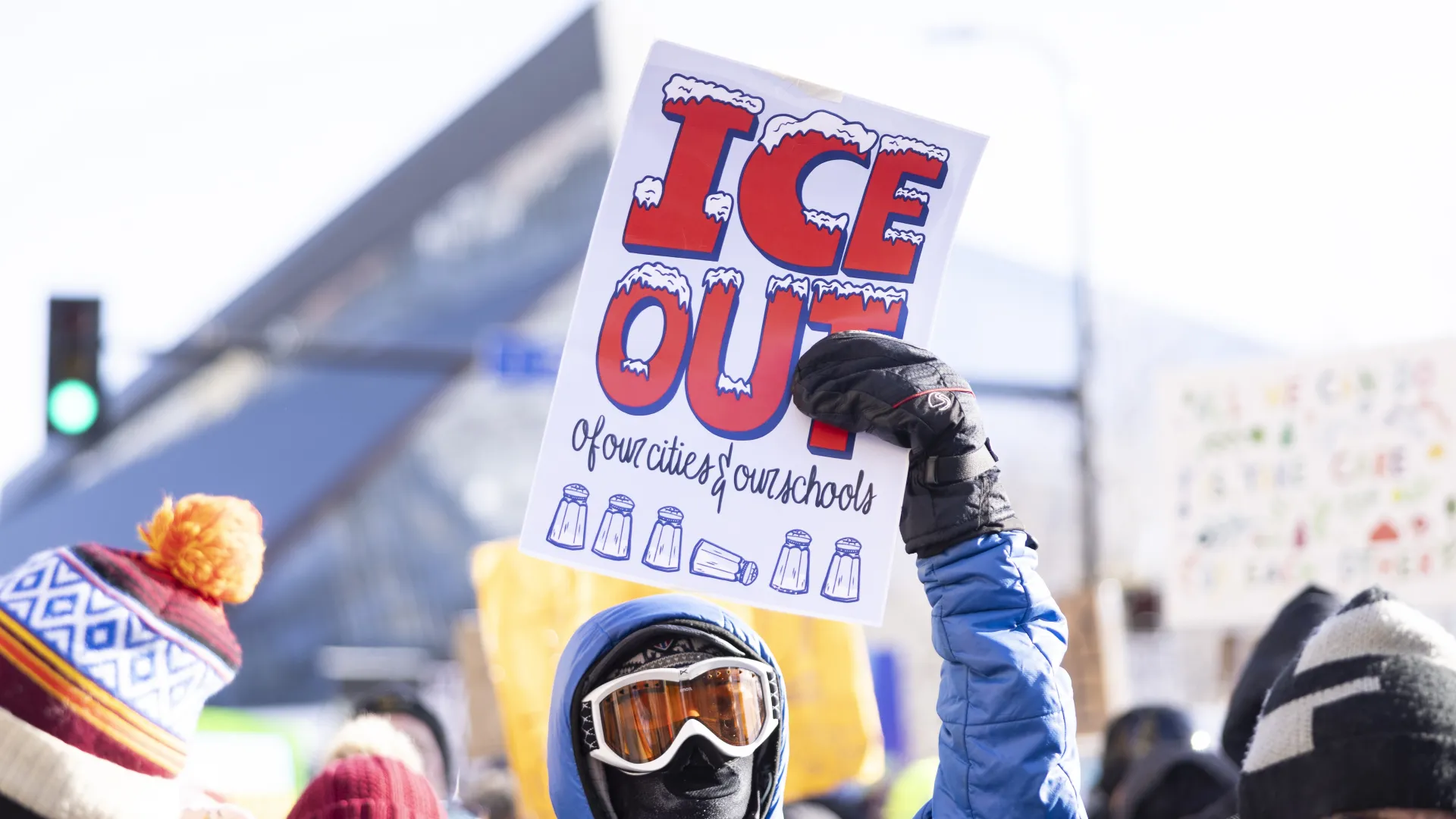
The First Amendment protects the right to take photos and videos of law enforcement officers performing their duties in public, including ICE agents.
However, while the Constitution protects your right to record in public, the Trump administration has taken an aggressive stance against anti-ICE activities and are attempting to criminalize protest, observation, and recording of ICE actions by charging individuals with “impeding” law enforcement under 18 U.S.C. 111. This statute makes it a crime to forcibly assault, resist, oppose, impede, intimidate, or interfere with federal officers when they are performing official duties, or on account of their official duties.
Federal law also prohibits warning undocumented people about immigration enforcement or substantially assisting them in avoiding detection by federal law enforcement, a crime known as “harboring.”
You have a Constitutional right to speak, associate, gather, dissent, and document. Recording ICE actions from a safe distance and without interfering with their duties can be critical in providing evidence of the violation of the rights of community members by federal officials. However, it is important to do so safely.
If you exercise your right to film ICE, please keep these guidelines in mind.
- When in a public space, you have the right to film ICE and the police as long as you are not interfering with or impeding their duties.
- If you feel safe to do so, you can record the ICE activity using pictures and video if possible.
- Do record from a safe distance. Stay far enough away from officers that the officers would have to move in order to touch you (at least 8 feet).
- Do not interfere or impede or engage with ICE agents.
- If asked to step back, do so while saying “I am exercising my right to document.”
- Always remain peaceful and non-violent.
- Do not make any physical contact or threatening moves or be verbally aggressive towards officers.
- While driving, drive safely, obey all traffic laws and speed limits. If following officers’ vehicles in your vehicle, stay far enough back that you will not hit them if they brake suddenly.
- If you are on private property and are asked by the business or property owner to leave, move to a public space nearby.
- If you are told by a law enforcement officer to step back, do so while saying: “I am exercising my right to document.” If officers get closer to you, narrate that you are stepping back in a calm, audible voice. If officers become confrontational, narrate what is happening (“I am observing. I am moving back as you requested”) rather than arguing with officials.
- Record your own and other’s interactions with federal officials. Don’t livestream or post images of detained persons without their consent. Remember to note the S.A.L.U.T.E.
- Size – number of agents/vehicles
- Activity – what are they doing
- Location – where it occurs
- Uniforms – what are they wearing, face coverings, badges, insignia
- Time & Date
- Equipment & Weapons
- Do not disclose the information of your loved ones or yourself to the agents. However, in some states you must give your name if asked.
- Be aware that you may be subject to questioning about the evidence that you have recorded.
- Ahead of time, ensure that your device’s audio and video are on and set up to share to the cloud.
- Turn off biometric identification on your phone, and if it is taken by law enforcement, state that you do not consent to a search. Be aware that even if you do not consent to a search, there is a substantial risk that your phone will be searched.
- Important considerations for recording:
- ICE agents are armed law enforcement officials who are first and foremost concerned for their own safety. Before taking out a recording device, it is best to assess the situation and determine whether taking a video could escalate the situation and endanger anyone present.
- It is extremely important that if you choose to record, you must make it obvious that you are recording. Almost every state has laws against “secret” recordings. Do not cover up, hide or conceal your camera/phone.
- If ICE warns you and asks you to step back while videoing/photographing, it is best to follow directions, as they may confiscate your camera.
- Make sure you know if you are on federal property and follow any directives about access to and limitation of rights while on that property as additional legal restrictions apply to federal property.
- It is recommended to participate with a buddy and to carry copies of citizenship documents or REAL ID.
In addition, avoid actions that reasonably can be understood as warning individuals you know to be undocumented that an ICE action is underway. While warning people generally of the presence of law enforcement is protected under the First Amendment, warning individuals who are undocumented about immigration enforcement can be a federal crime.
For example, avoid warning specific individuals about ICE presence. However, blowing a whistle in a public space or holding up signs informing the general public of ICE presence should be protected activity.
Finally, where communications are being done by shared community chats or via social media, recognize that such communications are effectively public and are likely subject to surveillance.