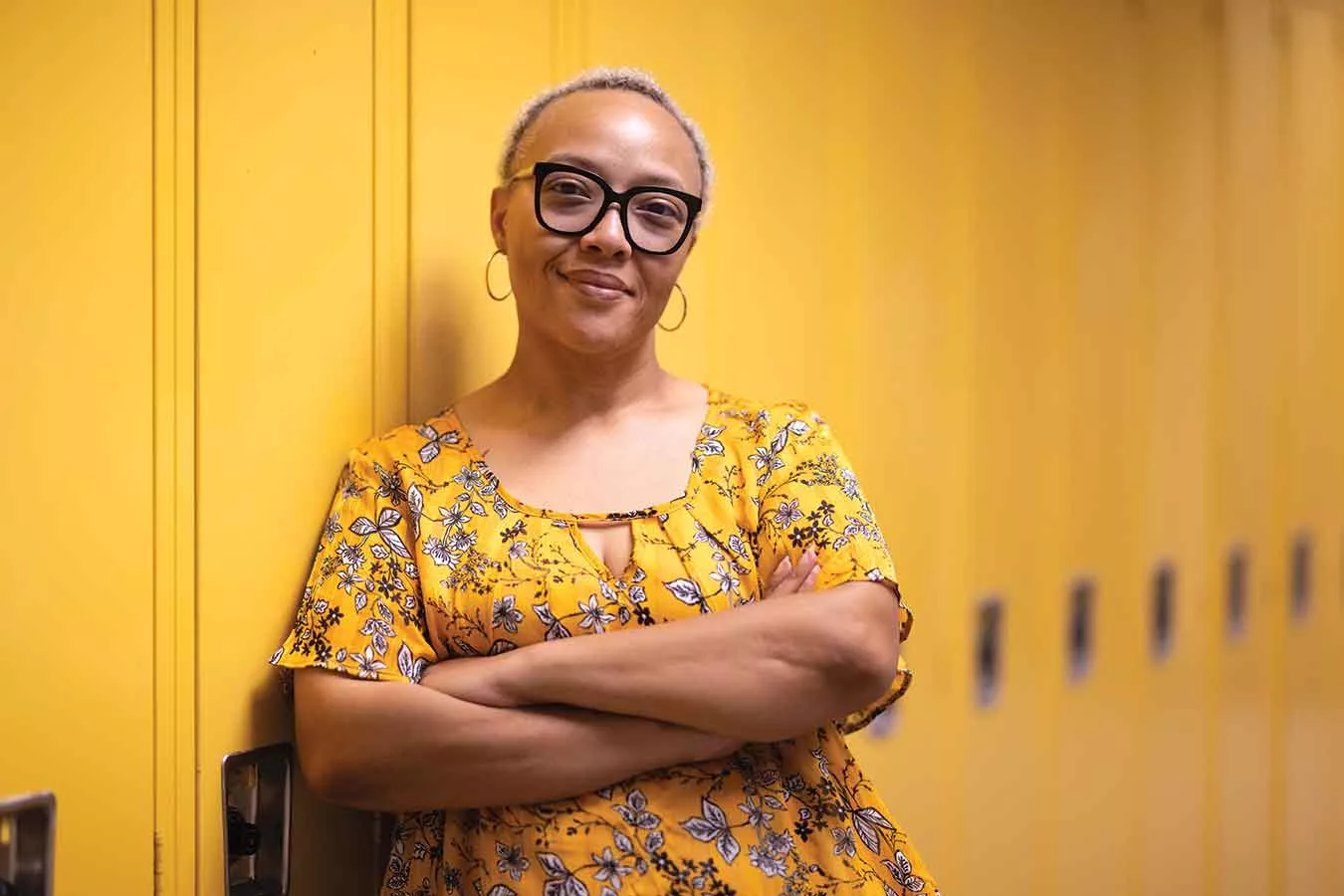
Professor Kerri Ullucci describes anti-Blackness as a “devaluing of Black people, of Black culture, and of Black history.” It’s embedded in both the school structure and the daily decisions educators make about students.
It’s this idea that there aren’t a lot of benefits in studying Black culture and history, and that “there’s something suspect about Black intelligence,” says Ullucci, who teaches diversity and equity at Roger Williams University, in Rhode Island.
Anti-blackness also refers to the specific ways Black people are excluded and harmed in society and institutions, including schools.
More Severe Discipline
One of the clearest examples of anti-Blackness is disproportionate discipline: Black students receive harsher and more frequent punishments than their peers for similar behaviors.
Ullucci notes that educators often justify these decisions with race-neutral language, such as, “I called him out because he was being disrespectful,” she explains. National research, however, consistently shows racial bias in discipline outcomes.
Adultification and Surveillance
Another common bias is adultification—the tendency to view Black children as older or less innocent than non-Black peers. This bias affects how mistakes are interpreted and how quickly situations escalate.
Black students often face heightened surveillance in schools, with their hair, clothing, bodies, and cultural expression closely policed. What is labeled as “dress code” often becomes racialized control.
In 2019, a Black high school wrestler in New Jersey was forced to cut his locs before competing, sparking public outrage and scrutiny of hair policies for students of color.
Less Opportunity
Black students are frequently viewed as less capable, limiting their academic opportunities. They’re underrepresented in gifted, honors and Advanced Placement Programs and overrepresented in special education.
An Argument of Morality
For Monique Cottman, a curriculum coordinator in Iowa City Public Schools, anti-Blackness predates current political debates.
“This isn’t a recent phenomenon. It is the pervasiveness of anti-Blackness that started with school desegregation in the 50s, and this is just a different iteration of that,” Cottman says.
She describes how legislation and policies have shaped educators’ behavior. Cottman points to the Trump administration’s February 2025 “Dear Colleague” letter, which threatened funding cuts for educational institutions that engaged in diversity, equity, and inclusion efforts. A year later, the Trump administration withdrew that guidance. But the damage was already done.
“Our equity departments were all gutted,” Cottman explains, adding that even if school affinity groups and similar programs are not explicitly banned, many educators interpret them as prohibited.
“It becomes less an argument about legality, and more an argument of morality,” Cottman says. Ullucci agrees: “If we know Black children are being harmed by racism, and we choose not to do anything, that to me is a moral failure.”