Key Takeaways
- Roughly 30 states have some sort of state-based school voucher program—18 of them universal. That number could grow as states consider opting into the new federal voucher law.
- Years of research—along with new data emerging from individual states—have documented how vouchers weaken public schools, blow up state budgets, and foster discrimination.
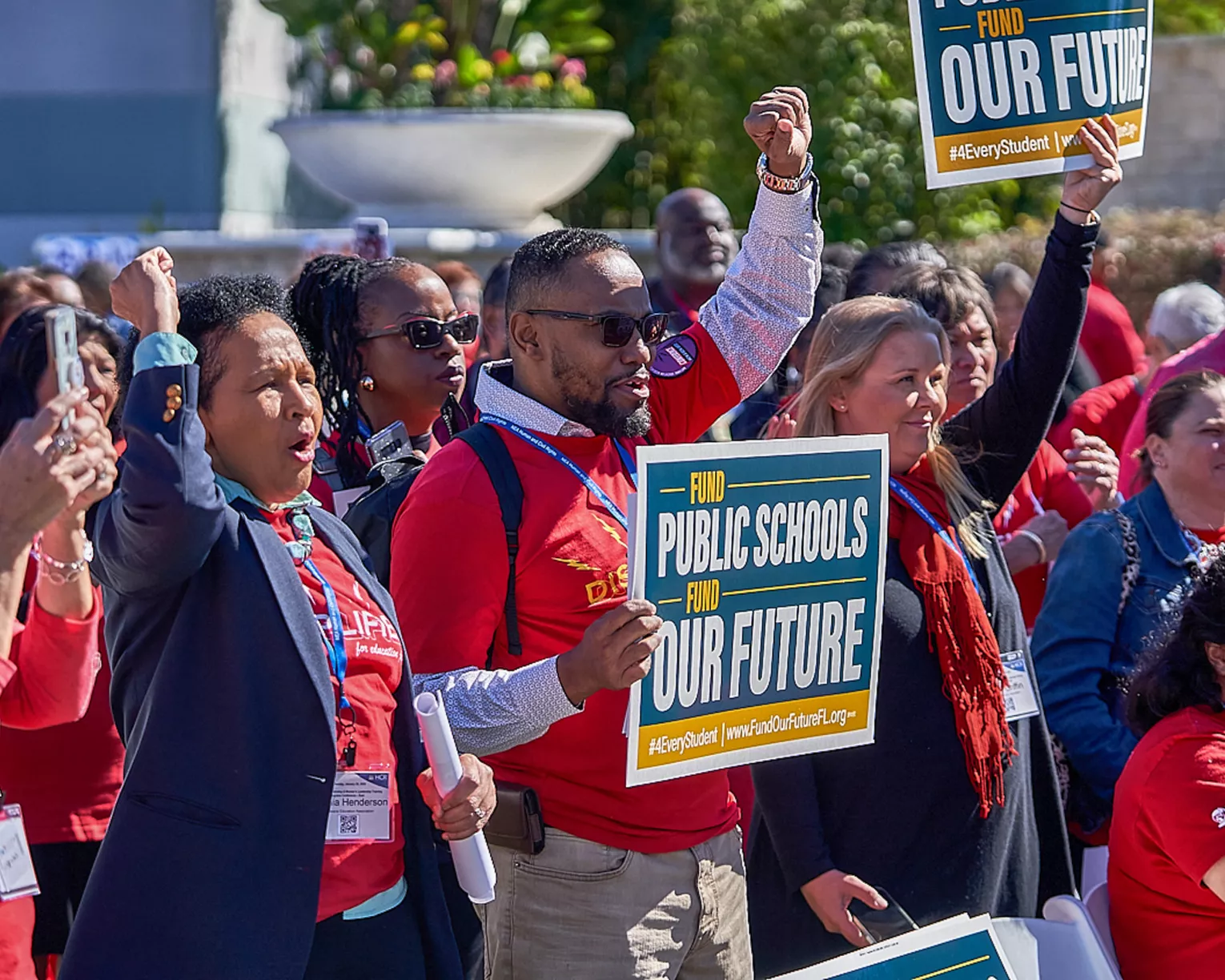
- As voucher failures have come more into focus, educators and their unions are leading campaigns to bring long overdue oversight and accountability to these programs.
Does this sound familiar?
Disregarding overwhelming public opinion, state lawmakers pass a school voucher law. They promise the program—which funnels taxpayer dollars out of public schools and into the hands of families to pay for private school tuition or other expenses—is designed to help lift lower income students out of underresourced neighborhood schools.
But then lawmakers quickly push to make the program universal, lifting income limits so that any family in the state with school-age children can access the funds. Soon, wealthy families become the primary beneficiaries, costs skyrocket, and discrimination and fraudulent spending become widespread. Starved of funding, public schools—many in rural areas—begin to close. Despite this dismal record, proponents, citing “high demand,” call the program a success, and push for even greater expansion.
This is a scenario that has played out—or is currently doing so—in virtually every state that has enacted school vouchers. “Research has documented over the years, over decades, the negative impact vouchers have on schools, communities, and students themselves,” says NEA President Becky Pringle.
And yet, as of February 2026, roughly 30 states have some sort of state-based voucher program—18 of them universal—on the books.
That number will likely increase as states decide whether to opt-into the new federal voucher programthat was included as a provision in the budget reconciliation bill signed into law in July 2025. This provision could direct up to $30 to $50 billion annually to fund vouchers—potentially committing more funding for vouchers than Congress has for the Individual with Disabilities Education Act and Title I.
It doesn't matter how their proponents try to disguise them—tax credits, education savings accounts, opportunity scholarships—a voucher is still a voucher.
As the results from state laws have come more into view, the picture hasn’t changed: vouchers are unaccountable, fraud-ridden programs. Meanwhile, public schools, where 90 percent of students attend, are left with even fewer resources.
‘Pop-Up Schools’
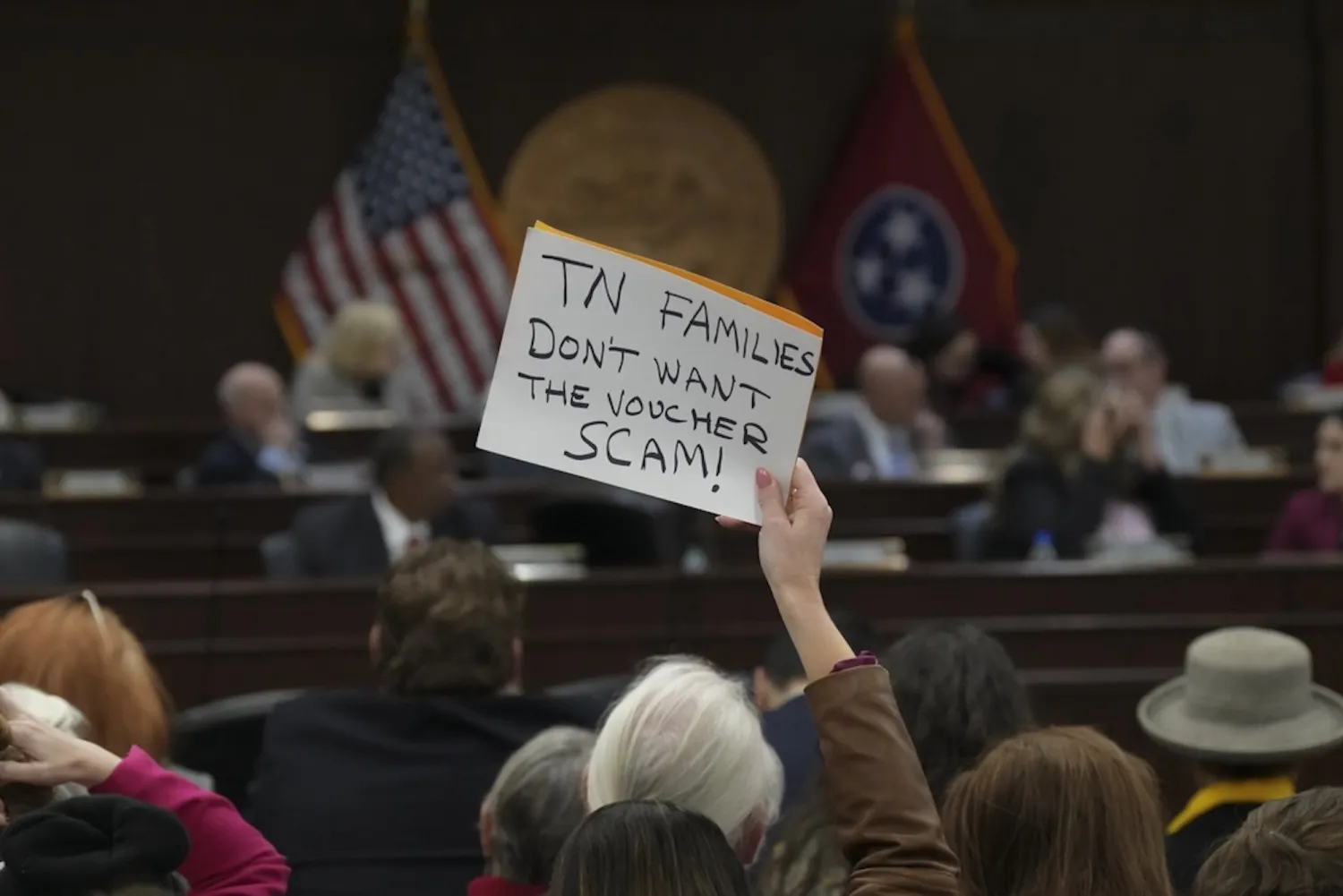
In January, some Republican lawmakers in Tennessee announced their opposition to expansion of the states’ voucher program. The lawmakers cited growing costs and lack of access in rural areas, but also a new state comptroller report that found that the voucher program wasn’t producing solid academic results. Students in the program were not performing as well as their peers in public schools, in both academic achievement and growth in test scores.
Specifically, students enrolled in virtual schools through the program performed especially poorly, with only 20 percent proficient in English language arts and 17 percent proficient in math.
Josh Cowen, a professor of education policy at Michigan State University, compares many private schools created through voucher programs to subprime loan providers or predatory lenders. He calls them “pop-up” schools, open for business and ready to accept new taxpayer voucher funds. These private schools are not regulated in areas such as teacher certification, background checks, curriculum standards, and testing and accountability. This can, and has, resulted in poorer educational outcomes.
On this measure alone, Cowen says, “vouchers have some of the worst results in education research.”
Robin Hood in Reverse
The state audit in Tennessee also found that the voucher program is overwhelmingly serving families whose children are already in private school. This was an inevitable result of a law that from the outset did not impose income limits on eligible families.
No wonder pro-voucher lawmakers cite “high demand” or “popularity” as dubious evidence of success. Voucher programs grow because more already-enrolled private school families are enthusiastically tapping into taxpayer funds. In Year Two of Tennessee’s program, 83 percent of enrollees did not attend a public school in the previous year.
In Arizona, the nation’s first universal voucher program, more than 70 percent of voucher recipients are already enrolled in private schools. In Arkansas and North Carolina, that figure hovers around 92 percent.
“This is not really education policy. This is sheer income redistribution. This is about subsidizing the wealthy. Pure and simple,” Tennessee State Senator Jeff Yarbro told WSMV in Nashville. “It’s just Robin Hood in reverse—on steroids.”Vouchers, Pringle says, “subsidize the few at the expense of the many.”
Section with embed
Furthermore, school vouchers usually are worth far less than the average private school tuition, therefore not providing any real tangible economic benefit for many, if not most, lower income families.
And Tennessee’s voucher law has a rather loose definition of “lower income.” The program provides 20,000 school vouchers. Ten thousand are reserved for families with no income limit (including those who earn more than $1 million annually) and 10,000 are for lower income families—or those making less than “300% of Federal Free or Reduced-Price Lunch,” or up to $173,000.
As a result of its voucher program, Tennessee is now investing an average of $273 more per student in private school students than students in public schools.
“Rather than closing resource gaps, the state is growing disparities by sending more money to private schools while public schools continue to struggle with overcrowded classrooms, outdated materials, and educator shortages,” said Tennessee Education Association President Tanya T. Coats.
No Guardrails
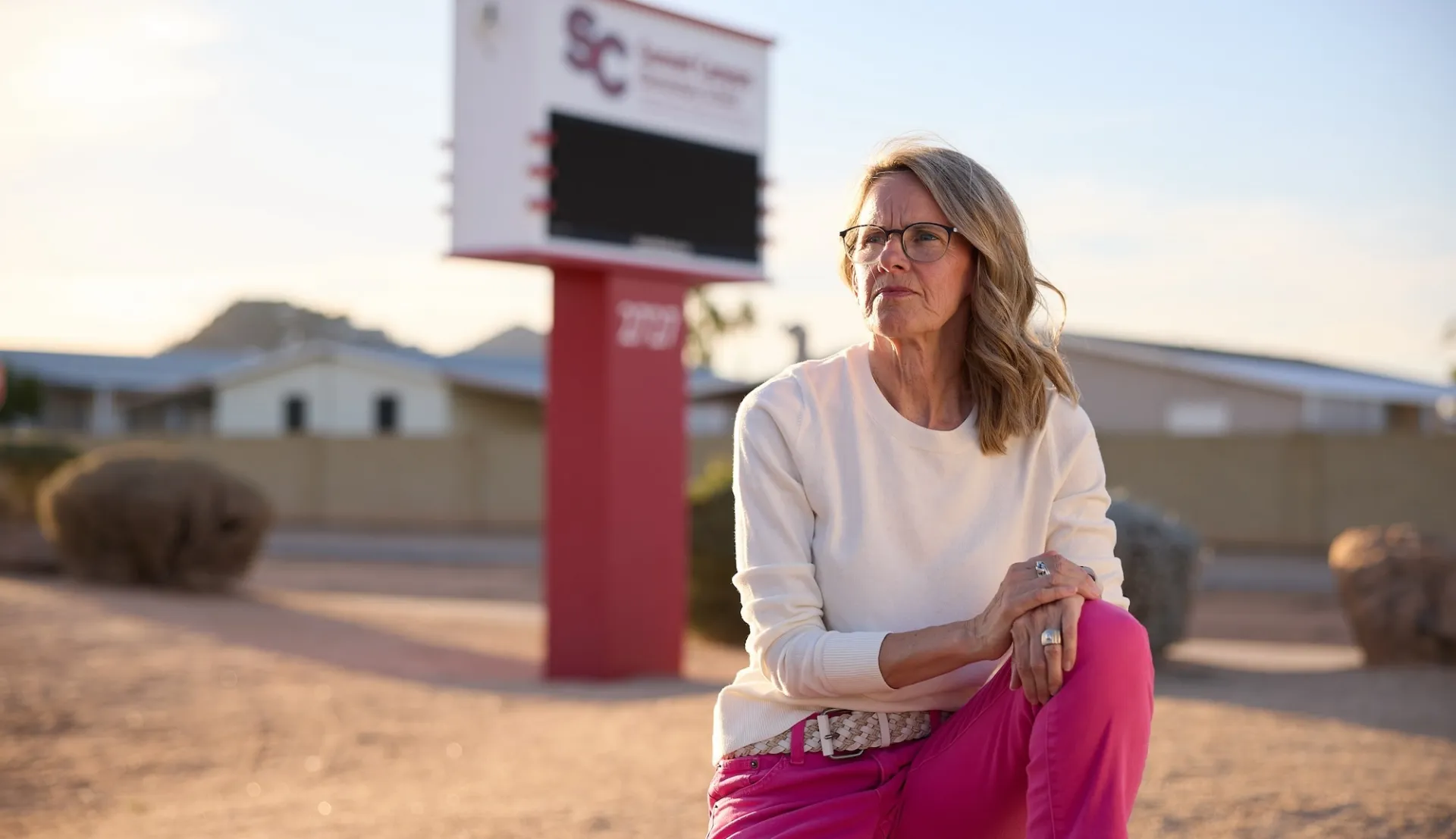
In January, six schools in and around Phoenix, Arizona, announced they were closing their doors, bringing the statewide total of school closings in the state to 24 since 2022—the year the state’s voucher law (an “Education Savings Account”) was made universal. Four years later, the program’s cost has reached $1 billion annually and now enrolls 100,000 students.
Like other voucher states, Arizona is burdened with funding two school systems. Instead of actually helping financially struggling families, vouchers are eating up state funding by sending tax dollars to schools that face little accountability and are often discriminatory.
In addition to subsidizing private schools for wealthy households, vouchers are also subsidizing fraud. In Arizona, investigations revealed that some parents of participating children bought gift cards, phones, televisions, lingerie and diamond rings with taxpayer education dollars.
Meanwhile, the state continues to rank near the bottom in per-pupil school funding—48th according to the 2025 NEA Rankings and Estimates report. The spiraling cost of the voucher program now drains on average at least $300,000 from every public school in the state.
‘Where’s the Choice?’
“In Arizona, vouchers have become an excuse not to fund public education,” Arizona Education Association (AEA) President Marisol Garcia told the U.S. Senate Health, Education, Labor and Pensions Committee in Washington, DC, on Jan. 28. “The same money that would go to paying educators, updating schools and resources, is the same money that is being allocated to the ESA voucher program. There is no cap on it. So, it’s like turning on water faucet and letting it go.”
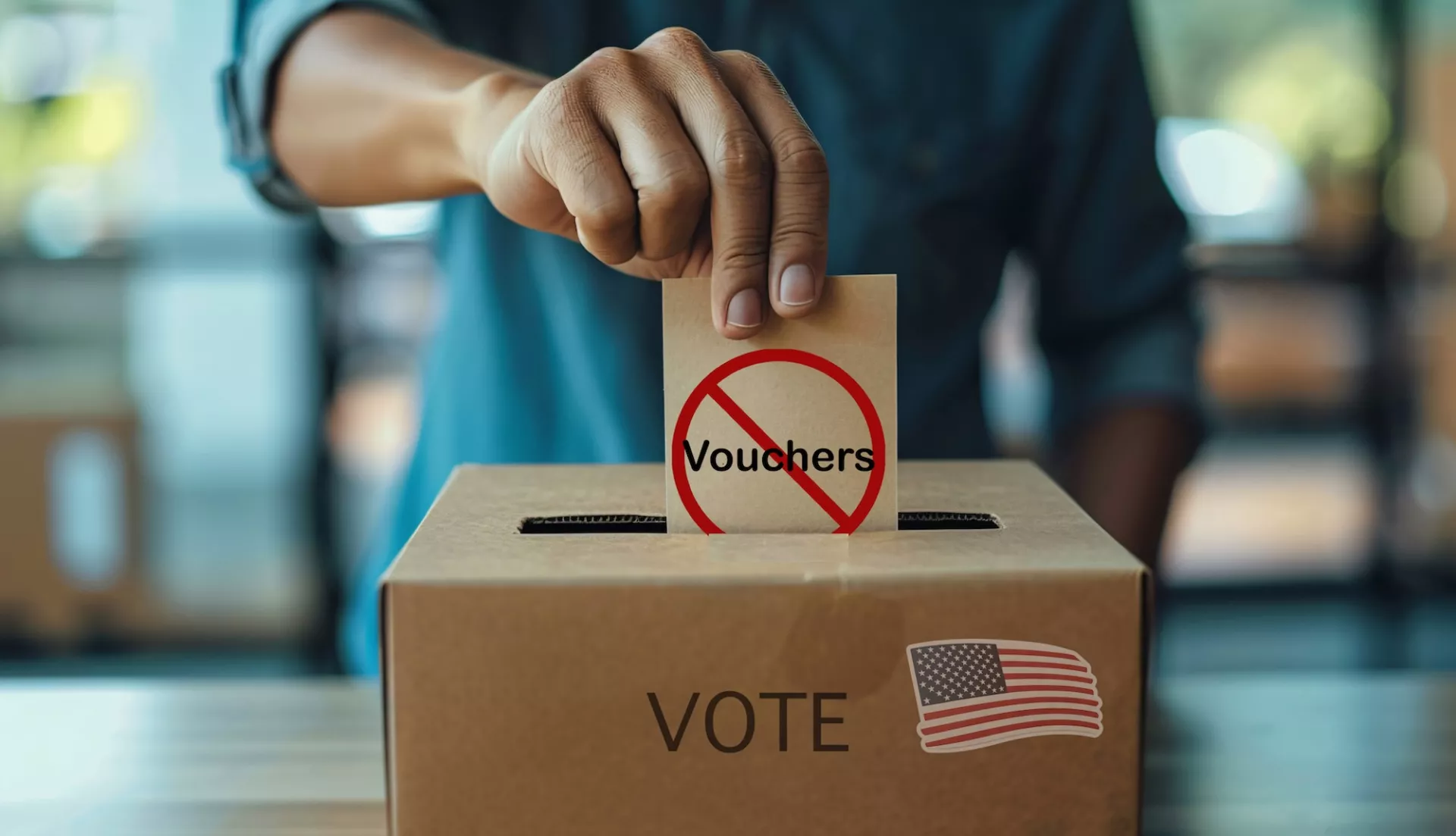
AEA has been a vocal advocate in bringing accountability to the state's unruly and unsustainable voucher program. On February 6, AEA, along with Save Our Schools Arizona, filed paperwork to bring a measure on the state ballot this fall. If successful, voters will have an opportunity to approve restrictions on spending, eligibility and other issues. When vouchers have been put directly to the voters in other states, they have always lost.
Cassie McBean, a teacher in Boise, Idaho, looks at the wreckage in Arizona and worries it will be duplicated in her state. Idaho approved a $50 million voucher program in Feb 2025.
“We’re beginning to see signs that vouchers could drain our schools,” she says. “The legislature is already talking about major budget cuts to education and their services on top of the $50 million already allocated for vouchers.”
McBean is especially concerned about small districts, where there are no private school options. “Our rural public schools are already struggling for funding. If more of our state resources go to private schools, the schools in these areas will take a huge hit. Where’s the ‘choice’ for parents in those communities?”

Funding Discrimination with Tax Dollars
The promise that vouchers give parents “choice” is misleading in other ways, says Linh Dang, NEA senior policy specialist. “It's the private school that ends up doing the choosing – about what students they want to accept, the students they want to expel, or the students they want to ‘counsel’ out.”
Unlike public schools, private schools do not need to make accommodations for students with disabilities, and they can exclude students based on religious beliefs, academic performance, disability status, and whether an applicant or family member is part of the LGBTQ+ community.
A July 2025 report released by Public Schools First NC examined the admission requirements of schools in North Carolina that receive more than $100,000 in voucher funds. In 2022-23, eighty-eight percent (295 of the 366 schools examined) had at least one of the six types of discriminatory policies examined, including academics, disability, LGBTQ+ status, and religion.
The report also found that North Carolina’s voucher program has become more segregated by race since it first launched in 2014.
Section with embed
Back then, 51 percent of enrolled students were Black and 27 percent were white. By the second year, more white students enrolled. As the state continued to expand eligibility and funding for the program, in 2024-25, white students now made up 73 percent of voucher recipients. Black student enrollment declined to just 11 percent.
Voucher programs also erode legal protections for students with disabilities. According to the Council of Parent Attorneys and Advocates (COPAA), many families are not informed that their children may lose specific rights if they transfer from a public school to a private school.
Students with disabilities have made historic gains over the years, including the right to be educated in general education classrooms. The proliferation of voucher programs across the nation, says Chris Roe, COPAA’s Director of State Policy, could “undermine” this progress.
“History suggests these programs will increase the likelihood that students with disabilities are increasingly educated in more segregated settings.”