Share this book
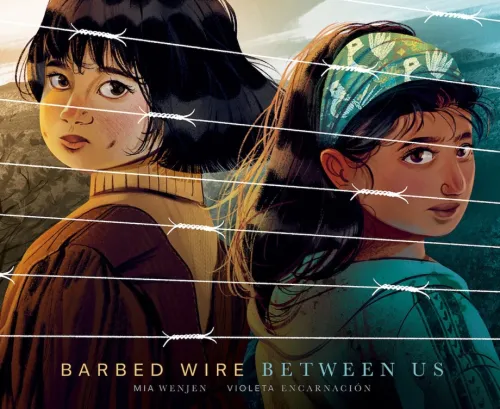
In Barbed Wire Between Us, Mia Wenjen uses the reverso form to show how the same words can take on new meaning when a story is read in a different direction. Invite students to be inspired by the beginning and ending of her poem—“in this land of promise, we hoped to find a place to belong”—to create their own reverso poem about belonging.
Begin by discussing what it means to belong. What helps people feel welcomed, valued, and seen? What might it feel like to search for a place where you belong? Have students think about moments when someone might feel included or left out, welcomed or alone. As a class, brainstorm words and phrases connected to belonging and not belonging, then look for words that could hold more than one meaning. Work together to arrange those ideas into a reverso poem that can be read in two directions and tell two stories. Encourage students to experiment with how changing the order of the words can change the feeling or meaning of the poem.
Display the finished poem and then ask students to add their own interpretations with illustrations for both the forward and reverse readings. Add their drawings to the poetry display and invite others to reflect on what belonging means and the many ways we can help each other find it.
Questions for Discussion or Reflective Writing
- The book begins, “In this land of promise, we hoped to find a place to belong.” What does a place to belong look and feel like? What helps people feel like they belong?
- Why do you think the author wanted us to read these two stories together instead of separately? How are the stories connected? What similarities did you notice? How did learning about one girl affect the way you thought about the other?
- What surprised you when the poem repeated itself backwards? How can the same words take on new meaning when they are read in reverse? How did reading the poem in reverse change your understanding of the stories being told? What did the illustrations help you understand that the words alone couldn’t?
- Would you expect to find kindness and hope behind barbed wire? Where did the two girls find kindness and hope, and why do you think those moments matter?
Related Resources
Barbed Wire Between Us Teacher’s Guide from Red Comet Press
Reverse Poetry from The Educator’s Room
Jumping Into Form – Reverso from The Miss Rumphius Effect
More Titles to Try
-
Bright Star
by Yuyi Morales

-
A Fish for Jimmy
by Katie Yamasaki
-
Hear My Voice/Escucha mi voz: The Testimonies of Children Detained at the Southern Border of the United States
by Warren Binford
-
Unbreakable: A Japanese American family in an American Incarceration Camp
by Minoru Tonai and Jolene Gutiérrez, illustrated by Chris Sasaki
Stay on top of current education news