Share this book
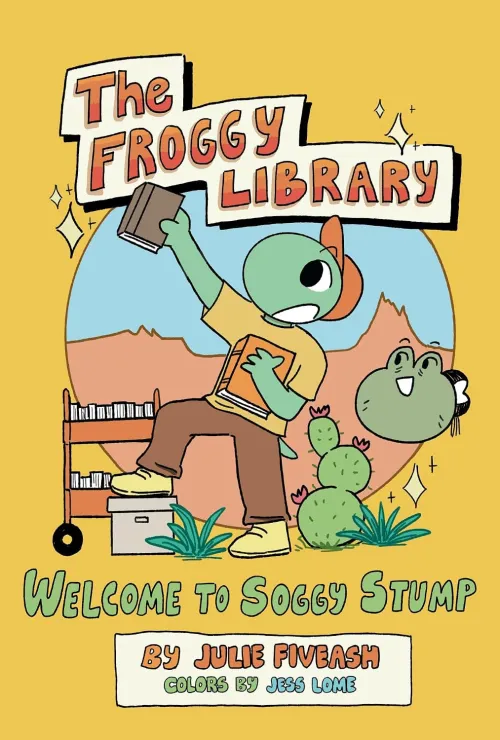
In The Froggy Library, Anura sets out to build an archive that reflects the people, places, traditions, and stories that make Soggy Stump special. After reading The Froggy Library, talk with students about what an archive is and why communities preserve evidence of the past. Discuss how archives help people remember, learn from, and connect with those who came before them. Then ask students to consider what stories, history, and knowledge about their own school they think should be preserved for future students.
Introduce the idea of creating a school archive, an ongoing collection that grows throughout the school year as students discover stories and memories worth preserving. As a class, brainstorm the kinds of materials they think belong in their archive. Encourage them to take a cue from Anura’s efforts and look beyond photographs, artwork, event programs, classroom projects, school traditions, maps, and newsletters. Ask them to also consider whose knowledge and experiences could be preserved through oral histories, demonstrations, or videos. Encourage students to think broadly, recognizing that a community’s story is told not only through major events but also through the routines, relationships, and traditions that shape everyday life.
As students decide what to include, encourage them to consider which items best represent the school’s history, traditions, and community, recognizing that archives are shaped by thoughtful choices about what is preserved and whose perspectives are included. Have students work in teams to first compile an inventory of existing archival and heritage materials (yearbooks, newsletters, photos, etc.) in the school. Then, throughout the year, invite students to identify and contribute items to the archive and write brief archival notes explaining what each item is, why it matters, and how it represents the school’s history or culture. Regularly review the growing collection together, discussing whose stories are represented and whose perspectives may still be missing.
At the end of the year, invite the school and community to view and hear presentations from students who built this collaborative record of their school community and celebrate the many people, places, traditions, and stories that shape the school’s history and culture.
Questions for Discussion or Reflective Writing
- Why does Anura decide to volunteer at the library? Why are they excited about the community archive project?
- What questions does Anura struggle with as they work on what the community archive should include? What responsibilities do people have when deciding which stories, traditions, and experiences should be preserved? How can they make sure many different voices are represented?
- What answers does Anura find for their questions about Soggy Stump, “like, what makes this place my grandma’s favorite? What have I been missing from Soggy Stump in all this time?”
- How do the friendships Anura makes help them feel more connected to Soggy Stump? What other experiences or relationships help Anura find a sense of belonging? How have your own friends helped you discover more about yourself and your community?
- What does Grandma Juniper’s advice to Anura about valuing shared experiences and looking forward to future ones reveal about her view of life and death? How does this advice shared in Anura’s dream help Anura? How might this perspective help someone facing a difficult loss or life change?
- How can we honor the people who have shaped our lives while they’re still with us? How can we continue to honor them after they’re gone?
Related Resources
Archival Lesson Plan from The Lehman Center for American History
Creating a Primary Source Archive: All History Is Local from the Library of Congress
DocsTeach from the National Archives
Julie Fiveash: We All Have Something New to Learn from EveryLibrary
More Titles to Try
-
I Can Make This Promise
by Christine Day

-
Marley Dias Gets It Done (And So Can You!)
by Marley Dias
-
The Mighty Macy
by Kwame Alexander, illustrated by Kitt Thomas
-
Moonshot: The Indigenous Comics Collection
edited by Hope Nicholson
-
Roohi and Nate Are Not on the Same Page
by Supriya Kelkar and Jarrett Lerner
-
The Secret Library
by Kekla Magoon
-
Seedfolks
by Paul Fleischman
Stay on top of current education news