
Share this book
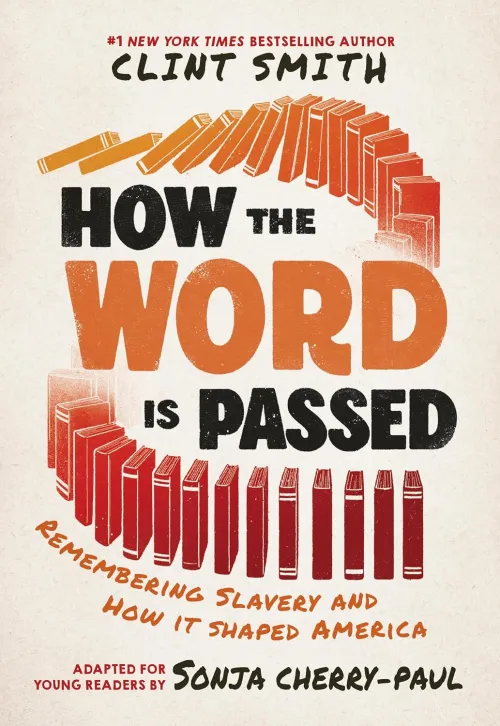
In How the Word Is Passed: Remembering Slavery and How It Shaped America, Clint Smith and Sonja Cherry-Paul examine how historical sites tell the story of slavery—what gets emphasized, what is left out, and how those choices shape our understanding of the institution of slavery and its legacy. After reading the book, invite students to think about how books also pass stories from one generation to the next by having them investigate how picture books, like historical sites, help shape our understanding of slavery and its legacy.
Work with your school or public librarian to provide students with a diverse collection of picture books that explore the history of the United States and the many experiences that make up Black life. Ask students to draw on the ideas they encountered in How the Word Is Passed about how historical memory is constructed as they examine the collection. As students explore and read the books, have them consider:
- What story does this book tell about Black life and American history?
- Whose experiences and perspectives get the most attention? Whose are less visible?
- What choices did the author and illustrator make about what to include, emphasize, or leave out?
- What understanding of slavery, its legacy, and American history might readers develop from those choices?
As they reflect on how books can shape historical understanding, ask students to discuss how they think the legacy of slavery should be remembered and shared with young readers. Who gets to decide what books are shared and when? Which books or stories from the collection would they recommend and why?
Questions for Discussion or Reflective Writing
- How is the word passed in places Clint Smith visits? Who is passing the word, and whose voices are being heard? What happens when parts of a story or history are left out, changed, forgotten, or told from only one perspective?
- How does learning about the history of a place change the way we see that place? What places in your own community might have stories that are not widely known?
- What does Clint Smith learn from the people who have connections to the places he visits? Why do you think listening to people’s memories and experiences is an important part of understanding history? Why do you think he values listening to the perspectives of different people?
- Why do places Clint Smith visits ignore, soften, or change the way they talk about slavery? Why do people sometimes avoid telling the full truth? What does it take for a community to be honest about its past?
- How has How the Word Is Passed changed your understanding of the role slavery played in the creation and development of the United States? What did you learn about how slavery influenced the country we became and the country we are today?
- How does the legacy of slavery exist in your community? Why is it important to understand how slavery’s history continues to shape our communities today? After we learn and confront this history, what steps do we need to take next?
Related Resources
How the Word Is Passed: Remembering Slavery and How it Shaped America Educator’s Guide from Little, Brown Young Readers
Lies My Bookshelf Told Me: Slavery in Children’s Literature from Learning for Justice
Slavery, Resistance, and Reparations from Social Justice Books
More Titles to Try
-
Discovering Black America: From the Age of Exploration to the Twenty-First Century
by Linda Tarrant-Reid

-
The Door of No Return
by Kwame Alexander
-
Slavery and the African American Story
by Patricia Williams Dockery
-
Stamped (For Kids): Racism, Antiracism, and You
by Sonja Cherry-Paul with Jason Reynolds and Ibram X. Kendi
Stay on top of current education news