Share this book
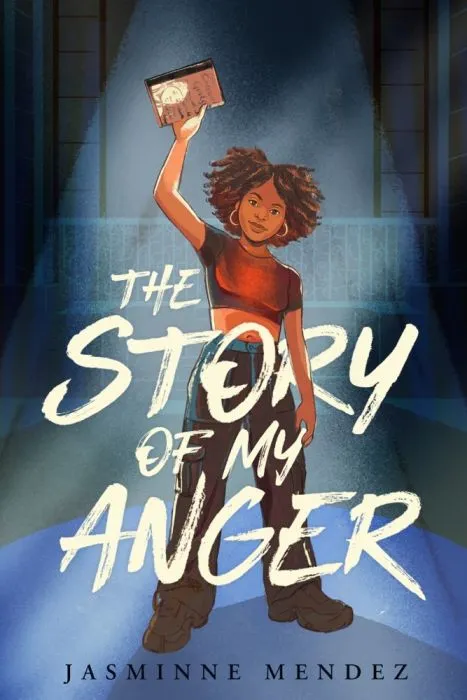
Inspired by A.C.T. Now’s guerrilla theater, have students collaborate in small groups to develop an original scene designed to bring attention to the question: Who decides which stories belong in a community, and what happens when certain voices are excluded? Begin by having students examine moments in The Story of My Anger when characters confront questions of representation and discuss what these conflicts reveal about who has the power to decide which stories are valued, shared, and protected.
Then, have students identify a space in their own school or community where certain perspectives, experiences, or histories may not be fully represented. After selecting a focus, groups should write their scene, bringing attention to the issue and exploring the perspectives of those affected. As students create their scenes, have them consider: What do they want their audience to notice or question? Whose perspectives are missing from the conversation? How can they represent those perspectives thoughtfully and respectfully? How can they use dialogue, conflict, and performance to help an audience understand the human impact of the issue? Encourage students to be creative in how they invite audiences to reflect on the impact of excluding certain voices.
Give groups the option to perform their scenes for the class or another audience, or to share their work in another format, such as a recorded performance or written script. After completing the project, ask students to reflect on how collaboration shaped their understanding of the issue they explored, what challenges they encountered when representing experiences that may have been beyond their own, and how performance can facilitate conversations about issues that communities may avoid.
Questions for Discussion or Reflective Writing
- Why do you think Yuli is drawn so strongly to for colored girls who have considered suicide/when the rainbow is enuf? How does Shange’s play make her feel? What happens to those feelings when the play is pulled from Mr. Gonzalez’s curriculum and classroom?
- What kinds of aggressions does Yuli experience over the course of an ordinary school day? How does the accumulation of everyday aggressions affect Yuli? Why can repeated "small" incidents have such a powerful impact?
- How does the stereotype of the "angry Black girl" influence the choices Yuli makes about when, how, and even whether to speak? What is lost when people feel they have to censor their emotions to be heard? Have you ever felt pressure to change the way you expressed yourself because of how others might interpret your identity?
- How are Yuli’s exclusion from the lead role in Our Town and the censorship in Mr. Gonzalez’s classroom really the same conflict? What do both situations suggest about who gets to tell stories, whose stories are considered "appropriate," and who gets to make those decisions? Where do you see similar debates playing out today?
- When is anger a justified response to injustice? How does Yuli treat her anger? What is different about Yuli’s anger after she finds a racial slur on Mr. Gonzalez’s whiteboard? How is understanding someone’s actions different from excusing them?
- How does Yuli’s relationship with her mother influence the choices she makes about speaking out and taking action? In what ways is Yuli trying to protect her mother, and what does that protection cost Yuli? Have you ever found yourself keeping something from someone because you didn’t want to add to their burden?
- What do you think of Yunior’s advice to Yuli to “stop waiting for someone to give you a chance and just take it”? What models does Yuli have for different ways of responding to injustice? Why do you think she chooses guerilla theater to fight censorship? What makes creative expression a powerful way to challenge injustice? What forms of expression have you seen change the way people think about an issue?
Related Resources
Flippy Guerrilla Street Theater by George W. Chilcoat
Guerrilla Theater Documentary from Eastside Arts Alliance
Guerrilla Theater Strategy for Modern Movements from Outcry
Resources to Protect the Freedom to Read in Schools from NEA’s Read Across America
More Titles to Try
-
Banned Books: The Controversy Over What Students Read
by Meryl Loonin

-
Banned Together
by Ashley Hope Pérez
-
This Book Won’t Burn
by Samira Ahmed
-
Ink Girls
by Marieke Nijkamp, illustrated by Sylvia Bi
-
Wake Now in the Fire
by Jarrett Dapier
-
You Can’t Say That: Writers for Young People Talk About Censorship, Free Expression, and the Stories They Have to Tell
by Leonard S. Marcus
Stay on top of current education news