
Share this book
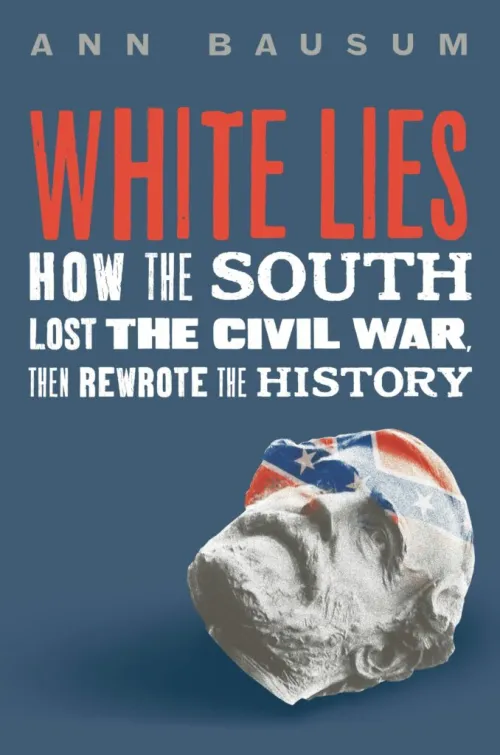
Reading White Lies provides many powerful opportunities for students to examine how historical narratives are created, challenged, and reshaped while deepening their understanding of the Civil War, Reconstruction, the Lost Cause, and the enduring legacy of racism in the United States. Take advantage of the excellent Teacher’s Guide for the book, created by literacy specialist Colleen Carroll, which includes historical background, discussion questions, and extension activities that help students develop historical and critical literacy as they analyze evidence, examine the power of language, and evaluate how history is remembered, interpreted, and sometimes manipulated.
Another excellent way to share White Lies is to have students investigate Confederate monuments and other forms of public commemoration. Whose Heritage? from the Southern Poverty Law Center provides reports and resources that can help students examine the history and impact of Confederate symbols, consider how they reinforce Lost Cause narratives, and explore ongoing efforts to challenge and replace harmful representations of the past.
Questions for Discussion or Reflective Writing
- What does the phrase “white lie” usually suggest? Why do you think Bausum chose the title White Lies? What does the title suggest about the power of language in shaping historical memory?
- Why was the Lost Cause narrative so successful in reshaping the story of the Civil War and Reconstruction? How deeply ingrained is it in our society? Where do you see the Lost Cause narrative woven into the fabric of how the United States sees itself? How has this ideology normalized and sustained racism?
- How does the Lost Cause narrative shape the way many Americans understand slavery, the Confederacy, and Reconstruction? What parts of those histories became harder to see or understand because of this narrative?
- How did Lost Cause advocates’ promotion of terms like “the Civil War” or “the War Between the States” instead of “the War of the Rebellion” shape understanding of the conflict, its origins, and its aftermath? How can people distinguish between a historical interpretation that helps us understand the past and propaganda that is designed to persuade us to see the past in a certain way?
- Why do you think some stories remain “undertold”? Who has the power to shape our country’s understanding of its past? How do schools, libraries, communities, public institutions, authors, filmmakers, and others influence the stories that are remembered and shared?
- Why can confronting the Lost Cause narrative be difficult? Why do some Americans still continue to embrace the Lost Cause? What does Bausum reveal about the challenges of reexamining the stories we tell ourselves about our past?
Related Resources
A Teacher’s Guide for White Lies: How the South Lost the Civil War, then Rewrote the History from Macmillan Children’s Publishing
Whose Heritage? from the Southern Poverty Law Center
Teaching Hard History: American Slavery from Learning for Justice
We Will Never Stop Teaching African American History from NEA Today
More Titles to Try
-
America Redux: Visual Stories from Our Dynamic History
by Ariel Aberg-Riger

-
Stamped: Racism, Antiracism, and You
by Jason Reynolds and Ibram X. Kendi
-
Unequal: A Story of America
by Michael Eric Dyson and Marc Favreau
-
We Are Not Yet Equal: Understanding Our Racial Divide
by Carol Anderson with Tonya Bolden
Stay on top of current education news