
Share this book
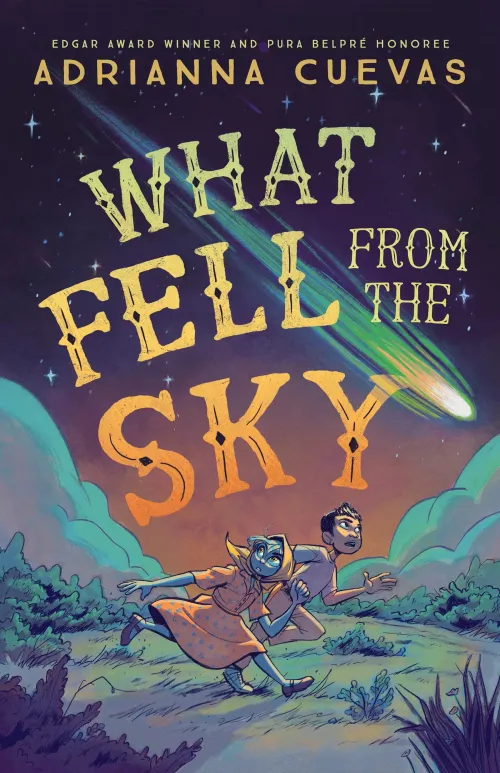
As an alien, Luisa’s point of view provides a unique look at the way humans live and behave. After reading What Fell from the Sky, invite students to explore what humans do, assume, and value—and how those beliefs shape who belongs, who has power, and how people treat one another.
Using the novel as a starting point, have students make their own observations about human culture in 1952 and investigate whether, and how, it has changed since then. Have students use their findings to create a class-authored Field Guide to Humans—a handbook that might help a first-time visitor to Earth, like Luisa, understand what it means to be human.
Working in small groups, have students draw examples from the novel and conduct additional research to explore a chosen aspect of human culture. Students might investigate topics such as:
- Family and kinship
- Community and cooperation
- Belonging and identity
- Government, rules, and authority
- Language and communication
- Traditions and celebrations
- Fairness and justice
Each group’s field guide entry should explain the topic, include examples from the novel and historical sources, compare 1952 with today, and explore what those similarities and differences reveal about people and society. Encourage students to make an evidence-supported claim about what has changed, what has improved, and what challenges remain. Each entry should end with advice for a visitor trying to understand humans.
After groups present their field guide pages to the class, compile their entries into a collaborative Field Guide to Humans. Celebrate what students learned about people and society by adding it to your library shelf as a companion to What Fell from the Sky.
Questions for Discussion or Reflective Writing
- What makes Pineda feel like he doesn’t quite fit into his Soledad, Texas community? How does that shape the way he responds when he meets Luisa? Why do you think Pineda decides to help Luisa? What does this tell you about his character?
- Why do you think the author chose to tell the story from both Pineda’s and Luisa’s points of view? What did you learn from seeing people and events through Luisa’s eyes?
- What have you noticed about how people may be treated because they seem “different”? Have you ever seen someone left out or pushed out because they were perceived as different? If Luisa landed in Texas today instead of 1952, how do you think she would be treated? What can people do to create a more welcoming community?
- How does Corporal Shipley see Luisa and Pineda? Why do you think he is willing to question unfair rules or expectations and risk helping Luisa and Pineda and his friends? Have you ever questioned authority? When is it important to follow rules? When might it be important to question them?
- How does the time period of 1952 shape the way people in the story respond to Luisa and to one another? What is happening in the world that might be influencing their attitudes and choices
Related Resources
What Fell from the Sky Teacher’s Guide
What Fell from the Sky Historical Background from Adrianna Cuevas
How One Texas Town Fell to Communist Rule in the 1950s from The Texas Standard
Ask An Anthropologist Activities
The 1950s--A Decade Collection from Smithsonian Learning Lab
More Titles to Try
-
The Enemy: Detroit 1954
by Sara Holbrook

-
The Experiment
by Rebecca Stead
-
Finding Junie Kim
by Ellen Oh
-
The Girl and the Robot
by Oz Rodriguez
-
The Nine Moons of Han Yu and Luli
by Karina Yan Glaser
-
Nothing Interesting Ever Happens to Ethan Fairmont
by Nick Brooks
-
Ruby Finley vs. the Interstellar Invasion
by K. Tempest Bradford
Stay on top of current education news