
Share this book
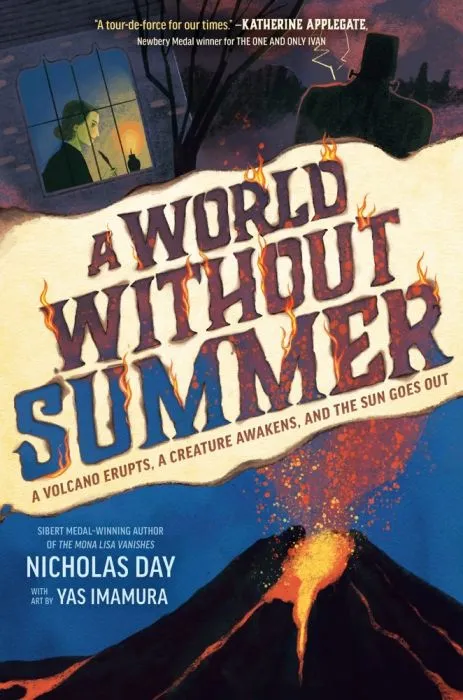
After reading A World Without Summer, talk with students about the gloomy, storm-filled summer of 1816 that led Lord Byron to challenge his friends to a ghost-story writing contest and inspired Mary Shelley to imagine the story that would become Frankenstein. Then invite students to take on a creative writing challenge of their own!
Instead of writing about ghosts or monsters, ask them to write a story in which the weather itself is the source of fear. Encourage students to explore the horrors Nicholas Day describes—storms that never end, crops that refuse to grow, seasons that no longer behave as they should, or a world where the familiar rhythms of nature have gone terribly wrong. After writing, students can bring their creations to life by recording dramatic readings complete with sound effects that produce the atmosphere of their imagined worlds. After listening to one another’s recordings, discuss how writers use weather, sound, and details to create tension and make readers feel the fear and uncertainty of a world turned upside down.
Questions for Discussion or Reflective Writing
- What happened on the island of Sumbawa in April 1815? How do we know what happened? Whose stories of the eruption of Tambora survive in the historical record? Whose voices are missing? Why does it matter who gets to tell history?
- Why did an eruption on one island create a crisis around the world? What does Tambora reveal about how closely human lives are tied to Earth’s changing climate? How should understanding those connections shape the choices we make as we face climate change?
- How did people try to make sense of the strange weather that followed Tambora’s eruption? What can we learn from the way people searched for explanations? Why are evidence and expertise important for deciding which explanations to trust?
- Day writes, “Frankenstein is a story straight out of the madness that Tambora made—a novel written from the epicenter of catastrophe.” How does Frankenstein reflect the fears and questions of the time when it was written? What connections do you see between the monster’s story and the experiences of people living through a world without summer?
- How did the human suffering after Tambora’s eruption change the way people thought about responsibility during a crisis? What debates emerged about who was responsible for helping those in need? What lasting impact did the Tambora years have on society?
Related Resources
A World Without Summer Educator’s Guide from Random House Children’s Books
A World Without Summer Book Club Guide from Random House Children’s Books
More Titles to Try
-
Disasters by the Numbers: A Book of Infographics
by Steve Jenkins

-
The Doomsday Detectives: How Walter and Luis Alvarez Solved the Mystery of Dinosaur Extinction
by Cindy Jenson-Elliott, illustrated by Theo Nicole Lorenz
-
Frankenstein
by Mary Shelley
-
She Made a Monster: How Mary Shelley Created Frankenstein
by Lynn Fulton, illustrated by Felicita Sala
-
Who Hid the Stars? How Light Pollution Changes Our World
by Danio Miserocchi and Maciej Michno, illustrated by Valentina Gottardi
-
Wild Weather: Storms, Meteorology, and Climate
by MK Reed
Stay on top of current education news